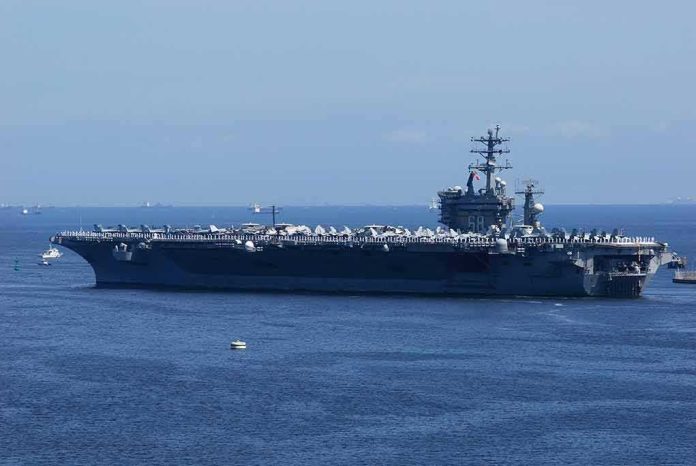
A U.S. carrier’s port call is never just a port call: the USS Abraham Lincoln’s stop in Thailand is officially a routine rest-and-recovery visit, yet it reliably concentrates three forces at once—operational respite for a battle-worn crew, a short, sharp boost for a coastal economy, and renewed scrutiny of Pattaya’s long-shadowed sex trade.
The Short Version
- Thai authorities say the Lincoln’s visit is a logistics-supported rest stop for sailors and Marines, not a joint exercise or show of force.
- Roughly 5,000 personnel coming ashore translate into brisk business for hotels, restaurants, and transport operators across Pattaya–Laem Chabang.
- Local officials tighten nightlife enforcement during high-profile port calls to manage reputation and risk around prostitution and vice.
- Carrier visits are a recurring feature of U.S.–Thai ties; their meanings are layered—operational, commercial, and symbolic—by design.
What Is Happening: A Routine Port Call, Stated Plainly
Thai defense and naval officials have characterized the USS Abraham Lincoln’s visit as a standard “rest and recovery” port call that includes replenishment and shore leave for the crew after an extended deployment. Public statements emphasize what it is not: this is not a joint exercise or bilateral operation. That framing has been consistent across Thai government spokespeople and local reporting, including confirmation that the carrier strike group’s ships will dock in the eastern seaboard area, with sailors going ashore in the Pattaya–Laem Chabang corridor for several days. The Associated Press, The Guardian, and Thai outlets have separately relayed the same essentials: the port call follows more than 250 days at sea and is structured for crew respite, logistics, and local liberty rather than training with the Royal Thai Navy.
The practicalities reflect that purpose. Large carriers move with escorts; they anchor or berth at deep-water facilities like Laem Chabang while liberty boats and buses move personnel between ship and shore. Host-nation agencies coordinate customs, port security, and crowd management. On the U.S. side, the Navy runs liberty briefings, sets curfews, and enforces conduct standards—predictable guardrails when thousands of sailors fan out into a tourism hub for a short window of time.
Why Pattaya Feels This Immediately: The Economics of Shore Leave
Carrier visits are temporary, but their economic footprint is unmistakable. A ship’s company of several thousand, cycling on and off liberty over four to five days, produces an intense micro-spike in local demand—rooms, meals, taxis, tours, small retail, and entertainment. Thai press and tourism authorities routinely anticipate the lift when U.S. Navy ships call: operators staff up, hotels set blocks aside, and restaurants expand inventory. For a city like Pattaya, already tuned to high-turnover hospitality, the surge is less about transforming the economy than compressing a peak season’s worth of mid-spend tourism into a compact, predictable burst.
Local boosters sometimes translate headcount into baht using per-capita spend estimates; while those figures vary widely with ship, itinerary, and policy, the broad story is straightforward: liberty ports convert sea-time deprivation into shore-time consumption, with outsized effects on small businesses near embarkation points. Retailers and transport operators often benefit the most—walkable storefronts near bus drop-offs and taxi fleets that can absorb late-night return flows. Pattaya’s municipal services, in turn, adapt for tempo: longer hours, stepped-up sanitation, and more traffic control.
The Complication Everyone Knows About: Sex Tourism Risk and Response
Pattaya is both a mainstream family beach destination and a red-light ecosystem with a global reputation. That duality is not news to Thai authorities, and it shapes their playbook for high-visibility port calls. In the run-up to a carrier’s arrival, police typically intensify checks on street solicitation, underage exploitation risks, licensing, and hours—a civic hygiene effort as much about optics as enforcement. This is not unique to U.S. Navy visits; Pattaya calibrates vice controls with any event likely to draw international cameras and concentrated foreign foot traffic. Military-focused outlets have reported such preemptive crackdowns alongside coverage of the Lincoln’s port call, reflecting the enduring tension between economic optimism and reputational risk.
For the Navy, the risk calculus is institutionalized. Commanders issue liberty policies—alcohol limits, buddy requirements, restricted areas—and pair them with training that is equal parts safety and ethics: human trafficking awareness, respect for host-nation law, and strict zero-tolerance on exploitation. Shore patrols and liaison officers coordinate with local police. The effect is not to sanitize a city’s nightlife—no brief can do that—but to bound sailor behavior within clear, enforceable lines and to respond quickly when problems arise. Those measures, combined with Thai enforcement, explain why many large liberty periods conclude without major incident despite the obvious temptations and headlines that precede them.
How We Got Here: Carrier Port Calls as a Habit of Alliance
U.S.–Thai defense ties are old and practical. Beyond annual exercises like Cobra Gold, the alliance is built on mundane but durable connective tissue: logistics, access, maintenance, and professional familiarity. Large ship visits are one expression of that normalcy. Thai coverage of the Lincoln’s call underscores the continuity: the purpose is rest and replenishment; the venues are familiar; the port window is short; and the Royal Thai Navy is not training with the strike group during the stop. That repeating pattern is why officials can present the visit credibly as routine, even as regional watchers interpret any carrier movement as a chess move in broader Indo-Pacific signaling.
The length of the Lincoln’s deployment adds one more layer. Multiple reports note more than 250 consecutive days at sea, a punishing rhythm for any crew and an operational schedule that makes a well-managed liberty period less a perk than a safety valve. Extended deployments elevate fatigue risk, complicate maintenance, and strain morale. A tightly controlled port call in a friendly, well-practiced location is the doctrine-compliant answer: refuel supplies, rotate rest, reset discipline, and continue the transit home.
Competing Framings Exist; The Facts of This Visit Are Not Contested
Carrier appearances inevitably attract narratives that outrun the ship’s orders. Some commentary casts any U.S. port call as implicit coercive messaging or even a vector for moral harm; others read it as evidence of deeper alignment or quid pro quo access arrangements. Those claims rise and fall with the politics of the moment. What matters here is that Thai officials and mainstream reporting converge on the same concrete description: a time-bound rest-and-recovery stop with no joint drills planned, anchored in established logistics cooperation rather than new commitments. In other words, the routine is the point—and it is fully consistent with past practice.
That does not flatten the symbolism. A nuclear-powered carrier is an unmistakable emblem; its silhouette alone communicates American reach. But symbolism is not an operation. When host and visitor both narrow the aperture to crew welfare, logistics, and shore leave—and do so publicly—the most reasonable reading is the literal one. The economic lift in Pattaya and the accompanying law-enforcement posture follow from that reading, not from a covert military agenda.
🚨 𝐏𝐀𝐓𝐓𝐀𝐘𝐀 𝐏𝐎𝐋𝐈𝐂𝐄 𝐃𝐄𝐓𝐀𝐈𝐍 𝟐𝟓 𝐈𝐍 𝐏𝐑𝐎𝐒𝐓𝐈𝐓𝐔𝐓𝐈𝐎𝐍 𝐂𝐑𝐀𝐂𝐊𝐃𝐎𝐖𝐍 𝐀𝐇𝐄𝐀𝐃 𝐎𝐅 𝐔𝐒 𝐍𝐀𝐕𝐘 𝐕𝐈𝐒𝐈𝐓 🚨
Pattaya police and social welfare officials detained 25 people during a late-night crackdown on suspected prostitution and solicitation… pic.twitter.com/ok2TeuV3sP
— Chrome Crumpet (@ChromeCrumpet) August 30, 2026
What It Means Going Forward
Expect this template to repeat. When a U.S. carrier finishing a hard deployment looks for a liberty port in Southeast Asia, Thailand will remain on the shortlist because the infrastructure, policing coordination, and hospitality sector can absorb a surge without chaos. Expect, too, the well-worn debates to resurface each time: boosters will talk up receipts; reformers will push harder on trafficking and exploitation; analysts will parse the itinerary for strategic tea leaves. The durable truth underneath is simpler. Rested crews operate better; allied ports that can deliver rest, safely and predictably, will keep hosting—on their terms.
Sources:
feedpress.me, apnews.com, washingtontimes.com, thestar.com.my, theguardian.com