
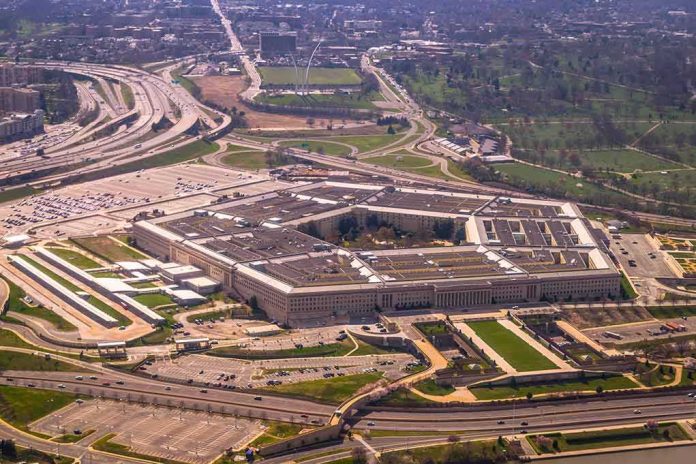
Firing a three-star from the Pentagon’s nerve center is not a routine personnel move; it is a statement about the integrity of the government’s war planning apparatus, the boundaries of secrecy, and the tools leaders will use to police them.
The Short Version
- Defense Secretary Pete Hegseth removed Lt. Gen. Brett Sylvia from the Joint Staff’s strategy and plans directorate over alleged classified leaks related to the Iran conflict, the Russia-Ukraine war, and other matters.
- Pentagon officials say the action followed an Air Force Office of Special Investigations inquiry and has been referred to the Justice Department for potential criminal review.
- Officials also say Sylvia failed three polygraph examinations about sharing classified information with the media.
- The episode fits a broader crackdown on unauthorized disclosures during a period of heightened operational planning and media sensitivity.
What happened and why the Pentagon acted so quickly
Lt. Gen. Brett Sylvia, director of the Joint Staff’s Strategy, Plans and Policy directorate (J-5), was removed from his post after Pentagon officials alleged he improperly disclosed classified information touching the Iran war, the Russia-Ukraine war, and other sensitive matters. Senior defense officials tied the decision to an “extensive” inquiry led by the Air Force Office of Special Investigations and said the case was referred to the Department of Justice, indicating potential criminal exposure beyond administrative discipline. Separate reporting attributed to Pentagon officials alleges Sylvia failed three polygraph examinations focused on media disclosures; those officials link the failed exams to the misconduct finding and removal.
The J-5 role is not ceremonial. It is the locus for global campaign planning, contingency options, and allied coordination. When the official in that seat is suspected of leaking, leaders worry about more than embarrassment; they worry about compromised decision cycles and adversary read-through of U.S. intent. That is why senior officials framed this as “severe misconduct,” and why the department moved with uncharacteristic speed for a three-star assignment action.
How internal leak cases are built — and what the OSI and DOJ pieces signal
In national security cases, “leak” is a catchall that collapses three distinct questions: did someone disclose, was the material actually classified, and was the disclosure unauthorized in a way that violates law or policy. Administrative actions, like removing a general from a billet, require a far lower threshold than a criminal charge; the Pentagon can and does sideline officials when leadership loses confidence, even if a prosecutor later declines to indict. Here, the Pentagon underscores that an Air Force OSI investigation underpinned the decision and that materials are with Justice for review — a signal the department views the alleged conduct as potentially chargeable, not merely a policy breach.
Polygraph results occupy a separate, narrower lane. They are widely used as an investigative tool in the security community, particularly to focus interviews and test consistency, but they are not admissible in courts-martial under Military Rule of Evidence 707 and remain constrained in federal criminal practice. Failing a polygraph is not proof of a crime; it is an investigative data point that often triggers further checks of access, contacts, and communications. In this case, officials cite three failed exams in support of removing Sylvia from a position of extraordinary sensitivity while the legal system does its work.
The strategic stakes: war planning, press engagement, and operational risk
Strategy and plans work runs on controlled disclosure. Commanders shape signaling to deter adversaries, reassure allies, and influence international markets; unplanned leaks upset that balance. Leaks about war plans or assessments can force adversaries to harden targets, accelerate timetables, or test U.S. red lines. When the topic is Iran — where U.S. options are time-sensitive and coalition-dependent — or Ukraine — where Russia is probing for allied fractures — the marginal cost of a leak rises. That is why officials emphasize the content areas alleged here and describe a zero-tolerance posture for “intentional unauthorized disclosure of classified information” in the current environment.
At the same time, senior planners historically maintained regular, bounded dialogue with journalists to explain doctrine, context, and non-operational background. Under tighter leak enforcement, those dialogues tend to contract; access gives way to scripted talking points, and career officers limit contact out of caution. The Pentagon’s aim is to protect sources and methods and keep options viable. The cost is a thinner public record about how choices are made — especially during complex, fast-moving crises.
Why this case stands out in Pentagon history
Removing a sitting J-5 is rare. The billet touches every combatant command and integrates diplomacy, logistics, and intelligence into executable options for the Chairman and the President. Sylvia’s résumé — a 32-year Army career that includes command of the 101st Airborne Division — underscores how unusual it is to see a leader of that pedigree abruptly detached from post for alleged misconduct. Multiple outlets independently reported the removal, the linkage to a leaks probe, and the DOJ referral, giving the core narrative cross-source stability even as specific evidentiary details remain housed inside classified channels.
Officials’ public emphasis on a formal OSI investigation and the DOJ handoff is also a marker. Internal leak hunts often end in tightened access controls and counseling. Flag-level firing, combined with a Justice referral, signals leadership’s judgment that the alleged conduct, if proven, crosses from administrative infraction into potential criminal territory — the distinction that separates a career-ending reprimand from a felony case.
Polygraphs, policy, and the limits of proof
For readers trying to parse the salience of three failed polygraphs, two truths can coexist. First, within the security ecosystem, failed exams materially affect trust: they prompt suspension of clearances, access restrictions, and, as here, relief from high-sensitivity billets. Second, polygraph outputs are not courtroom proof; U.S. military evidentiary rules sharply limit their admissibility. In practice, that means polygraph results catalyze administrative action while prosecutors build separate evidentiary chains — emails, call records, witness statements, and document access logs — to meet criminal standards if charges are contemplated.
That duality can be frustrating to outside observers who want a single dispositive answer. But it is how the system balances speed — protecting ongoing operations and war plans — with due process in any potential prosecution.
🚨 Hegseth fires Pentagon's top planner, Lt. Gen. Brett Sylvia, amid an alleged classified-leaks probe.
Pentagon confirms personnel action but gives no details; leak claims come from an unnamed official, not a public charge.
Firing or accountability? 👇#Pentagon #BreakingNews pic.twitter.com/jDY1zLo4pp
— Real USA Stories (@RealUsaStories) October 29, 2026
What to watch next
Three tracks matter from here. First, the Justice Department’s decision: investigators will test whether any alleged disclosures involved properly classified information, whether intent and knowledge elements are met, and whether public interest or reporting-channel considerations complicate charging. Second, the Pentagon’s internal remediation: expect tighter need-to-know partitions in plans cells, refreshed guidance on media contacts, and possibly expanded insider-threat analytics to flag anomalous information flows. Third, the leadership signal: for a planning enterprise that prizes discretion, removing a J-5 is meant to deter gray-zone boundary pushing about “background” conversations with the press — a message that will be heard across the services.
Sources:
washingtonexaminer.com, bssnews.net, aljazeera.com, cbsnews.com, abcnews.com