
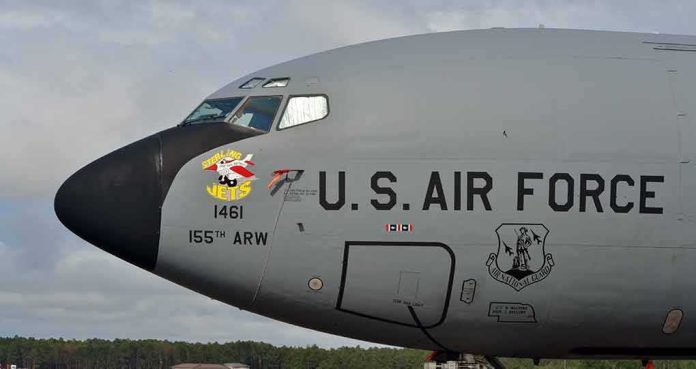
When a Pentagon watchdog tells the Air Force to seek $19.2 million back on spare parts for its next‑generation tanker, it is not an anomaly; it is a flare in a well‑mapped minefield where sole‑source spares, commercial‑item rules, and thin pricing data routinely collide to produce unreasonable prices and slow, costly fixes.
The Short Version
- The Defense Department Inspector General urged the Air Force to pursue about $19.2 million in refunds tied to overpriced KC‑46 spare parts, after finding the service did not obtain fair and reasonable prices for select items.
- The recommendation concerns parts supplied through arrangements that include major vendors to the KC‑46 support enterprise; Collins Aerospace declined public comment in initial reporting.
- The KC‑46 support portfolio includes a multiyear, firm‑fixed‑price contract vehicle for exchanges and repairs administered through vendors such as Velo Aviation and Drake Air.
- The case sits squarely in a longstanding structural problem: DOD often buys sole‑source spares as “commercial items,” limiting access to certified cost data and complicating price reasonableness determinations.
What the watchdog found and why it matters
The Inspector General concluded that Air Force purchasing officials overpaid for certain KC‑46 parts and recommended that the service recover approximately $19.2 million, a targeted remedy grounded in the watchdog’s price reasonableness analysis under the Federal Acquisition Regulation’s standards for fair and reasonable pricing. Early accounts indicate the finding spans a small set of spare parts but a meaningful sum for a single platform’s support slice; it is material not because the KC‑46 is uniquely flawed on spares, but because the mechanism that produced the overpayment is common across the defense logistics system.
KC‑46 sustainment is organized through a portfolio of firm‑fixed‑price arrangements that cover exchanges and repairs of commercial and noncommercial components. In 2026, the Defense Logistics Agency awarded a maximum $470,978,031 indefinite‑delivery, indefinite‑quantity contract for KC‑46 parts exchanges and repairs to Velo Aviation (and, in a related announcement, Drake Air) to execute this work over multiple ordering years. These vehicles consolidate demand and promise supply‑chain stability, but they also concentrate pricing power and place a premium on the government’s ability to interrogate prices up front, when leverage is highest.
The mechanism: how commercial spares and sole‑source conditions drive risk
Spare parts pricing for modern military aircraft frequently proceeds without competition. Items designated or treated as commercial can be exempt from certified cost or pricing data requirements under statute; contracting officers must then rely on “data other than certified cost or pricing data” to judge reasonableness. Between fiscal 2015 and 2019, GAO found that the Defense Logistics Agency awarded 136 sole‑source spares contracts above the threshold where pricing data would typically be pivotal; for 77 of those, contractors provided alternate, non‑certified information because the items were handled as commercial products. That framework is lawful and sometimes efficient—but it puts extraordinary weight on market research, historical price analysis, and negotiation skill. When those tools are thin, prices drift.
History shows the drift can be large. GAO’s recurring work on spares has documented significant price growth episodes without adequate justification during prior reform cycles and, conversely, sharp savings when competition is introduced for items previously bought sole‑source. The risk is not theoretical for Air Force fleets: a recent Inspector General audit of C‑17 spares found price outcomes that violated reasonableness standards, including an 80‑times markup on a lavatory soap dispenser relative to a comparable commercial item, underscoring how quickly out‑of‑market prices can harden without effective checks.
KC‑46 sustainment in context: promises, pitfalls, and contract structure
The KC‑46 is a hybrid of commercial and military engineering—built on a Boeing 767 airframe with specialized refueling systems, sensors, and mission avionics. That mix invites sustainment models that draw from commercial logistics while enforcing military airworthiness requirements. Firm‑fixed‑price exchange and repair programs, frequently called performance‑based logistics in adjacent efforts, aim to optimize availability and cap cost exposure by paying vendors for outcomes rather than inputs. Properly structured, they curb cost growth and align incentives; poorly informed starting prices, however, lock in overruns that the government must unwind later through claims, offsets, or, as here, IG‑prompted recoveries.
Price reasonableness is not a slogan in these deals; it is the lynchpin. Contracting officers must establish it with market data, historical trends, quantity curves, and, where accessible, supplier cost elements. When access to certified cost data is limited by commercial‑item treatment, GAO has shown that officers still request and use other pricing information, but delays and gaps can impede timely awards and weaken the government’s bargaining position. That is the canyon where overpayment risk lives.
Where the genuine disagreement tends to lie
In spare‑parts disputes, the conflict is rarely over whether a part was delivered; it is over the definition of “fair and reasonable.” Vendors cite low production runs, engineering change orders, proprietary tooling, and compliance overhead to justify prices. The government counters with comparable commercial items, historical paid prices, learning‑curve effects, and volume discounts. Advocates have long warned that commercial‑item determinations, when stretched, can curtail the government’s visibility into the cost backbone and create room for unjustified increases; Air Force officials have, in past KC‑46 spares episodes, publicly stated they could not determine that portions of commercial spares costs were fair and reasonable, a signal of exactly the data shortfall the IG seeks to address. In initial coverage of the current recommendation, Collins Aerospace declined to comment, and no detailed vendor rebuttal has been published.
The IG’s $19.2 million recovery recommendation does not, by itself, rewrite contract law; it triggers a disciplined follow‑through—demand letters, negotiations, potential offsets against ongoing orders—and it invites a forensic scrub of the price‑analysis files that supported the original buys. The result can range from a negotiated credit to a formal claim. What matters systemically is the correction loop: show the analysis, close the gap, and prevent recurrence.
What to watch next: process, playbook, and durable fixes
Expect three moves. First, an Air Force decision on collection posture—informal voluntary refunds, contractual offsets within current IDIQs, or a formal demand. Second, a price‑analysis autopsy: what data the government had, what it asked for, which comparisons it used, and where its determinations fell short. Third, adjustments to sustainment vehicles—revised pricing clauses, refreshed market baskets, or competition for sub‑tiers—to restore leverage. Because the KC‑46 support pathway relies on large IDIQs and exchange pools, action can cascade quickly across many part numbers if the government and vendors agree on a pricing template anchored in transparent comparables.
The durable fix, however, is broader than one platform. GAO’s work points to a repeatable remedy set: collect better alternate pricing information earlier, segment truly commercial parts from unique military derivatives, and inject competition wherever technical data packages allow it. When that is not feasible, contracting teams must intensify use of independent government cost estimates, parametric benchmarks, and historical pay‑price analysis before awarding sole‑source spares at scale. The KC‑46 case, like the C‑17 findings before it, reinforces that price reasonableness is not a compliance box; it is a discipline that, when neglected, shows up years later as a refund letter.
NEW REPORT: The DoW OIG found that Air Force officials overpaid for some parts for the KC-46, the next‑generation aerial refueling tanker. This happened b/c officials failed to use sound business judgment as the Federal Acquisition Regulation requires. 🔗:https://t.co/OhZhH5Lvv4 pic.twitter.com/OlavMHL0xl
— DoW Office of Inspector General (@DoW_IG) November 17, 2026
How to read a recovery: signal versus noise
Recovering $19.2 million on a tanker program measured in tens of billions is not a budgetary earthquake; it is a governance signal. It tells program offices and vendors that even in commercial‑leaning sustainment models, the government’s burden to establish price reasonableness persists—and that watchdogs will test it. For a fleet the Air Force relies on to keep every other aircraft in the fight, sustaining credibility in the spare‑parts ledger is not optional. It is the quiet work that keeps the tankers flying and the rest of the force on station.
Sources:
insidedefense.com, bloomberg.com, briefs.co, sam.gov, pogo.org, aerotime.aero, upi.com, govtribe.com, war.gov