When a commemorative monument is recast as an operational military site, the argument stops being about taste or skyline and becomes a test of authority, law, and feasibility: who can militarize a symbolic space, on what mandate, and to what practical end.
The Short Version
- President Trump publicly said the planned 250-foot triumphal arch by Arlington would double as a “top grade Military Complex” with drones, sniper positions, and ammunition storage.
- Major outlets reported the same detailed claim, indicating it was a clear, on-the-record statement rather than a paraphrase or rumor.
- No military directive, engineering package, or funding authority has surfaced to corroborate the military “request” or the operational design.
- Opposition coalesces around memorial integrity, sightlines, aviation safety, and the propriety of militarizing a site bordering Arlington National Cemetery.
What Trump said, and why the wording matters
On its face, the announcement is unambiguous. President Trump stated that, “at the strong request of the United States Military, and for National Security purposes,” he had agreed to convert the proposed triumphal arch near Arlington Memorial Bridge into a military complex capable of housing and rapidly using “large numbers of drones,” positioning “Snipers” on the roof and plaza, and holding “large quantities of sniper ammunition in storage.” That level of specificity—missions, positions, ammunition—reads like an operational concept, not a ceremonial flourish. The statement was widely and consistently carried by Reuters, AP, CBS, ABC, Fox, and others the same day, which reduces the chance this was a misquote or stray aside.
Precision in language carries institutional implications. “Strong request of the United States Military” suggests formal tasking; “top grade Military Complex” implies compliance with force protection, explosive safety, and airspace rules. If taken literally, those phrases would ordinarily trigger a paper trail: a requirements document, a program authority, and a budget line. None have been produced in the public record to date, a gap that shifts the conversation from intent to implementability.
Mechanics: can a memorial function as a military site?
Turning a prominent, open-access monument into a functioning security installation is not a matter of adding a locked room and calling it a day. Drone operations require launch and recovery zones, electromagnetic interference management, secure command-and-control, hardened storage for batteries and munitions if armed, and airspace coordination with the FAA. Any structure sited within the restricted National Capital Region air defense identification zone faces layered rules; proximity to Reagan National intensifies those constraints. Reporters have flagged aviation-safety concerns tied to the location; those concerns are credible because obstacle clearance, approach and departure corridors, and counter-UAS rules are unforgiving here.
Sniper “positions” on a public monument introduce a different class of problems. Permanent overwatch assets at a tourist site would either be overt—altering the character and experience of the place—or covert, which conflicts with predictable public access and preservation standards. Ammunition storage at quantity (“large quantities of sniper ammunition”) invokes military explosives safety regulations even for small-arms munitions; those standards dictate standoff distances, structural ratings, and segregation—in plain terms, you do not warehouse munitions in a crowd-friendly landmark without substantial redesign. No engineering, safety, or architectural plans have been presented publicly to show how such functions would be achieved.
Location, history, and the memorial-versus-military tension
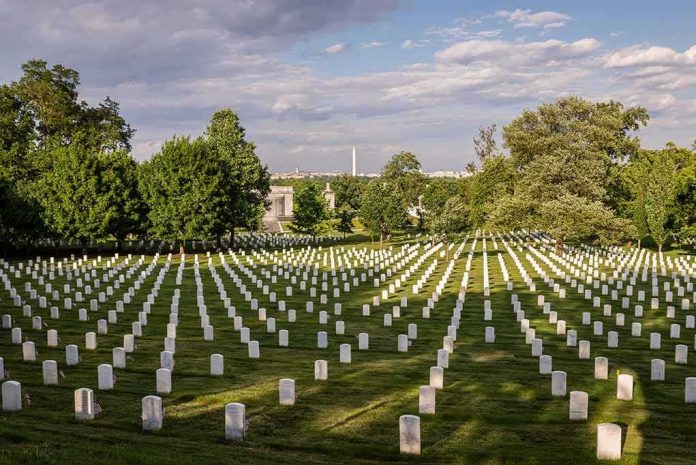
This contested site is not just another parcel. Memorial Circle and the Arlington Memorial Bridge axis mediate the symbolic connection between the Lincoln Memorial and Arlington National Cemetery; the “view corridor” is itself part of the capital’s designed language. That is why veteran groups and preservationists have litigated to protect sightlines and scale, arguing that the arch, at roughly twice the height of the Lincoln Memorial, would dominate the composition and shadow graves across the river. A retired Army Major General, Paul Eaton, has called the project a “sacrilege,” specifically invoking the sanctity of the cemetery and the danger of monumental overreach at the nation’s most hallowed military burial ground.
Washington has a lineage of sightline fights—monuments and museums proposed for prestige addresses, often recast with alternative justifications when approval falters. Reframing a project under national security is a recognizable move in that playbook; it can accelerate certain processes, but it also invites compound scrutiny: legal (does the executive have this authority here), technical (can this safely function as claimed), and symbolic (does this alter the meaning of the place). The arch debate slots directly into that pattern.
Evidence check: what is known, what is asserted, what is missing
What is known: the President made a specific, public claim that the arch would double as a drone/sniper/ammunition complex “at the strong request” of the military; major outlets accurately relayed this claim; the proposed location is adjacent to Arlington National Cemetery and along a historically protected axis. What is asserted without corroboration: that the military requested or endorsed this conversion, and that the structure will be engineered and authorized to perform those functions. What is missing: a signed directive, program of record, interagency airspace plan, architectural and safety drawings, or on-the-record endorsement from named defense officials. In infrastructure terms, the claim is in front of the documentation.
For a reader weighing credibility, the asymmetry matters. Newsrooms can and should report a sitting president’s clear statement as news, and they have; they have also noted the absence of institutional confirmation or plan sets. That duality is not “gotcha” framing—it is an accurate description of the evidentiary state. Until documents appear, the announcement is best understood as an intent claim, not an implemented program.
President Trump says his planned 250-foot triumphal arch near Arlington Memorial Bridge will now double as a military complex.
Trump says the structure would be able to rapidly deploy drones, position snipers and store ammunition.
See Trump’s plan for the massive new monument. pic.twitter.com/IJSB37lXhO
— Chris Larsen (@chrislarsen32) September 20, 2026
The crux of the dispute: authority, law, and appropriateness
Opponents attack on three axes. First, memorial integrity: the arch is seen as incompatible with the solemn choreography between Lincoln and Arlington, both by sheer height and by militarized function. Veterans have sued to preserve sightlines, arguing that the project violates the spirit of the landscape and may require congressional approval. Eaton’s critique adds the weight of professional command experience to the symbolic argument, a combination that resonates with courts and commissions alike.
Second, safety and operations: aviation specialists question siting any drone-capable facility near Reagan National’s tight airspace envelope and approach paths; even if drones were small and unarmed, command-and-control and counter-UAS concerns would be acute. The promise of “rapid ability” implies alert postures and contingency use that clash with tourism, traffic, and preservation rules in one of the capital’s busiest crossroads.
Third, process and power: a “top grade Military Complex” usually comes with budget, chain-of-command sponsorship, and environmental and historic-preservation review tailored to the use. If the project proceeds on a commemorative approval track while being functionally military, expect procedural litigation to challenge the mismatch. Courts often scrutinize such category slippage closely because use classification determines which statutes apply.
What would resolve the uncertainty
Clarity will come from paper, not posts. If the military indeed requested the conversion, there should be correspondence—taskings, memoranda, or briefing decks—identifying the operational requirement, sponsors, and constraints. If the arch is to host drone operations, there should be an airspace and safety package developed with the FAA and NCR counter-UAS authorities. If munitions storage is contemplated, the design should show compliance with explosives safety standards, standoff distances, and fire/life-safety codes. Absent those, the claim remains rhetorical and the counter-arguments about appropriateness dominate.
Conversely, if documents emerge showing real requirements and compliant design, the argument shifts: from “this is parody” to “should this capability live here.” That would be a values debate about militarizing a memorial threshold, not a feasibility debate. In either case, the enduring lesson is the same: in Washington’s symbolic core, use is meaning. Changing the use of a monument changes what the nation says about itself.
Sources:
yahoo.com, militarytimes.com, reuters.com, uk.news.yahoo.com, wsj.com, abcnews.com, nytimes.com