A presidential phone call is rarely just a phone call — it’s a signal of how seriously a government takes a threat before all the facts are in, and President Trump’s announcement that he had a call scheduled with Vladimir Putin over a suspected pneumonic plague death in Siberia is a case study in exactly that kind of pre-emptive diplomacy.
Key Points
- President Trump said Tuesday, October 6, that he had a call scheduled with Putin “very soon” to discuss a possible case of plague at a Siberian research institute.
- The case involves a 28-year-old laboratory technician at an anti-plague research institute in Irkutsk who died after reportedly contracting pneumonic plague.
- Trump said U.S. intelligence agencies were in “very deep discussions” about the matter and suggested more information could emerge within a day.
- The World Health Organization said no cause of death had been officially confirmed as of early October, even as it offered Russia support.
- Pneumonic plague is treatable with common antibiotics but can kill untreated patients with near-total certainty, which explains the urgency of the diplomatic and public-health response.
What Happened in Siberia
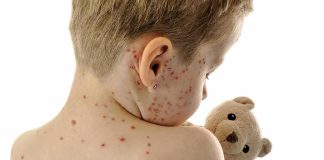
The episode began with reports that a young laboratory worker at a research institute in Russia’s Irkutsk region had died of severe pneumonia on October 2, with Russian media and subsequent international coverage identifying the illness as a suspected case of pneumonic plague. The institute in question specializes in plague research, which heightened concern among global health officials the moment the story surfaced. Nearly 200 co-workers were placed under quarantine, and a local hospital tied to the case was shut to new admissions, measures consistent with standard outbreak containment protocol rather than confirmation of a wider epidemic.
President Trump addressed the matter directly from the White House on October 6, telling reporters, “I have a call scheduled, yes,” when asked whether he had spoken with Putin about the situation. He said the conversation would happen “very soon” and that American intelligence agencies were engaged in “very deep discussions” about the case, adding that he expected more clarity within a day. That timeline, and the fact that Trump raised it unprompted in two separate public appearances within 24 hours, indicates the administration treated the Siberian case as a live concern rather than a passing curiosity.
The Science Behind the Alarm
Pneumonic plague is caused by the bacterium Yersinia pestis, the same organism responsible for the bubonic plague that devastated medieval Europe, but it attacks the lungs rather than the lymph nodes and spreads between people through respiratory droplets at close range. Left untreated, it is close to uniformly fatal; treated promptly with antibiotics such as ciprofloxacin or doxycycline, mortality falls to roughly 20 to 30 percent. That gap between near-certain death and a manageable illness is why speed of diagnosis matters so much, and also why the delay is frustrating to public-health officials: laboratory culture and molecular confirmation typically take one to two weeks, leaving a window in which authorities must act on incomplete information.
Infectious-disease specialists have noted that plague is not a novel threat in that part of Siberia — it is endemic in pockets of the region near the borders with Mongolia and China, and the United States itself logs five to six cases annually, almost all of them the bubonic form transmitted by fleas rather than the person-to-person pneumonic variant. What made the Irkutsk case unusual was the reported speed of progression, roughly two days from exposure to death in a young, presumably healthy patient, a trajectory that specialists flagged as atypical and worth close scrutiny rather than alarm.
Why Moscow’s Silence Complicates the Picture
Russian officials have offered few details about the circumstances of the worker’s death, describing it instead as pneumonia of undetermined origin, even as they quarantined a hospital and nearly 200 contacts — a response that reads as more cautious than the public messaging suggests. The World Health Organization said it was aware of the reports and had offered Russia support, but stated plainly that no cause of death had been officially confirmed and that laboratory testing was still underway. Under the International Health Regulations, a member state is obligated to notify the WHO within 24 hours once an event is assessed as potentially constituting a public health emergency of international concern — an obligation complicated by the fact that Russia closed its WHO liaison office amid the war in Ukraine, narrowing the usual channels through which such information flows.
🚨 BREAKING: President Trump says he has a call scheduled with Vladimir Putin over the supposed "plague" that may have leaked from a lab
"We're in very deep discussions. We'll be able to report about it probably tomorrow."
We're sure as hell NOT pic.twitter.com/woonK2X9BJ
— 𝗧𝗵𝗲 𝗗𝗼𝗻𝗮𝗹𝗱 (@TheDonaldUSA28) October 7, 2026
What the Putin Call Signals Going Forward
A scheduled head-of-state call over