The debate over livestreaming Nidal Hasan’s execution is not really a debate about Hasan’s guilt — that question was settled by a court-martial jury more than a decade ago — it is a debate about whether the American state should turn capital punishment back into a public ritual, and the fact that skepticism is coming from inside the administration that proposed it tells you how unsettled that question remains.
Key Points
- The Pentagon plans to livestream the firing-squad execution of Nidal Hasan, convicted of the 2009 Fort Hood shooting, at the base itself on December 3 — the first publicly broadcast U.S. execution in roughly a century.
- The legal foundation is solid: a 2013 court-martial conviction on all 42 counts, Supreme Court denial of review, and presidential approval of the firing-squad method — but no regulation or precedent authorizes broadcasting the act itself.
- Vice President Vance has publicly doubted the livestream will actually occur and said he personally would not watch, while insisting Hasan’s crimes should not be lost in the controversy.
- Operational basics — the streaming platform, access rules, recording policy, and safeguards for the soldiers on the firing squad — have not been disclosed.
- Retired military leaders, Catholic bishops, and figures across the political spectrum have questioned whether the broadcast serves justice or simply stages a spectacle.
What the Pentagon Has Actually Proposed
Defense Secretary Pete Hegseth announced that Hasan will die by firing squad at Fort Hood, Texas, at 1 p.m. on a Thursday — timed, reporting indicates, to roughly coincide with the hour the 2009 attack began. Hegseth has said plainly that the government intends for the public to watch: “we’ll make sure that people are able to watch it, that it’s public,” he said, adding that “people need to understand that there’s serious consequences for these types of things”. A Defense Department official separately confirmed to reporters that a livestream is planned, though which platform would carry it remained undisclosed.
The Army’s own account supplies the legal scaffolding. A court-martial jury convicted Hasan on all 42 counts on August 23, 2013, and sentenced him to death five days later; the Supreme Court declined to review the case on March 31, 2025. President Trump approved the death sentence on October 2, 2026, and Acting Army Secretary Adam Telle ordered execution by firing squad four days after that. None of this is in dispute. What is unresolved is a separate and much newer question: whether the authority to execute carries with it the authority to broadcast the execution to the public at large.
A Revival, Not a Routine Transparency Measure
Public executions were common in America well into the nineteenth century, staged partly as community deterrence and partly as spectacle, before the practice receded behind prison walls over the course of the twentieth century. Legal historians note that no Supreme Court ruling establishes a public right to a livestreamed execution, and that existing precedent on media access to executions has generally been narrow and restrictive rather than expansive. What the Pentagon is proposing, in other words, is not an extension of settled transparency policy — it is a return to an older punitive tradition, now equipped with internet distribution rather than a courthouse square. That distinction matters because it shifts the Pentagon’s burden: it must justify reviving a discontinued practice, not merely defend an existing one.
The deterrence rationale Hegseth has offered rests on an intuitive claim — that visible consequences discourage future violence — but the public record contains no study, military assessment, or historical comparison showing that a livestreamed execution deters mass violence more effectively than a closed one, a written notice, or pool coverage restricted to credentialed witnesses. Nor has the Pentagon released a policy memorandum weighing that rationale against competing concerns: victims’ dignity, the psychological burden on the soldiers assigned to carry out the sentence, or the risk that footage becomes propaganda or imitation material once it leaves government control.
Where the Disagreement Actually Lives
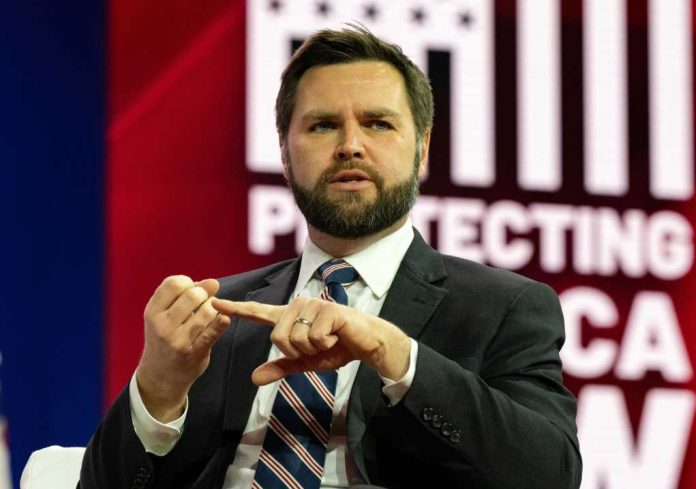
This is the part of the story most coverage flattens into a single reaction, when in fact the opposition spans the ideological map. Vice President Vance told reporters he doubted the plan would happen at all — “I don’t know that that’s actually going to happen” — and said flatly that if it is livestreamed, “I’m not going to be watching it”. He paired that skepticism with a pointed reminder that Hasan “brutally murdered a lot of innocent people,” making clear his doubt is about method, not about the sentence itself. Separately, he has been reported saying that broadcasting a death “diminishes us and is not an effective deterrent”.
Vance’s position does not contradict the Pentagon’s facts; it contests the wisdom of the method, which places it alongside a broader chorus rather than against the record. Retired Fort Hood commander Sean MacFarland asked publicly whether carrying out the sentence there, livestreamed, amounted to “justice, vengeance, or a mere spectacle for the masses”. Joe Kent called the approach “beneath the dignity” of the country. The U.S. Conference of Catholic Bishops and other religious voices have raised similar objections, and critics quoted in national coverage have drawn an uncomfortable comparison to practices associated with the Taliban and Iran. None of this disputes that Hasan was convicted, sentenced, and scheduled to die; it disputes whether turning that death into a broadcast event serves the public interest the Pentagon says it does.
The Pentagon plans to livestream Nidal Hasan's firing squad execution at Fort Hood. He once said he'd die a martyr. Hegseth is about to give him the stage.https://t.co/NndVYSrOPX
🎥 #NidalHasan #Hegseth #FortHood #DeathPenalty
— The Democracy Advocate (@demadvocatenews) October 9, 2026
What Remains Undisclosed — and Why It Matters Going Forward
The Pentagon has confirmed intent but not mechanics. No one has publicly identified the streaming platform, the access controls, whether footage will be delayed or edited, how long it will be retained, or who decides when the feed cuts away. Nor has the Army disclosed how the soldiers assigned to the firing squad were selected, whether they consented with full awareness of public exposure, or what psychological support they will receive before and after. Fort Hood survivors have offered a useful distinction here: support for the sentence is not the same as support for the spectacle. A survivor quoted in coverage backed the execution itself while questioning the wisdom of broadcasting it.
Whatever happens on December 3, the precedent set will outlast this single case. If the livestream proceeds, it establishes that the federal government can convert a judicial death sentence into a mass media event without a disclosed legal framework governing how, to whom, and under what safeguards. If it does not proceed — and Vance’s own doubt suggests internal uncertainty about whether it will — the episode will still have tested how far executive branding of punishment can go before even allies inside the administration pull back. Either outcome will shape how the next contested execution, military or civilian, is handled.
Sources:
military.com, dw.com, nbcnews.com, abcnews.com, army.mil, afp.com, santacruzsentinel.com