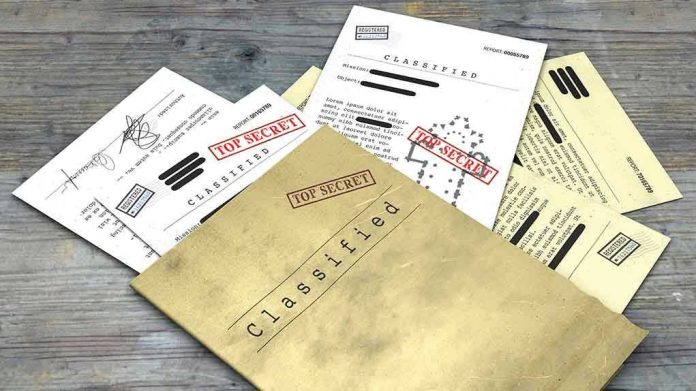
A sitting congressman used the protections of the House floor to blast six names from the Epstein files into the public record—without presenting evidence they committed a crime.
Quick Take
- Rep. Ro Khanna (D-CA) read six previously redacted names from unredacted Jeffrey Epstein files into the Congressional Record on Feb. 10, 2026.
- Khanna said the DOJ and FBI improperly withheld or scrubbed information despite the Epstein Files Transparency Act, a bill he co-sponsored with Rep. Thomas Massie (R-KY).
- Rep. Massie stressed that appearing in the files does not prove guilt, even as the disclosures intensified scrutiny and reputational risk for those named.
- The DOJ had released about 3.5 million pages out of more than 6 million, while Khanna argued key categories of material were still missing.
Khanna’s House-floor move forces names out—while the evidence stays unclear
Rep. Ro Khanna identified six individuals on the House floor on February 10, 2026: Leslie Wexner, Sultan Ahmed bin Sulayem, Salvatore Nuara, Zurab Mikeladze, Leonic Leonov, and Nicola Caputo. Khanna said the names were visible in unredacted Epstein records he reviewed at the DOJ the day before alongside Rep. Thomas Massie. Khanna offered no claim that the men committed crimes, but argued the public deserved transparency after prior redactions.
The mechanics matter as much as the message. Congress members receive broad protections when speaking on the floor, and Khanna’s approach ensured the names were preserved in the Congressional Record. That tactic can satisfy public demands for openness, but it also creates a constitutional tension conservatives recognize immediately: government officials can make high-impact allegations or implications under legal protection, while the targets often have limited immediate recourse. In cases tied to Epstein, the public appetite for answers collides with basic due-process fairness.
What the bipartisan transparency push actually did—and what it didn’t
The disclosures grew out of the Epstein Files Transparency Act, introduced in July 2025 by Khanna and Massie and later passed, requiring DOJ release of Epstein-related documents with limited redactions. As of early 2026, DOJ had released about 3.5 million pages out of more than 6 million. Khanna said major items still were not public, including victim interview reports, a draft 2007 indictment, and Epstein computer data—gaps that keep fueling suspicion across the political spectrum.
That suspicion is understandable, but the available reporting still draws a hard line between transparency and proof. Massie, a Republican frequently aligned with limited-government oversight, highlighted that merely being listed in files does not establish wrongdoing. According to the reporting, some of the names appeared in contexts such as photo lists connected to Epstein, Ghislaine Maxwell, and victims. Without the underlying documents fully released, the public cannot independently evaluate why each name appears or whether any entry reflects real culpability.
Two high-profile names bring different questions, not settled answers
Two of the six names stand out because the public record already contains more context. Leslie Wexner was described as being labeled an FBI-designated co-conspirator in a 2019 document, while representatives for Wexner said he cooperated with investigators as a source rather than as a target. Sultan Ahmed bin Sulayem, CEO of DP World, was associated in the files with an email reference involving a “torture video,” according to Massie’s post summarized in coverage.
Those details underline the central problem with headline-driven outrage: context decides everything. A label in a law-enforcement document, a referenced email, or a photo-list appearance can range from deeply significant to entirely incidental. The sources summarized here do not establish criminal conduct by any of the named men, and Khanna did not present evidence of wrongdoing in his remarks. Conservatives who demand equal justice should demand full documentation—not selective leaks that invite innuendo.
Claims of scrubbing and withholding raise oversight stakes for Trump’s DOJ
Khanna’s broader accusation targeted DOJ and the FBI, alleging improper redactions and even “scrubbing” before documents were uploaded, framing it as protection for “rich and powerful” figures. The reporting indicates DOJ partially complied after lawmakers reviewed unredacted material, but the dispute continued over what remains withheld and why. With President Trump back in office in 2026, this fight also becomes a test of whether the executive branch can deliver transparency while protecting victims’ privacy and legitimate investigative sensitivities.
The immediate impact is real even without charges: once names are spoken on the House floor, reputations can be damaged permanently. The longer-term impact could be positive if it forces a cleaner, lawful disclosure process that treats elites and ordinary Americans the same. Yet the lesson from what’s public so far is straightforward: neither Congress nor the media should treat file appearance as a verdict. If the government has evidence, it should be presented through proper channels; if it doesn’t, Americans deserve facts, not insinuations.
Sources:
House Dem identifies ‘wealthy, powerful men’ DOJ …
Representative Ro Khanna’s Statement on DOJ’s Release of Additional Epstein Files
H.R.4405 – Epstein Files Transparency Act (bill text)