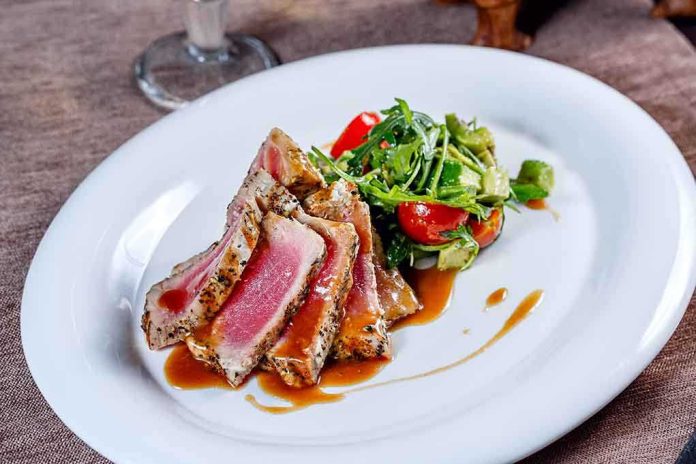
Restaurants across America are quietly shrinking portion sizes and redesigning menus to capitalize on customers taking appetite-suppressing drugs like Ozempic, prioritizing pharmaceutical profits over traditional American dining values.
Story Overview
- Restaurants reducing portion sizes to match Ozempic users’ diminished appetites
- Food industry adapting menus with smaller plates and lighter options for GLP-1 drug users
- Businesses potentially increasing profit margins by serving less food at same prices
- Dining culture shift driven by widespread pharmaceutical dependency rather than natural eating habits
Restaurant Industry Embraces Pharmaceutical Dependency
The restaurant industry has begun systematically reducing portion sizes and creating specialized menus targeting customers using weight-loss medications like Ozempic. These establishments are capitalizing on the reduced appetite effects caused by GLP-1 drugs, which mimic fullness hormones and create artificial satiation. This represents a fundamental shift away from traditional American dining experiences that emphasized hearty portions and value for money, instead catering to chemically-induced eating patterns.
Menu Engineering for Drug-Induced Appetite Changes
Chains and independent eateries are redesigning their offerings with smaller plates, reduced calorie counts, and lighter menu options specifically aligned with the digestive effects of appetite-suppressing medications. The drugs slow digestion and create prolonged feelings of fullness, prompting restaurants to develop “bite-sized” meals that accommodate these artificially reduced hunger levels. This menu engineering represents a calculated response to customers whose eating habits are now dictated by pharmaceutical interventions rather than natural appetite cycles.
The trend reflects how widespread prescription of these medications has become, with restaurants viewing Ozempic users as a significant enough market segment to justify menu overhauls. This pharmaceutical-driven dining approach prioritizes accommodation of drug side effects over traditional culinary experiences that have defined American restaurant culture for generations.
Profit Margins Trump Traditional Value
Restaurant operators are discovering that serving smaller portions to drug users can significantly boost profitability through higher margins on reduced servings. While claiming to enhance customer satisfaction for those on appetite-suppressing medications, establishments are essentially charging the same prices for less food. This business model exploits customers’ chemically-reduced appetites to increase profits, undermining the traditional American expectation of generous portions and fair value.
The shift represents a concerning precedent where businesses adapt their core offerings not to improve quality or service, but to maximize profits from customers whose consumption patterns have been artificially altered by pharmaceutical dependency. This approach prioritizes corporate earnings over the authentic dining experiences that have long been part of American social and cultural traditions, replacing natural appetite satisfaction with medication-dependent portion control.