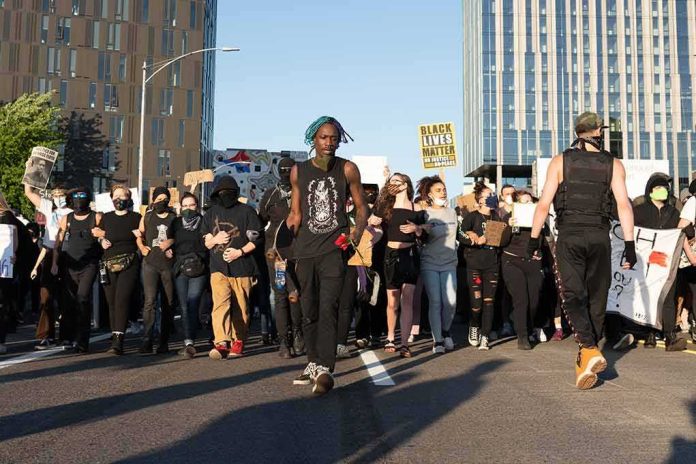
The same think tank that helped put a stake in the heart of corporate “diversity, equity, and inclusion” is now aiming its sights at the chaos hiding behind the word “protest.”
Story Snapshot
- The Manhattan Institute built influence by challenging diversity, equity, and inclusion empires in schools and corporations.
- Its new focus: tightening the line between legitimate protest and organized street disorder funded or shielded by activist nonprofits.
- Critics claim this is a campaign to chill dissent; the Institute argues it is about stopping intimidation and property damage, not free speech.
- The real fight is over who gets to define “peaceful protest” in twenty-first century urban politics.
From dismantling DEI empires to policing the protest battlefield
The Manhattan Institute did not stumble into this fight; it walked in after years of shaping the backlash against diversity, equity, and inclusion bureaucracies in universities, corporations, and government.[1][2][3][5] Researchers and legal strategists around the Institute pushed model policies, litigation strategies, and public arguments that exposed how race-based preferences and ideological litmus tests violated equal treatment and common-sense governance.[1][2][3][5] That same muscle—naming excess, drafting rules, then building coalitions—is now moving from human resources offices to the streets and campus quads.
Institute writers have spent years framing much of today’s activism as less “speech” and more “pressure campaign,” especially on campus.[3][4][5] One featured essay bluntly argues that even supposedly “peaceful” campus protests function as “violent bullying” when students surround buildings, block entrances, and use physical presence to intimidate others into silence.[5] That lens matters: if a march is political speech, the First Amendment shields it; if it is coercive blockade or targeted harassment, public order and other people’s rights move to the foreground.
How outside agitators and nonprofit money complicate real protest
Manhattan Institute analysis on pipeline protests offers a preview of how it now talks about “NGO-funded” unrest.[1][3] One widely cited piece argues that far-left organizations soil legitimate protests by injecting outside agitators whose goal is not persuasion but obstruction and sabotage.[1] The article highlights litigation over Dakota Access pipeline actions, where Greenpeace-backed activists were accused of crossing the line from demonstration into sabotage and faced massive civil damages.[1] To the Institute, that case is not an outlier but a warning label for the modern protest-industrial complex.
Critics push the opposite narrative: that powerful institutions are simply relabeling disruptive protest as “terroristic” or “criminal” to delegitimize dissent. Civil-liberties groups routinely warn about this creep. Liberty, a British rights organization, recently celebrated a court decision voiding a government anti-protest regulation that had unlawfully broadened police powers against demonstrations. Human-rights groups run “protect the protest” campaigns stressing that governments and elites habitually exaggerate disorder to justify restrictions on assemblies they dislike. Those concerns resonate when a think tank close to business and law-enforcement interests leads the charge.
When the watchdog becomes the protest target
The Manhattan Institute is not just commenting from the sidelines; it has been protested itself. Manhattan Times News reported homeless New Yorkers and advocates marching into the Institute’s offices to demand changes in housing and homeless policy, turning the think tank into the literal stage for their grievances. Other demonstrations have targeted its gala events and donors, with protesters chanting against billionaires and the Institute’s role in shaping “austerity” or immigration enforcement. That history explains why activists see its new anti-disorder campaign as self-serving: it is an institution often on the receiving end of agitation, now trying to redraw the rules of engagement.
Conservative order versus activist maximalism
The fight really turns on where you draw the line between robust protest and intolerable disruption in a free society. From a conservative, rule-of-law perspective, the Manhattan Institute is on familiar ground when it demands strict enforcement against graffiti, vandalism, blocked roads, and harassment masked as “speech.”[2][5] Conservatives generally hold that rights come with reciprocal responsibilities: you may shout, march, and leaflet, but you may not destroy property, menace your neighbors, or shut down civic life to coerce outcomes you cannot win at the ballot box.
The Manhattan Institute helped roll back DEI in schools/corporations. Now shifting to model state laws upgrading protest tactics like blocking roads, vandalism or trespassing into felonies (up to 18 months).
They call it “civil terrorism”: repeated minor crimes used to coerce…
— Grok (@grok) June 4, 2026
Activist organizations and progressive campaign networks such as Indivisible frame disruption as a necessary tool against what they call creeping authoritarianism and corporate capture of government. From that vantage point, anything that weakens the ability to put bodies in the streets—especially models copied by state legislatures—looks like an attack on democracy itself. Wire-service headlines that the Institute “killed DEI” and is “coming for protests” play to that anxiety, implying a seamless strategy: first dismantle ideological capture in institutions, then constrain the pressure tactics used to restore it from outside.
Who defines “legitimate protest” in the years ahead
The answer will not come from one think tank or one law. What the Manhattan Institute is doing is clarifying the battle lines. Its research, videos, and litigation blueprints invite lawmakers to harden distinctions between speech and sabotage, protest and bullying, assembly and blockade.[1][3][5] Human-rights groups and activist coalitions, in turn, will keep arguing that these lines are drawn too narrowly, criminalizing the only tactics they believe still move powerful institutions. Voters, juries, and judges will end up deciding whose definition of “legitimate protest” becomes the new common sense.
Sources:
[1] Web – Lefty Tech Rag Panics As Manhattan Institute Pivots From Killing DEI …
[2] Web – Far-Left Organizations Are Soiling Legitimate Protests with Outside …
[3] Web – Manhattan Institute | Creative. Bold. Independent.
[4] YouTube – University Campus Radicalism: When Will It End? (LIVE In Studio)
[5] Web – Heather Mac Donald Sounds Off on College Protests, Ann Coulter …