America’s new ban on foreign-made advanced robots is less about today’s Roomba than about who controls the sensing, connected machines that will be embedded in homes, factories, and critical infrastructure for decades to come.
Key Points
- The FCC has added foreign-produced “advanced robotic devices” and connected power inverters to its national-security Covered List, blocking new models from getting FCC authorization to be imported, marketed, or sold in the U.S.
- The rule is formally origin-based and nationality-neutral but built on a national-security determination that centers Chinese-made robots and power electronics as high-risk supply‑chain and cyber targets.
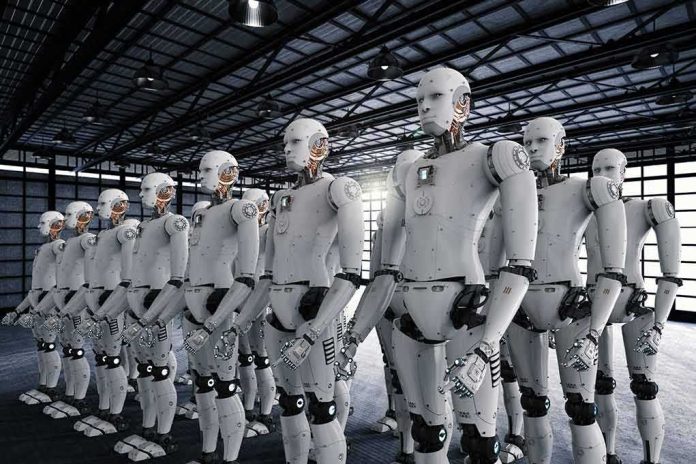
- “Advanced robotic devices” are defined narrowly: mobile, sensor-rich, networked robots above a weight and connectivity threshold – a category that can include humanoids, quadrupeds, and some high-end consumer robots, but not every gadget with wheels.
- Existing authorized robots and inverters remain legal; the ban operates prospectively and allows case‑by‑case “Conditional Approval” where defense or homeland security agencies find no unacceptable risk.
What the FCC Actually Did: The Covered List Expansion
The core of the controversy is a technical regulatory move: on July 28, 2026, the FCC’s Public Safety and Homeland Security Bureau updated its Covered List to include two new categories of equipment—foreign-produced advanced robotic devices and foreign-produced connected power inverters. Under the Secure and Trusted Communications Networks Act, that list is reserved for equipment an appropriate national-security agency has determined poses an “unacceptable risk to the national security of the United States or the security and safety of United States persons.” Once an item is on the Covered List, the FCC is effectively obliged to treat new models as too risky to authorize.
In practice, that means any new foreign-produced robot falling inside the defined “advanced robotic device” class cannot receive the FCC equipment authorization that most electronic products require before they can be imported, advertised, or sold in the U.S. The same mechanism applies to the newly listed foreign-made power inverters that connect solar panels, batteries, and data-center hardware to the grid. The move does not order recalls, confiscate existing devices, or ban use of already authorized models; it closes the gate to new entrants.
How “Advanced Robotic Devices” Are Defined
Public debate has understandably latched onto headlines about “humanoid robots” and “robot dogs,” but the regulatory definition is more structured than a mere list of product names. In the incorporated national-security determination, an advanced robotic device is a foreign-produced mechanical mobile device—such as an autonomous mobile robot, humanoid, or quadruped—that satisfies several cumulative criteria.
To fall within the category, the robot must be capable of locomotion and navigation or obstacle avoidance, operate at some distance from its human supervisor based on commands or sensor data, and have a combined device-plus-docking-station weight above roughly 4.4 pounds. It must include an environmental sensor, have wired or wireless network connectivity of at least 200 kbps in either direction, and run local or remote software—potentially including AI or machine-learning weights—that governs navigation, perception, data collection, or remote control.
This matters for consumer devices: a simple toy car without connectivity or sensors is outside the scope, while a networked, camera-equipped autonomous vacuum or lawn robot that streams data and accepts remote commands might meet the thresholds. The line is drawn by function and connectivity, then narrowed further by one decisive attribute: foreign production.
Roombas, Robot Mowers, and the Consumer Angle
The question most household tech owners ask is simple: “Is my Roomba now illegal?” The available record says no. The FCC’s order and subsequent explanations consistently state that the Covered List designation operates through equipment authorization; new foreign-made robots in the covered class cannot obtain authorization, but models that already have authorization remain legal to import, market, and use. There is no blanket recall or forced shutdown of existing devices.
Where things become less clear is future product generations. Commentary around the public notice and FCC fact sheets has explicitly mentioned consumer-facing robots—robot vacuums, lawnmowers, and delivery bots—as examples of devices that may sit inside the definition if they are foreign-produced and meet the connectivity and sensing criteria. A high-end, camera-rich, Wi‑Fi‑connected robot vacuum from a Chinese manufacturer, for instance, is very likely to be treated as an advanced robotic device under the rule. That does not retroactively ban current models, but it does make the path for their successors far more complicated.
For U.S. consumers, the immediate effect is subtle: continued access to existing devices, but a potential drying up of next-generation foreign designs unless manufacturers secure a Conditional Approval. Over time, however, the constraint can reshape what kinds of robots are available in the American mass market, nudging households and businesses toward domestic or formally approved foreign options.
The National-Security Theory: Supply Chains, Sensors, and Remote Control
The FCC did not invent its own national-security theory in a vacuum. Under the Secure Networks Act, it can only update the Covered List after receiving a determination from designated national-security authorities. In this case, a White House-convened interagency group—including defense and intelligence agencies—concluded that foreign-produced advanced robots and connected inverters pose unacceptable risk.
The determination identifies two broad risk categories. First is supply-chain risk: the fear that reliance on foreign hardware, especially from strategic competitors, creates both a leverage point and a vulnerability in sectors like manufacturing, logistics, and energy. Second is cybersecurity and surveillance risk: connected robots are mobile sensor platforms. They move through homes, offices, factories, and potentially sensitive facilities; they collect audio, video, positional, and environmental data; they rely on software updates and remote command channels. If those channels can be subverted, the same device that tidies a warehouse aisle can quietly stream imagery to a foreign server or be commandeered to disrupt operations.
Hard, public technical evidence is sparse in the record; the findings reference broad vectors—data exfiltration, remote disruption, and commandeering—but do not walk through model-by-model exploit histories. Some reporting has highlighted specific concerns, such as backdoors discovered in certain Chinese quadruped robots that exposed camera feeds and remote control, but the formal determination leans heavily on the combination of capability, connectivity, and foreign control as sufficient grounds for exclusion.
Origin-Based Risk and the China Focus
The rule is written in formally neutral terms: foreign production, not nationality of the brand or user, is the trigger. A robot manufactured in any foreign country that meets the advanced device definition is covered, and the FCC’s own statements emphasize that the legal category applies globally. Yet both the supporting evidence and external commentary make plain that China is the practical center of gravity.
Chinese firms currently dominate global production of quadruped robots and a substantial share of humanoid platforms, as well as large segments of the inverter market that links solar and battery systems to the grid. Prior U.S. actions against DJI drones, Huawei telecom gear, and Chinese networking equipment provide the policy backdrop: regulators are increasingly averse to allowing high‑bandwidth, sensor-rich devices from Chinese suppliers into critical or ubiquitous roles in the American communications and energy stack.
China’s government has condemned the robot and inverter decision as protectionist, arguing that the U.S. is stretching “national security” to suppress Chinese enterprises and warning that the move harms American competitiveness and consumers. That criticism aligns with a domestic counter-narrative that sees origin-based bans as industrial policy by other means. But the existence of a formal, interagency security determination means the FCC’s legal footing rests on more than rhetoric, even if the underlying technical record is not fully public.
Conditional Approval: A Safety Valve or a Political Gate?
One of the most important—and least understood—features of the new regime is the Conditional Approval process. Devices on the Covered List are presumptively barred from new FCC authorization, but manufacturers can seek an exception if the relevant national-security authority concludes that a particular robot or inverter does not pose an unacceptable risk.
For robots, that review reportedly sits with the Department of War (as referenced in the public notice and subsequent analysis); for inverters, with the Department of Homeland Security. In theory, this allows a foreign-produced robot to prove its benign design and win access to the U.S. market. In practice, the process is opaque: standards for a successful application are not spelled out in detail, and decisions will likely be classified or minimally explained.
Critics argue that this structure makes the category overinclusive while leaving real-world access to the mercy of discretionary national-security judgments, creating room for politicization and inconsistent treatment. Supporters respond that any system that screens strategically sensitive hardware must retain flexibility; bright-line technical criteria alone cannot capture the evolving threat landscape, and case‑by‑case review is precisely how government avoids both blanket bans and unchecked risk.
Preemptive Tech Security: Regulating Before Disaster
This episode fits a broader pattern in U.S. technology governance: regulators are increasingly acting preemptively, based on risk potential rather than a trail of publicized incidents. From 5G infrastructure to commercial drones and telecom backbones, the Secure Networks Act and related policies are designed to make exclusionary decisions early, on the theory that the cost of inaction can be catastrophic once dependency is entrenched.
For households and businesses, that forward‑looking posture can feel abstract or even speculative. No major U.S. cyberattack has publicly been attributed to a networked robot vacuum; no widespread sabotage campaign has yet been traced to foreign-made lawn robots. The argument from security agencies is less about what has happened than about what could, and about how hard it would be to unwind dependence once millions of such devices are scattered across homes, offices, and critical sites.
For an older, more infrastructure-conscious audience, this logic is familiar from earlier energy and communications debates: once a risky vendor is deeply embedded, the price of swapping them out—in dollars, disruption, and diplomatic friction—skyrockets. The FCC’s robot and inverter action is a bet that restricting origin and connectivity now will avoid a far more painful reckoning later.
Implications for Robotics Innovation and Consumer Choice
The long-term consequences reach well beyond a handful of high-profile Chinese robotics brands. Global projections for humanoid and quadruped robots suggest a rapidly scaling market, with hundreds of millions of units potentially deployed over the next two decades in logistics, elder care, manufacturing, and everyday consumer roles. By closing the default path for foreign-produced advanced robots, the U.S. is signaling that future growth in its own market must either run through domestic manufacturing or pass the sieve of national-security review.
For innovators, that raises two strategic questions: where to build, and what to design. A foreign startup with a compelling warehouse robot may now face a choice between investing in U.S. production capacity, restructuring its connectivity architecture, or accepting exclusion from the American market. Domestic firms gain a clearer runway but also shoulder a heavier responsibility: if they fail to match the performance, cost, or capabilities of excluded rivals, American consumers and industries may pay a premium for security.
For ordinary technology users, the day‑to‑day experience will evolve more slowly. Their current robots will keep vacuuming, mowing, and delivering. But over the next product cycle or two, they may notice fewer Chinese-branded models on store shelves, more emphasis on “Made in USA” or allied-country labels, and a growing distinction between devices that are explicitly marketed as secure and those that quietly vanish from the catalog.
FCC's New Robot Ban Covers Roombas, Robot Mowers, and Almost Anything on Wheels
The FCC quietly expanded its Covered List to block new foreign-made robots weighing over 4.https://t.co/Y3yuWtKgvi#UnbiasedHeadlines #News pic.twitter.com/lm3QVY1Ghz
— Unbiased Headlines (@UnbiasedHdlns) August 3, 2026
Where the Real Debate Lies
The evidence supports one clear conclusion: the FCC’s ban on new foreign-made advanced robots is anchored in a formal national-security determination and a structured legal framework, not ad hoc fear. What remains genuinely contested is whether origin-based, category-wide exclusion is the right instrument for managing the risk.
Security agencies and the Commission argue that foreign-produced, networked robots and inverters are potential “Trojan horses” in America’s tech ecosystem, and that systemic exposure to their data channels and control paths is incompatible with resilient critical infrastructure. Skeptics counter that without a transparent technical appendix—detailing specific vulnerabilities, exploit chains, and failed mitigations—the public is being asked to accept a broad ban on trust rather than evidence.
That tension is unlikely to disappear. As robotics, AI, and power electronics become more central to daily life, the line between reasonable precaution and overreach will be drawn and redrawn, often under geopolitical pressure. For now, the FCC’s move marks a decisive turn: in the United States, the default assumption is that if a sophisticated, connected robot rolls off a foreign production line, it will have to clear a national-security hurdle before it ever cleans your floor.
Sources:
reason.com, abcnews.com, yahoo.com, npr.org, washingtonpost.com, techcrunch.com, dw.com, youtube.com, thehill.com, foxnews.com