When allegations of campus sexual assault collide with fragmented records and jurisdictional habits, the justice system doesn’t just risk getting the facts wrong; it risks never truly seeing them. The Cornell case shows how evidence asymmetries between universities and prosecutors, plus evolving survivor accounts and digital traces, can bury chargeable conduct until a second, more complete review forces the system to start over.
At a Glance
- The Tompkins County district attorney formally reopened the 2024 Cornell case and indicated it will go to a grand jury.
- A civil complaint surfaced detailed allegations, including involuntary drugging and group sexual assault, supported by a fraternity group-chat screenshot.
- New York’s Attorney General accepted a special-prosecutor role after a gubernatorial executive order, adding state-level authority.
- Reports indicate Cornell’s internal Title IX file ran over 1,000 pages, while prosecutors initially saw only a fraction, sharpening the case for renewed review.
What has changed: from a closed file to a live criminal review
In late September 2026, Tompkins County District Attorney Matthew Van Houten announced his office was reopening the 2024 case involving allegations against seven members of Cornell’s Chi Phi fraternity and would consider the matter before a grand jury. That decision marked a clean break from the original no-charge outcome and signaled that new material—whether newly alleged facts or previously undisclosed records—had made a fresh criminal assessment both possible and necessary. Shortly after, the New York Attorney General’s office publicly accepted appointment as special prosecutor via an executive order, giving state-level investigators full authority to investigate and, if warranted, prosecute. Cornell, for its part, issued a statement supporting the DA’s decision to provide the complainant’s account to a grand jury, aligning the university’s public posture with the revived criminal process.
The catalyst was not a single revelation but an accumulation. The complainant’s civil filing alleged involuntary drugging and assault by multiple fraternity members and introduced a fraternity group-chat image—reportedly a Snapchat message inviting others “upstairs”—that was not part of the local prosecutor’s original package. The civil complaint’s granular detail stood in contrast to the more constrained record that framed the 2024 declination decision.
How parallel systems fractured the evidentiary picture
Campus sexual-assault matters routinely bifurcate into three tracks: university Title IX processes, criminal investigations, and, at times, civil litigation. Each runs on different standards, timelines, and incentives. According to multiple outlets, Cornell’s internal file reportedly exceeded 1,000 pages, including a lengthy transcript and interviews, while the DA’s office initially received a much thinner subset—described as roughly a six-page statement and some screenshots. That asymmetry is not just bureaucratic trivia; it determines what prosecutors can credibly charge and how defense counsel can contest it. When the state’s top prosecutor is brought in as special prosecutor, the structural bet is that subpoenas and independent re-interviews can collapse that gap and reconstruct a complete record.
The reopened review arrives with a thorny complication: the complainant’s 2024 sworn statement, which the DA cites as describing drug use and sexual activity as “voluntary, conscious, and consensual,” appears to diverge from the later civil allegations of involuntary drugging and group assault. That contradiction is real and legally relevant; it doesn’t end the inquiry, but it frames the evidentiary work now underway. Trauma, intoxication, and social pressure can produce inconsistent early accounts—especially when the first interview is cursory—but a grand jury will need more than generalities to reconcile the record.
The legal fulcrums: consent, intoxication, and corroboration
Three questions tend to decide cases like this. First: capacity and consent. New York’s sex-offense statutes draw sharp lines between voluntary and involuntary intoxication when assessing capacity to consent; where those lines fall matters profoundly. If the complainant was misled or drugged without fully informed consent, incapacitation may be chargeable. If intoxication was voluntary but later consent was withdrawn and ignored, the issue shifts to proof of non-consent at specific moments. Either way, prosecutors must anchor consent analysis to concrete evidence—statements, timelines, messages, and any medical/toxicology results that exist.
Second: corroboration. The headline-grabbing Snapchat screenshot is probative only if authenticated and contextualized—who sent it, when, to whom, and what else the thread shows. A forensics-backed chain of custody and device-level logs can convert a screenshot from rumor into evidence; without that, it remains a lead, not a linchpin. The same logic applies to any Title IX transcripts and interview notes: they can guide questions, but grand-jury testimony under oath establishes perjury-backed accounts that carry more weight at trial.
What the counter-arguments say—and why they no longer close the case
DA Van Houten has publicly defended the 2024 declination as legally correct based on the evidence then at hand, emphasizing that the complainant’s statement did not allege involuntary drugging or gang rape. He also noted his office relied on the campus-police investigation and did not conduct a parallel probe—an approach common in smaller jurisdictions but risky in complex sexual-assault matters. Those explanations are specific and sourced; they explain, but they do not end, the analysis. With a special prosecutor empowered and an evidently larger evidentiary universe now in play, the original rationale is, by definition, incomplete for the purposes of the reopened proceeding.
This is not an invitation to retry the past; it is a recognition that criminal charging is a function of the record, not the headlines. If the grand jury hears materially new testimony, authenticated digital communications, and medical findings that were absent in 2024, the legal question changes. If, on the other hand, the reopened file still lacks corroboration beyond an evolving narrative and a handful of messages, the charging calculus may land where it did before—albeit on firmer procedural ground.
"This is now an active criminal investigation."
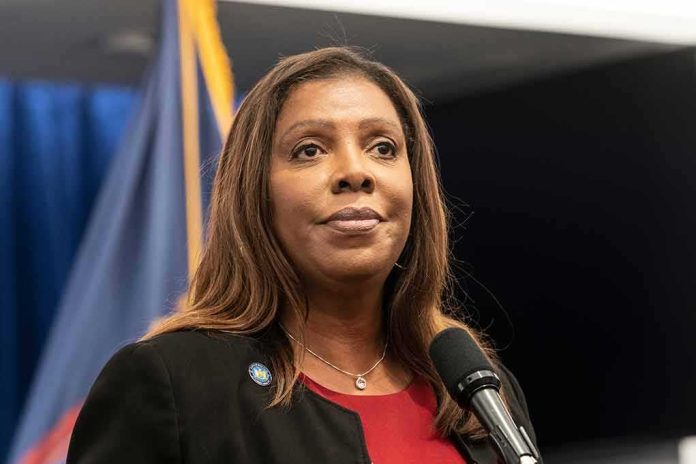
New York Gov. Kathy Hochul (D) enlists state Attorney General Letitia James as independent special prosecutor in Cornell University sexual assault case.
Full video here: https://t.co/i3qPE0afNl pic.twitter.com/JHDiKtKhxn
— CSPAN (@cspan) October 2, 2026
What a serious reinvestigation must do now
The path forward is disciplined and knowable. Investigators should obtain the full Title IX file under subpoena; re-interview every witness, on the record, with trauma-informed techniques; and secure original devices and cloud backups to authenticate the group-chat messages and reconstruct a minute-by-minute timeline. Medical records—rape-kit documentation and any toxicology results—should be reviewed by independent experts. The aim is not to validate a narrative but to test it against durable evidence. Cornell’s public support for grand-jury review aligns with this ethos; the special prosecutor’s mandate makes it enforceable.
Why this case is bigger than Cornell
Universities increasingly conduct exhaustive internal inquiries that do not automatically flow into criminal case files. Prosecutors, especially in resource-constrained offices, may lean on campus-police work that wasn’t built for courtroom rigor. Survivors may give inconsistent early accounts that harden only after they understand what happened and what the law requires to prove it. Those dynamics, present here, recur nationally. The Cornell matter offers a template for correcting course: escalate to a capable, independent authority; stitch together the divided records; and let sworn, testable evidence—not rumor or outrage—decide whether charges are warranted.
Sources:
facebook.com, nbcnews.com, cnn.com, ag.ny.gov, abcnews.com, theguardian.com, usatoday.com, cbsnews.com, thehill.com, statements.cornell.edu