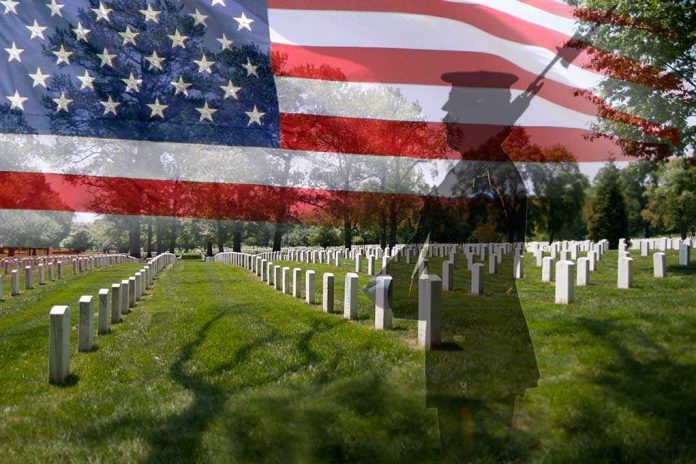
The modern science that restores a name to long-lost war dead is not a miracle; it is a disciplined convergence of records, recovery context, osteology, dental comparison, and DNA that—when it aligns—turns an “Unknown” into someone’s son again.
At a Glance
- Defense Department specialists increasingly identify World War II POW/MIA remains through a multi-line forensic process, not DNA alone.
- In the Cabanatuan POW cemetery cases, historical burial records, postwar exhumations, and recent disinterments provide the evidentiary backbone.
- The DPAA’s laboratory workflow reconciles archival data with bone, teeth, and kinship DNA to exclude alternatives and confirm identity.
- Public summaries often compress the science; nonetheless, the institutional process and case histories show a mature, credible identification regime.
Why these identifications are holding now, eight decades on
The crucial insight about today’s World War II identifications is methodological, not emotional. The Defense POW/MIA Accounting Agency (DPAA) does not rely on a single test. It synthesizes lines of evidence—who was in a given unit and where, who died and when, which graves were used, how remains were recovered, what bones and teeth show biologically, and what kinship DNA indicates about relatedness—to reach a conclusion robust enough to exclude other reasonable candidates. That is the standard modern forensic organizations, from the International Committee of the Red Cross to national casualty programs, teach and use: corroboration across domains, then reconciliation until one identity best fits the total record.
Applied to American POWs who died in the Philippines, this approach has matured into project-level work—Cabanatuan foremost—where the archival scaffolding is unusually strong. Wartime camp rosters, recorded deaths, and known common graves were followed by postwar exhumations and reburials; in recent years, DPAA has reopened those graves to disentangle commingled remains and resubmit them to laboratory scrutiny. In the specific case of Cabanatuan’s Common Grave 701, DPAA reports that American Graves Registration personnel recovered multiple sets after the war; as part of a renewed effort, those remains were disinterred again in 2020 to enable a full modern analysis pipeline.
How the science actually works: mechanism over myth
Start with context. Investigators reconstruct a decedent’s last-known circumstances using unit diaries, casualty lists, camp records, witness statements, and geographic data. That contextual net defines the plausible set of identities. Recovery teams then work the burial site: map the grave, record provenience, inventory remains, and document any artifacts. In the lab, forensic anthropologists establish a biological profile—estimated age, stature, ancestry traits, skeletal pathologies—while odontologists compare dental morphology and restorations to military dental charts, which were ubiquitous in U.S. service records. Where possible, radiographic comparison to antemortem chest films or sinus patterns offers powerful, individualizing matches.
DNA is decisive when it speaks clearly but rarely speaks alone. DPAA and its partners extract mitochondrial DNA (passed through the maternal line), Y-STRs for paternal continuity when applicable, and autosomal STRs that capture bi-parental inheritance. These profiles are compared to reference samples volunteered by families. A high-likelihood kinship result tightens the circle; when it coexists with a fitting biological profile and the right recovery context, the identification crosses from probable to persuasive. The agency’s Nebraska DNA lab and Hawaii forensic complex operate at scale with this integrated model; the principle is not novelty but redundancy—independent lines of evidence converging on the same name.
The Cabanatuan pattern: why these POW cases are resolvable
Cabanatuan’s grim efficiency paradoxically aids modern identifications. Deaths were frequent and recorded; common graves were used and enumerated by number; after liberation, U.S. personnel exhumed and transferred remains under a process later refined into the American Graves Registration Service. Those historical touchpoints mean that when DPAA reopens a common grave today, its scientists are not excavating in narrative darkness. They are testing a bounded hypothesis set anchored in specific burial associations and dates. In the case linked to Common Grave 701, DPAA’s account documents both the original postwar recovery and the 2020 disinterment, placing the lab work in a well-defined chain from camp ledger to current bench.
This is why Cabanatuan outcomes mirror broader WWII recoveries where context is strong. Tarawa, for example, has yielded dozens of named Marines and soldiers once buried as Unknowns after renewed, well-mapped recoveries; Pearl Harbor’s commingled caskets from the USS Oklahoma were resolved through a massive reanalysis that married historical burial grids to bone metrics and kinship DNA. The common feature is not a single technology breakthrough. It is a systematic reconciliation that forces agreement across history, anatomy, and genetics—and stops only when alternatives are excluded to a defensible degree.
What the public sees versus what the lab files hold
Families and readers often encounter a compressed summary: “identified using dental, anthropological, and DNA analysis.” That phrasing covers months or years of iterative bench work—re-cataloging bones from commingled sets, resolving duplicates, chasing additional family donors to improve kinship statistics, and running confirmatory comparisons. The DPAA’s public communications, tailored for clarity and privacy, rarely publish raw accession numbers, kinship likelihood ratios, or full chain-of-custody logs. That can make outside audit difficult, but it is not evidence against the identification; it reflects the long-standing tension between transparency, family privacy, and the technical complexity of forensic case files.
When details do surface in media profiles of other resolved cases, they track the same template: contextual linkage to a grave or crash site; biological profile consistent with the missing service member; and a DNA match to one or more relatives that meets or exceeds the program’s threshold for statistical confidence. The operational reality is that most WWII identifications now land because several methods point the same way, and the cases that do not are held in abeyance rather than forced to conclusion.
The Japanese ship sank off the coast of the Philippines in 1944 while carrying hundreds of American POWs. Recovering their remains has been impossible—until now. https://t.co/4YbmbDXjYJ via @WSJ #POW #WWII #USA 🦅🇺🇸
— Matthew Lance 🇺🇸🦅🐘🐙🔴 (@LlMatthew) July 30, 2026
Where legitimate scrutiny belongs—and where false balance does harm
Serious scrutiny has a place: requesting the formal identification memorandum, verifying that the biological profile and context cohered, and understanding how kinship DNA supported the call. Those documents, when released, typically confirm that an identification rested on multiple pillars rather than on a single seductive number. What is not a competing case is generic doubt—complaints that a lab file was not appended to a press release or that chain-of-custody logs were not published line by line. In the absence of a counter-identification, a contradictory lab result, or archival evidence that reassigns a grave, skepticism untethered to specifics is an aesthetic, not an argument.
The most constructive questions are technical and concrete. How many individuals were originally recovered from the grave, and what was the commingling profile? Which dental features or restorations were present, and did they agree with service charts? What loci underpinned the mitochondrial and autosomal DNA calls, and what were the likelihood ratios relative to the next-best candidate in the plausible set? When such questions are asked and answered, confidence increases—because the underlying system is designed to accumulate corroboration until only one name fits.
What these returns mean—for families, and for the historical record
Each identification restores agency to a family’s narrative: a burial with honors, a headstone bearing a name rather than a cenotaph, a casualty record that closes with finality. But there is a second effect that careful observers should value just as much: a clarified historical ledger. Every time DPAA reconciles an Unknown, the record of a camp, a battle, or a ship grows more precise. The cumulative result is not just consolation but a refined history—how many died here, who they were, and where they finally rest. That is why the program continues to invest in site-specific projects like Cabanatuan and in the laboratory capacity to do this right rather than fast.
How to read the next repatriation story like an expert
Ignore the sentiment for a moment and look for structure. Does the case trace to a specific burial or recovery context? Are there postwar exhumations or recent disinterments that explain how remains reached the lab? Do dental, skeletal, and DNA lines converge? If the answers track the pattern described here, you are seeing a mature identification ecosystem at work. It is not infallible; no forensic system is. It is, however, built to withhold judgment until the convergence is persuasive and to keep working cases that do not yet meet that bar. That is how, eight decades on, names keep coming home.
Sources:
abcnews.go.com, bgindependentmedia.org, idahostatesman.com, propublica.org, youtube.com, foxnews.com, benningtonbanner.com, offutt.af.mil