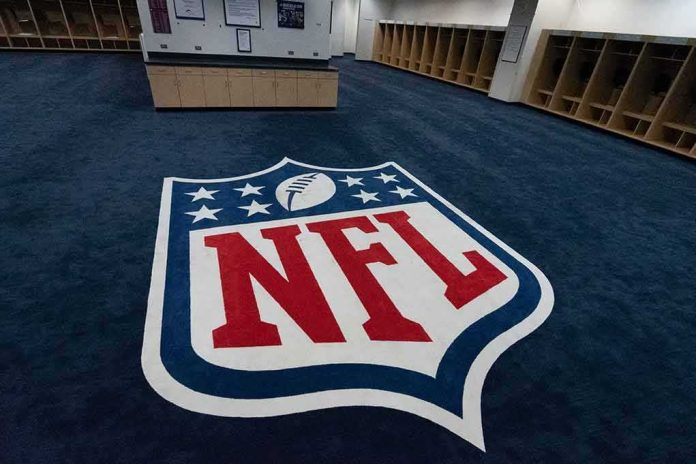
In the NFL, uniform rules are not a sidebar to the sport; they are the league’s operating system for what the audience sees, and they are enforced with a consistency that makes individual protests—no matter how humane or heartfelt—collide with a policy designed to keep game-day visuals under central control.
The Short Version
- The NFL’s game-day equipment policy broadly bans visible personal messages unless pre-approved; the league also refuses approval for political or cause-related content.
- Texans linebacker Azeez Al-Shaair was fined and later told to remove eye black bearing names of Palestinian children during games; the league framed both actions as rule enforcement, not content judgment.
- Al-Shaair says his intent was humanitarian awareness and that a fine is trivial compared with the value of a human life.
- This dispute fits a long arc: the NFL allows league-curated social messaging but bars player-initiated expressions on uniforms and equipment without prior approval.
What the Rule Says and Why Enforcement Was Predictable
The NFL’s uniform and equipment policy is unambiguous: throughout any period on game day when a player is visible—pregame, on the sideline, postgame interviews—players are prohibited from wearing, displaying, or otherwise conveying personal messages unless the league office has granted advance approval. The same provision states approval will not be granted for political activities or causes, or other non-football events and campaigns. This is not a new hair-trigger standard; it is the codified framework the league uses to police every inch of gear the cameras might capture. Against that backdrop, fines for unapproved writing on eye black are not discretionary flair; they are the expected outcome under Article 8.
Al-Shaair wrote the name “Hind Rajab” on his eye black in Week 1 and was fined roughly $11,941 under the league’s uniform rules; he was later told to remove a different name, “Wafaa Akila,” during Week 2 or he would be barred from continuing to play, which he did, complying with the directive. The league confirmed the fine to reporters and tied it expressly to the personal-message prohibition, not to the specific viewpoint expressed. From a compliance lens, this is a straightforward case: the message was visible, not pre-approved, and within a category the rule says will not be cleared.
The Player’s Stated Purpose: Humanitarian, Not Self-Promotional
Al-Shaair has been clear about his aim. He said he used his platform to make viewers aware of Palestinian children killed in Gaza, arguing that many people watching would not have known their names absent the broadcast’s reach. He explicitly framed the effort as humanitarian—“bigger than me,” as he put it—and rejected any endorsement of violence against civilians on any side. He also put the cost in moral rather than monetary terms: “What’s a life worth? Is a life worth $11,000? I think it’s priceless”. Those statements do not rebut the existence of the rule, but they explain why he continued, at least until game operations demanded removal during play. They also highlight the perennial tension between institutions that value message discipline and athletes who view visibility as a moral lever.
Crucially, Al-Shaair’s rationale does not alter the policy’s trigger. The NFL’s restriction is content-agnostic in form and time-bound in scope: if it is a personal message and it is visible during game-day windows, approval is required—and cause-based content is categorically disallowed from approval. That structure is why humanitarian tributes, political slogans, and personal inscriptions are all treated the same under the code, even when public debate fixates on the content’s merits.
A Long-Running Pattern: Central Control Over Game-Day Expression
If this episode feels familiar, it is because the league has for years maintained a broad prohibition on player-initiated messages on visible gear, while selectively creating league-curated campaigns it controls—end-zone stencils, helmet decals, and themed weeks supported and standardized by the office. The difference is not whether a message is “good” or “bad,” but whether it is authorized and centrally managed. That is why enforcement actions recur when players independently inscribe names, slogans, or symbols on towels, cleats, tape, or eye black. In practice, the policy consolidates narrative authority: the NFL decides which messages appear on screen, at what moments, and in what uniformed form factor, ensuring consistency for broadcasters and sponsors.
The practicality is obvious. Uniform discipline protects brand coherence and limits in-game controversies from hijacking a broadcast. The cost is equally clear: spontaneous, player-driven expression—especially on urgent social issues—gets fenced out of the most visible stage. That is not selective enforcement so much as the mechanical outcome of a rule calibrated to sweep broadly and to deny pre-approval for precisely the categories most players seek to highlight when the stakes feel highest.
Where Reasonable People Disagree
There are two honest points of contention. First, is the policy appropriately neutral in effect? Formally, yes—any personal message without approval is barred, and cause-related content will not be approved. Critics argue the practical optics are uneven: league-curated messaging often aligns with broad corporate consensus, while player-originated calls for attention to contested conflicts get blocked, leaving the impression that the rule protects some causes while excluding others. Supporters counter that uniformity—not content sorting—drives the restriction; anything else would force the league into an impossible adjudication of global tragedies. Second, should the on-field window be sacrosanct? Traditionalists say yes; the game is the product. Advocates of athlete speech argue that the platform’s power lies precisely in its visibility, and that off-field forums are not substitutes for the audience moment only a live broadcast creates.
Al-Shaair’s case crystallizes that friction. The league applied the rule as written. The player judged the moral urgency to outweigh the fine until continuing would have ended his participation that day. Both positions are coherent within their own logics; they are simply incompatible at kickoff.
NFL star Azeez Al-Shaair honored two Palestinian children today, wearing the name “Lana” and “Bana” on his eye black during the Houston Texans’ game. Both sisters were murdered by Israel.
This comes just days after the NFL ordered him to remove “Wafaa Akila,” an 8-year-old… pic.twitter.com/Me16YVl5Wt
— WearThePeace (@WearThePeaceCo) September 27, 2026
What This Means Going Forward
Expect more of this, not less. As long as Article 8 bans visible personal messages and withholds approval for political or cause-based content, attempts at unsanctioned tributes on equipment will produce predictable enforcement—warnings, fines, and, if needed, removal from play. Players who wish to speak will keep seeking edges: pregame tunnels, postgame media, social platforms, or league-approved initiatives that translate intent into permitted formats. The league, for its part, will keep channeling expression into standardized campaigns it can script and schedule. That is the equilibrium the policy was built to create. It preserves a consistent broadcast. It also guarantees the next collision when a player decides the world beyond the hashmarks must be seen in the stadium lights.
Sources:
facebook.com, nytimes.com, aljazeera.com, nbcsports.com