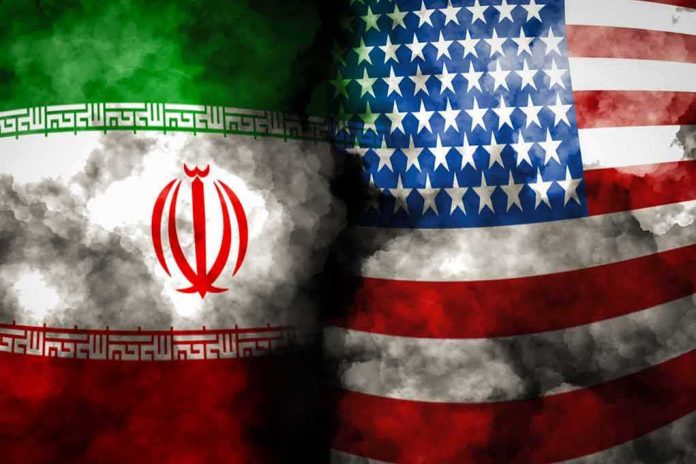
When a combatant commander flies into the White House to brief a president on target sets and campaign timing, the signal is unambiguous: contingency planning has matured to the point where political leadership is weighing the use of force, even as diplomatic channels stay open. That is where the United States now stands on Iran—preparing options, calibrating leverage, and testing escalation ladders without declaring a decision in advance.
At a Glance
- CENTCOM’s commander, Adm. Brad Cooper, delivered an in-person White House briefing to President Trump on Iran military options, joined by Defense Secretary Pete Hegseth and Joint Chiefs Chairman Gen. Dan Caine.
- Reporting points to concrete operational discussions, including the naval blockade, target categories, and post–election timing windows.
- Officials indicated a potential short, intense campaign focusing on infrastructure and nuclear-related sites; no final authorization was reported at the time.
- The moment fits a long U.S.–Iran pattern: coercive signaling alongside diplomacy, with legal obligations under the War Powers framework if hostilities widen.
What Happened: A Rare In-Person Briefing on Iran Options
The Wall Street Journal reported that Adm. Brad Cooper, the U.S. Central Command chief responsible for the Middle East theater, briefed President Trump at the White House on military options for Iran. Defense Secretary Pete Hegseth and Chairman of the Joint Chiefs Gen. Dan Caine participated—an alignment of principals that indicates the conversation was not theoretical musing but operationally grounded planning. Parallel coverage underscored the same core: the discussion centered on options relevant to ongoing friction—at sea and ashore—with administration planners ensuring the president could choose among calibrated responses should he direct action.
Axios added texture: the briefing touched directly on the naval blockade, a live operational lever in any coercive strategy against Tehran, and set the scene for potential resumption of major combat operations while diplomatic probes continued. Multiple outlets described U.S. messages to Gulf partners to brace for a short, sharp campaign that could aim at energy infrastructure and nuclear-linked targets, with a notional window after the November 3 midterm elections—an example of synchronizing policy, politics, and alliance management in a compressed timeline.
How These Meetings Work: From Options to Orders
An Oval Office options brief is the end of a long pipeline. Combatant commands maintain standing operational plans and contingency branches; the Joint Staff vets feasibility, risk, logistics, and escalation dynamics; civilian leadership frames the political objectives and acceptable costs. By the time a CENTCOM commander briefs the president in person, the portfolio typically ranges from precision stand-off strikes to more sustained sets that combine cyber, maritime interdiction, and airpower—each with clear triggers, assessed second-order effects, and exit criteria. The presence of the Joint Chiefs chair and the defense secretary signals that military feasibility and political risk were being weighed together, as they must be when potential targets include air-defense nodes, missile and drone arsenals, energy infrastructure, or nuclear-related facilities.
Importantly, such a meeting demonstrates readiness and intent to deter as much as it prepares to strike. Coercive diplomacy uses visible planning and allied consultations to raise the credibility of a threat. It does not, by itself, constitute a decision to attack; reporting at the time consistently stated that no final order had been given, preserving the administration’s leverage and freedom of action.
Objectives, Targets, and Timing Windows
Public reporting coalesced around several potential objectives. First, to blunt Iranian capabilities that enable attacks on U.S. forces and partners—missiles, UAVs, and maritime strike assets. Second, to impose costs on the regime’s strategic programs and energy lifelines that finance military activity. Third, to reestablish deterrence through a concentrated, time-bound operation that avoids open-ended commitments. The Associated Press summary, reflected in subsequent coverage, described warnings to Gulf states of a possible short, intense campaign, with notional timing after the midterms—an alignment meant to deconflict domestic political deadlines with operational surprise and coalition coordination.
Axios’s reporting on the naval blockade emphasizes the maritime domain as the hinge of any campaign design. Interdiction, convoy protection, and pressure on sanctioned flows are not peripheral tactics; they shape Tehran’s revenue, constrain weapons movement, and create bargaining space. In practice, such a maritime-centered posture can be paired with limited precision strikes to degrade high-value systems while signaling limits to escalation—what planners sometimes call a “left-of-boom” and “laddered” approach to compellence.
Where This Fits in the U.S.–Iran Playbook
For four decades, Washington and Tehran have danced on the edge of escalation without sliding into a sustained interstate war. The pattern is durable: the United States develops and signals options, uses proportional force when needed, and keeps a diplomatic offramp visible. Analysts who have studied these cycles argue that careful signaling can deter and compel without spiraling—though miscalculation has repeatedly produced casualties and crises. The June 2025 conflict, for example, upended some maximalist predictions about automatic regional conflagration; it showed that tightly scoped U.S. operations can achieve discrete aims without triggering total war, even as risks remain.
Inside the U.S. system, the War Powers Resolution provides the legal scaffolding for consultation and notification when forces are introduced into hostilities or situations of imminent hostilities. Presidents of both parties have asserted Article II authority for limited strikes in the national interest; sustained or expanding hostilities, however, make consultation and congressional engagement unavoidable in practice and law. Any renewed significant combat against Iran would implicate those processes, especially if maritime interdiction and air operations were prolonged beyond a short window.
‼️ Reports say top US military officials have been summoned to the White House for urgent talks on possible renewed military operations against Iran. With tensions rising and Trump weighing his options, will another round of strikes begin? 🇺🇸🇮🇷 pic.twitter.com/XkiTgl81Tl
— MARS, Military Auxiliary Radio Service (@WhiteHatsjpy) November 6, 2026
Signals, Leverage, and the Diplomacy–Force Balance
The simultaneous pursuit of negotiations and military readiness is not contradiction; it is strategy. Iran responds to incentives and constraints across domains—economic, diplomatic, and military. A visible, credible option set presented to a president increases the weight behind diplomatic messages and allied coordination. The briefing’s participants—CENTCOM’s commander, the defense secretary, and the Joint Chiefs chair—are precisely the officials whose alignment converts theory into leverage. That is why this meeting mattered: it told multiple audiences, from Gulf capitals to Tehran itself, that Washington’s planning cycle had reached a point where choices were real, not rhetorical.
One Constraint That Always Matters: Escalation Management
The operational art here is not simply picking aimpoints; it is sequencing actions to control adversary response. Maritime pressure paired with pinpoint strikes can degrade capabilities while keeping the diplomatic track viable; striking deeply at infrastructure or nuclear-linked facilities signals a different threshold and invites more forceful retaliation. U.S. planners thus model adversary reactions, coalition resilience, and logistics—especially munitions and air-defense inventories—against campaign aims. Lessons distilled from past confrontations underscore that measured, time-bound operations with clear political ends fare better than open-ended coercion for its own sake.
The Bottom Line
The White House briefing confirms that the administration brought mature Iran options to the president, blending maritime pressure with potential precision strikes and wrapping both in a tight timeline should he order execution. That does not predetermine conflict; it raises the credibility of deterrence while preserving freedom to negotiate. In the U.S.–Iran relationship, that duality is the point. When options are real, messages land—and choices, including the choice not to fire, become more effective.
Sources:
facebook.com, independent.co.uk, timesofisrael.com, yahoo.com, washingtoninstitute.org, congress.gov, greenwichtime.com, newarab.com