Big immigration numbers often collapse under imprecise language. The core of the current dispute is not whether the border was quieter—it was—but whether “zero illegal aliens” means zero releases by the government after encounters or literally zero unlawful entries. The evidence supports the former, not the latter.
The Short Version
- CBP and DHS reported 17 consecutive months of zero Border Patrol releases—an operational outcome, not a count of crossings.
- During the same period, Border Patrol continued to apprehend thousands of people each month attempting to cross illegally, totaling roughly 90,000 in a recent 12‑month span.
- CBP encounter metrics track detected events and government decisions; they do not enumerate undetected “gotaways,” which officials acknowledge occur.
- The claim of “zero illegal aliens admitted” conflates a narrow metric (releases) with a broad state of the world (unlawful entry), which the government’s own data contradicts.
What the government actually measured: zero releases, not zero crossings
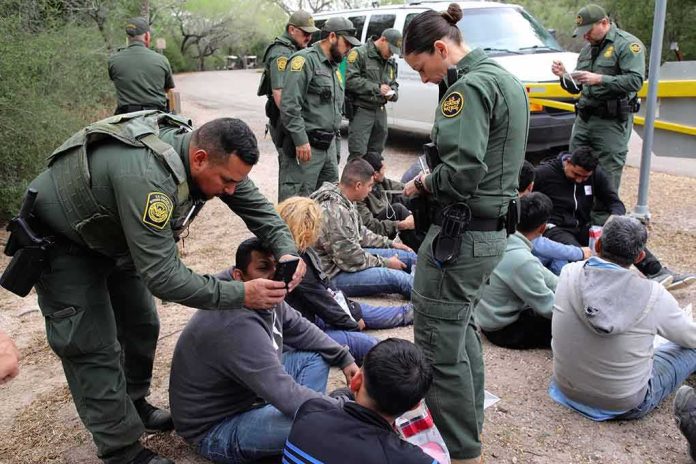
Homeland security agencies emphasized a specific operational metric: for 17 straight months, Border Patrol made no releases at the southern border. In plain terms, when agents encountered people crossing illegally, they did not temporarily release them into the interior pending proceedings; they either detained, removed, or otherwise processed them without release. DHS and CBP framed this as a historic end to “catch and release,” highlighting September as the 17th consecutive month of zero releases and noting fewer than 99,000 southwest-border apprehensions in the fiscal year—far below prior peaks. That is a real policy result. But it is not the same as zero unlawful entries, zero apprehensions, or zero successful evasions.
Why the distinction matters: “release” is a government disposition after an encounter. It tells you how the state handled people it caught; it says nothing about whether attempts to cross continued, how many people agents apprehended, or how many evaded detection entirely. When a political line substitutes “zero releases” with “zero illegal aliens,” it moves from a narrow operational claim to a sweeping assertion the underlying data does not sustain.
How CBP tracks border activity: encounters, apprehensions, inadmissibles, and expulsions
Customs and Border Protection’s public statistics revolve around “encounters,” a family of detected events comprising U.S. Border Patrol Title 8 apprehensions between ports of entry, Office of Field Operations Title 8 inadmissibles at ports, and—for the pandemic era—Title 42 expulsions. These series are built from live operational systems and are designed to make policy tradeoffs visible. They were never intended to be a census of total unlawful entries; by definition, they exclude people who were never detected and thus never “encountered” by the government.
Within that construct, “apprehensions” are the proper lens on attempted illegal crossings between ports. Under President Trump, those apprehensions dropped sharply from prior highs, but they did not fall to zero. FactCheck.org’s synthesis of CBP data tallied 90,875 apprehensions across a recent 12‑month period and monthly figures in the 5,000–10,000 range during the 17‑month zero‑release window; July clocked in at 9,295, one of the higher months of his second term. These are not edge cases—they are the standard operational counts that define the border workload.
Where the counter-evidence is strongest: continuing apprehensions and “gotaways”
The most credible counter to the “zero illegal aliens” phrasing is the government’s own operational record. Apprehensions persisted month after month. That alone invalidates the literal interpretation of zero unlawful entry. Added to that is the category practitioners call “gotaways”—individuals detected by sensors or surveillance who evade arrest and are not reflected in the published encounter tallies. CBP has acknowledged that gotaways occur; outside compilations have cited thousands during the period in question, including figures attributed to the Border Patrol Chief and additional counts obtained via FOIA by the Cato Institute. While CBP does not routinely publish a comprehensive gotaway series, the agency’s acknowledgement that they exist—and the independent figures offered by named officials—further undercuts any absolute claim about “zero illegal aliens.”
None of this contradicts the administration’s narrow assertion about zero releases, which appears in CBP and DHS communications exactly as such. It does, however, draw a bright line between what the agency measured and what a sweeping political line suggests.
How we got here: a recurring measurement-and-meaning problem in border rhetoric
Border politics habitually conflate flows (how many try to come), encounters (how many the government detects and processes), and dispositions (how the government resolves those cases). The catch-and-release debate sits in that third bucket; it is primarily about deterrence and incentives created by release versus detention or rapid removal. When an administration ends releases, it changes an output of the system. But flows respond to a larger web of forces—labor markets, violence, weather, smuggling networks, policy signals in multiple countries—and rarely drop to zero for long. That is why CBP’s encounter dashboards exist: to track the moving parts separately, without pretending they all move in lockstep.
In this light, the record reads coherently: the government tightened post‑encounter outcomes to zero releases for an extended period and saw apprehensions fall to modern lows. Yet agents still encountered and arrested thousands each month, and some people evaded capture. Saying “zero illegal aliens admitted” blurs those categories into a claim the evidence cannot carry.
President Trump makes a sweeping claim about his administration’s border crackdown, saying the U.S. has gone 17 months without a single person illegally entering across the southern border.
pic.twitter.com/UGk6LHdslq— PASCAL NAJADI JFK (@Pascalnajadchat) November 3, 2026
What it means going forward: precision, accountability, and policy design
The practical lesson is simple: demand precision. When leaders cite zeroes, ask “zero what?” Zero releases signals a disposition strategy—detention, expedited removal, safe-third outcomes—that can reduce incentives and strain on interior systems. It does not certify a hermetic border. For accountability, use the right instrument for the question at hand. To understand attempts to cross unlawfully, look to Border Patrol apprehensions. To understand strain at the ports, consult OFO inadmissibles. To understand the fate of those encountered, examine release, removal, and detention outcomes. And to gauge residual risk, ask what is known—however imperfectly—about gotaways.