
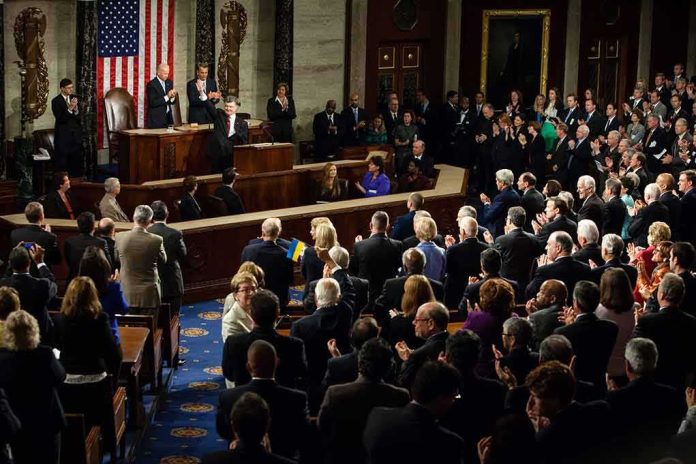
The Blanche confirmation fight was never really about one overnight vote; it was about whether a Justice Department led by Trump’s former lawyer could still be trusted to act like an institution rather than a personal instrument. The Senate answered that question procedurally, not philosophically: by confirming him after a narrow, highly managed contest over the anti-weaponization fund and the scope of the IRS settlement.
Intro Header
- Blanche was confirmed as attorney general by a 50-49 Senate vote after a short, intensely partisan process.
- The decisive issue was a disputed settlement package tied to Trump’s IRS litigation, not a broad debate about legal qualifications.
- Republican holdouts wanted written assurances that the anti-weaponization fund was dead and that tax-audit protections were narrowed.
- Blanche had already been confirmed once by the Senate, as deputy attorney general, which gave supporters a ready-made credential.
What the Senate actually decided
In substance, the Senate did not certify Blanche as a consensus figure; it elevated him because enough Republicans decided the objections had been boxed in by written commitments. The Judiciary Committee moved first on a 12-10 party-line vote after Blanche agreed in writing that there was “no Fund,” then the full Senate confirmed him 50-49, with Bill Cassidy providing the decisive Republican support and Susan Collins and Lisa Murkowski voting no.
That sequence matters because it shows how modern confirmation battles are often resolved. The public argument sounds like a referendum on character or competence, but the real mechanism is narrower: enough senators want enforceable language, enough party loyalty holds, and the nominee survives long enough for the institution to declare the matter closed. In Blanche’s case, the written assurances were the hinge. Once Cornyn and Tillis accepted them, the path to confirmation opened.
Why the anti-weaponization fund became the central issue
The core controversy was not abstract distrust; it was a specific settlement structure that critics believed could bankroll political retribution and shield Trump from ordinary tax scrutiny. Reporting shows Blanche first verbally promised the fund was not moving ahead, then issued a written order stating the fund “is rescinded and shall have no force or effect,” while the Justice Department separately narrowed the tax-immunity language so it applied retroactively only to Trump, two of his sons, and the Trump Organization.
That is the practical reason the fight landed so hard. A Senate confirmation battle usually turns on ideology, temperament, or résumé; here it turned on the architecture of a settlement. Once a nominee is entangled in the mechanics of a presidential lawsuit against the IRS, the burden shifts from abstract reassurance to textual precision. Senators were not just asking whether Blanche meant well. They were asking whether the legal instrument itself had been boxed in tightly enough to prevent later abuse.
What Blanche’s record contributed to the distrust
Blanche did not walk into this confirmation as a neutral blank slate. Trump had already tapped him as his former personal lawyer and then elevated him within the Justice Department, and the Senate had previously confirmed him as deputy attorney general by a 52-46 vote. Those facts matter because they explain why opponents treated the nomination as a loyalty test disguised as a personnel decision. In ordinary circumstances, a nominee’s prior Senate confirmation would be a stabilizing credential; in this case, it also underscored how closely Blanche’s ascent tracked Trump’s legal and political orbit.
That closeness does not prove misconduct, but it does shape how every later decision is read. The attorney general sits at the apex of federal law enforcement; the office demands not only formal legal competence but credible independence. When the nominee is a former defense lawyer for the sitting president, the appearance problem is obvious, and the burden on the nominee is correspondingly heavier. Blanche’s supporters argued that his experience and prior confirmation showed he could do the job. His critics answered that the job requires more than the ability to execute a president’s preferences with legal polish.
Why this confirmation was narrower than it looked
The public often hears a 50-49 vote and imagines a bitterly divided Senate reaching a major institutional judgment. That is only partly true. A narrow vote can indicate hard scrutiny, but it can also reflect a process in which the decisive facts have been compressed into a few negotiated guarantees rather than tested through a fuller record. Here, the late-stage written assurances did most of the work; the final vote then ratified the compromise already brokered behind the scenes.
That is why the opposition remained politically potent even after confirmation. The critics’ best argument was not that Blanche lacked legal experience, or that the Senate had no right to confirm him, but that the episode revealed how little resistance there is when a president places a deeply allied lawyer atop the Justice Department. The counterargument is equally plain: the Senate did force clarifications, extracted written limits, and used its advice-and-consent power to narrow the disputed settlement language. Both things are true. The difference is that one side sees institutional control, while the other sees a system that allowed the nominee through after only partial constraint.
Senate Republicans narrowly confirm Todd Blanche as attorney general 👀 https://t.co/1YbjgUkq7K
— Diana Nunez (@DianaNu84941814) August 8, 2026
What the confirmation means for the Justice Department
Blanche’s confirmation leaves the Justice Department with a leader whose legitimacy will be judged less by the ceremony of appointment than by the first hard choices he makes. The obvious test cases are enforcement priorities, recusals, the handling of politically charged investigations, and whether the department maintains enough internal distance from Trump’s personal and electoral interests to preserve public confidence. The Senate settled the nomination; it did not settle the question of independence.
That unresolved tension is the real legacy of the vote. Supporters will point to the prior Senate confirmation, the written rescission of the fund, and the narrowing of the tax settlement as evidence that the process worked. Opponents will point to the same record and say that a president’s former lawyer should never have required this much negotiation to prove he was not carrying private obligations into public office. Both readings can survive the same facts. The stronger institutional lesson is simpler: in an era of personalized executive power, the Senate can still slow a nominee down, but it often cannot fully separate legal authority from presidential loyalty when the two have already been fused upstream.
Sources:
facebook.com, nytimes.com, congress.gov, abcnews.com, en.wikipedia.org, cnn.com, cnbc.com, theguardian.com, politico.com, npr.org