As Houthi rebels move to choke off Saudi oil shipping in the Red Sea, Americans could soon pay more at the pump because two of the world’s main energy arteries are now under simultaneous threat.
Story Snapshot
- Yemen’s Houthi movement has announced a maritime embargo on Saudi-linked ships through the Bab el-Mandeb Strait, a key Red Sea chokepoint.
- Early data show oil tankers turning away, freight and insurance costs jumping, and crude prices adding a risk premium tied to the crisis.
- Experts warn that if both the Strait of Hormuz and the Red Sea route stay disrupted, global oil supply and consumer fuel costs could spike sharply.
- The episode highlights how fragile energy trade has become and how slow, divided governments are leaving ordinary drivers exposed to distant conflicts.
Houthi Embargo Turns the Red Sea into a New Energy Pressure Point
Yemen’s Iran-backed Houthi rebels have declared a “maritime embargo” on Saudi Arabia, threatening to block Saudi-linked ships moving through the Bab el-Mandeb Strait at the southern gate of the Red Sea. This narrow passage connects the Red Sea to the Arabian Sea and is one of the world’s major routes for Middle Eastern oil and fuel shipments headed toward Europe and the Americas. Houthi leaders say the move is retaliation for a Saudi blockade and recent attacks, framing it as an “eye for an eye” response. Whatever their motives, their declaration instantly turned a regional feud into a global energy risk.
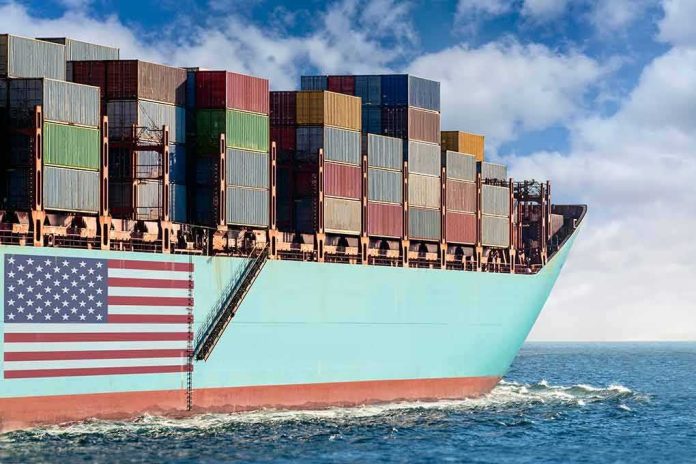
Ship-tracking and news outlets report that several oil tankers have already changed course near Yemen, treating the Houthi threat as serious enough to avoid the area. Major energy traders and tanker operators have suspended or reduced shipments through the Red Sea in past Houthi flare-ups, and early signs suggest they are again preparing longer detours around the Cape of Good Hope at Africa’s southern tip. These routes add up to a month of extra sailing time, increase fuel use, and raise insurance premiums, all of which show up as higher transport costs built into the final price of gasoline and diesel.
Two Chokepoints Under Strain: Red Sea Risks Stack on Hormuz Closure
Analysts stress that the Red Sea crisis comes on top of an already severe shock: Iran’s closure of the Strait of Hormuz, the main passage for Gulf oil and liquefied natural gas shipments. With Hormuz blocked, the Red Sea route via the Bab el-Mandeb Strait and Suez Canal has become a crucial alternative path for Middle Eastern exports. Experts warn that if the Houthis manage to significantly disrupt traffic there, the world could lose access to routes that together carry roughly a third of global seaborne oil and gas. In that worst case, refiners would scramble for supply, and energy prices could soar far beyond recent spikes.
Past studies of Houthi attacks show that even partial disruptions in the Red Sea quickly raise shipping costs and create short-term inflation pressure, especially in Europe and Asia. Tanker freight rates on routes that cross Bab el-Mandeb jumped by around 20 percent during the 2023 attacks, mainly because of extra insurance charges tied to security risks. Some “clean” tankers that carry refined fuels saw their transport costs nearly double, pushing up prices for diesel and other products. Those episodes did not fully shut the route, yet they still produced noticeable price bumps, suggesting that a broader embargo now could have a larger impact.
Oil Prices, Risk Premiums, and What Drivers Might Feel
Oil markets often move not just on physical shortages, but on fear of what could happen next. Energy analysts say the Houthi threat is already building a “risk premium” into oil prices, adding a few dollars per barrel as traders brace for possible supply shocks. Earlier Red Sea tensions linked to Houthi attacks pushed benchmark crude up by about 2 to 4 percent in short bursts, even when overall supply stayed intact. Current reporting shows Brent crude climbing above $90 per barrel, a few percent higher on the week as traders price in the chance of a wider blockade.
For everyday drivers, these changes usually show up at the pump with a lag. When shipping routes get longer and freight and insurance costs jump, refiners and fuel distributors face higher expenses that they often pass along to gas stations over weeks or months. Analysts note that past Red Sea disruptions have had a “fairly limited but not insignificant” effect on oil prices, yet they also warn that a full or near-full closure of Bab el-Mandeb would be different and could force sustained higher prices. In that scenario, already stretched household budgets in the United States and abroad would feel another squeeze, even as wages and savings struggle to keep up.
Weak Global Governance Fuels Shared Frustration at Home
This crisis is also a story about power and responsibility. A small, non-state armed group now has the leverage to disrupt key energy routes because larger governments have failed for years to secure freedom of navigation in these waters. Western navies struggled to fully protect Red Sea shipping during earlier Houthi campaigns, and experts warn that defending both the Red Sea and Hormuz at once would be even harder. For many Americans, on the right and the left, this looks like another example of a global system run by elites that cannot or will not shield ordinary people from distant conflicts.
The cost to surrender is big.
Potential Downsides of “Stopping the War” / Major U.S. Pullback from Iran Conflict1. Strategic vacuum → Iran expands influence
Historically, when a major power withdraws (e.g., U.S. leaving Iraq in 2011), regional actors rapidly fill the vacuum.…— David (@dstmartin7) July 23, 2026
Conservatives who distrust globalism see yet another proof that dependence on foreign oil and fragile sea lanes leaves the United States at the mercy of hostile actors. Liberals who worry about inequality see a familiar pattern in which higher energy and shipping costs hit workers and small businesses first while large traders and insurers often profit from volatility. Both sides share a growing belief that the federal government talks tough but rarely delivers lasting energy security, whether by protecting lanes abroad or by building resilient supply at home.
Sources:
19fortyfive.com, bbc.com, aljazeera.com, cfr.org, cepr.org, gulfnews.com, atlanticcouncil.org, cnbc.com, pbs.org, youtube.com, semafor.com, apnews.com, reuters.com