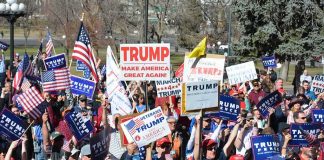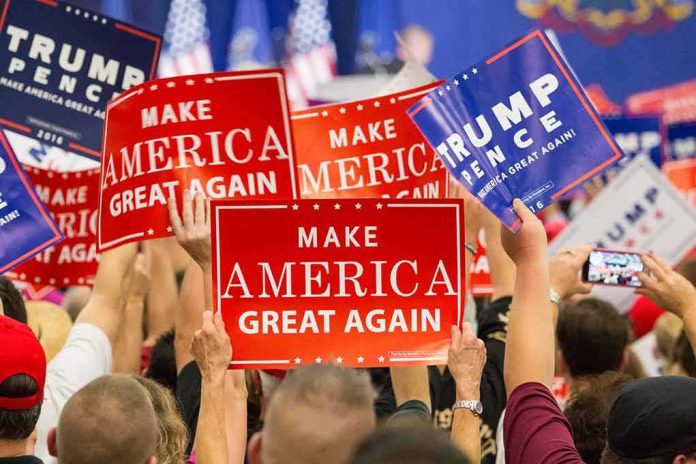
When a governing party rips up a century of habit to stage a full-scale national convention in the middle of a congressional cycle, it is not a gimmick; it is a bet against political gravity, and the Republican midterm convention planned for Dallas is exactly that kind of bet.
Key Points
- The Republican National Committee has formally changed its rules and finances to support the first midterm national convention in modern party history, scheduled for September 9–10 in Dallas.
- President Trump is driving the idea personally, framing the Dallas gathering as a high-energy celebration of his post‑2024 record and a tool to “defy history” by averting typical midterm losses.
- Historical evidence suggests such conventions are symbolically powerful but rarely decisive; midterm outcomes usually track economic performance, presidential approval, and war and peace, not event choreography.
- The Dallas convention will unfold amid polarized views of Trump, internal GOP tensions, and scrutiny of his unprecedented personal financial dealings, all of which may shape how the event is received.
What Makes the Dallas Midterm Convention Historically Unusual
Modern American parties reserve national conventions for presidential election years, when delegates formally nominate a ticket and unify the party in front of a mass television and digital audience. For Republicans, that quadrennial rhythm has held from their first convention in 1856 through the 21st century. The Dallas gathering breaks that pattern. In January 2026, the Republican National Committee unanimously amended its rules to allow a convention in a midterm year, explicitly to create a national rally point before voters decide who controls Congress.
Trump had floated the concept publicly as early as 2025, describing a pre‑midterm Republican National Convention as something “that has not been done before” and arguing that the goal would be to galvanize support in the face of the longstanding tendency for presidents to lose seats in their first midterms. By early 2026, RNC chair Joe Gruters was saying openly that a midterm convention was designed to help Republicans “defy history” and protect their narrow House and Senate margins. That institutional buy‑in, combined with Trump’s announcement on Truth Social that Republicans will gather in Dallas on September 9–10, marks this as a coordinated party strategy rather than a one‑off campaign rally.
Why Dallas, and Why September
Location and timing are not incidental. Dallas sits at the crossroads of Republican electoral geography: a major media market in a large, still‑red but increasingly competitive state, with convenient air links for donors and activists nationwide. Reports through spring 2026 indicated the RNC was focusing on Dallas as its preferred venue, with Las Vegas as an early alternative, and Texas Attorney General and Senate nominee Ken Paxton later told a tele‑town hall audience that the party had chosen Dallas for a September convention.
The convention dates—September 9–10—land squarely in the window when early voting begins in several states and campaign advertising reaches saturation. Trump himself has framed the event as an opportunity “to show the great things we have done since the Presidential Election of 2024” and to make the case for maintaining Republican control of Congress. Analysts quoted in national coverage have emphasized that a two‑day, made‑for‑TV spectacle just before ballots go out provides an unusually concentrated platform to argue that voters should stay the course.
Strategic Logic: Trying to “Defy History”
The Dallas convention is best understood as a structural response to a familiar problem. Since the 1930s, the president’s party has almost always lost House seats in the first midterm following a White House victory; exceptions have required extraordinary conditions, like wartime surges in support or unusually strong economic booms. Brookings Institution analysis of the 2026 landscape underscores how exposed Republicans are: after the 2024 election, they held just 220 House seats—two above the bare majority—making even modest midterm losses potentially fatal to their control of the chamber.
Against that backdrop, the RNC and Trump are attempting to use the president himself as a turnout engine. Gruters has described Trump as the GOP’s “secret weapon” for the midterms, and the rule change enabling a convention was adopted unanimously, suggesting a shared belief among party elites that their best chance is to nationalize the campaign around Trump’s brand and record. A midterm convention fits that logic. It allows Republicans to craft a narrative of what they call “the great American comeback,” showcase legislative and policy achievements, and immerse volunteers and donors in a festival‑style environment intended to convert enthusiasm into field work and contributions.
Mechanics: Money, Program, and Mobilization
Pulling off a national convention is expensive and complex. On that front, Republicans appear prepared. Public reporting on RNC finances indicates the committee entered June 2026 with more than $125 million in available funds, a sizable war chest relative to typical midterm cycles and one that stands in contrast to a more indebted Democratic National Committee. That level of funding makes it plausible to rent a major arena, secure hotels and transportation, produce a national broadcast, and still send substantial support to key House and Senate races.
Substantively, party officials have portrayed the event as a hybrid of traditional convention and campaign rally—part policy showcase, part entertainment, and part organizing boot camp. Trump’s own promotional language promises “lots [of] great entertainment” and casts the gathering as “a rally like none other,” signaling that it will lean heavily into spectacle. In theory, such a format can capture television ratings, dominate social media feeds, and send thousands of energized activists back to their states to knock doors and make calls. In practice, the effectiveness of that model depends on careful integration with state and local campaign operations and on whether the message resonates beyond the core base.
Historical Precedents and Their Limits
While the Dallas convention is unprecedented for Republicans in the modern era, it is not wholly without precedent in American politics. Democrats experimented with off‑cycle national conferences and “mini‑conventions” in the 1970s and 1980s, hoping to reinvigorate their brand and adapt to a changing media environment. Those efforts produced some memorable speeches but did not fundamentally alter midterm dynamics; outcomes still tracked inflation, unemployment, presidential approval, and perceptions of competence in foreign affairs.
That history is one reason many political scientists remain skeptical that a single event—no matter how “historic”—can reverse entrenched midterm trends. Brookings analysts reviewing the 2026 environment point out that the usual conditions associated with midterm gains for the president’s party are absent: instead of post‑crisis unity or a roaring economy, the country is digesting the costs and controversy of the Iran war and persistent concerns about living costs. Against that backdrop, a midterm convention may matter less as a decisive turning point than as one more input into a broader strategic environment.
Constraints: Trump’s Polarization and Structural GOP Challenges
The core facts about the Dallas convention—the rule change, the date and location, Trump’s own announcement—are uncontested. What is contested is whether this strategy can work. Here, the evidence is mixed. One constraint is Trump’s standing with the broader electorate. Public reporting notes that his approval rating has declined since the start of his second term and that his party has underperformed in cycles where he is not personally on the ballot, suggesting his mobilizing power may be strongest with existing loyalists rather than swing voters.
Critics, including Senator Bernie Sanders, offer a substantive indictment of Trump’s record that indirectly challenges the premise of a celebratory midterm convention. In widely viewed Texas speeches, Sanders accuses Trump of structuring tax policy to deliver a trillion dollars in breaks to the top 1 percent, cutting health care and education, and presiding over extreme wealth concentration. He describes Trump as a “pathological liar” and “corrupt kleptocrat,” language intended to frame any self‑congratulatory GOP gathering as out of touch with economic realities faced by most Americans. These speeches do not dispute that a convention is happening; they contest whether the record being celebrated merits acclaim.
Ethics, Money, and Message Discipline
Another layer of complexity involves Trump’s personal finances. A 2025 financial disclosure showed more than $1.2 billion in income from cryptocurrency and meme‑coin ventures, including hundreds of millions from a firm he and his sons helped found. NBC reporting tied those earnings to an administration that also sought to loosen crypto regulation, raising conflict‑of‑interest questions the White House rejected as unfounded. Whatever the legal merits, the optics matter: a Dallas convention framed as a showcase of “great things we have done” will inevitably be filtered through public awareness of the president’s private enrichment, particularly among voters already skeptical of his ethics.
Inside the party, the convention also intersects with factional tensions. In Texas, for example, Republican leaders are navigating a contentious Senate race featuring Ken Paxton, a polarizing figure whom Senator John Cornyn has declined to endorse enthusiastically. CBS Texas reporting highlights concerns among GOP strategists that Trump’s deep involvement in Paxton’s campaign—amplified by the Dallas convention—could both energize loyalists and further alienate moderates. That tension illustrates a broader risk: a midterm convention may highlight internal divisions as much as unity if candidate selection fights or ethics controversies intrude on the scripted message.
Information Ecosystems and the Battle for Attention
The Dallas convention will not be experienced in a vacuum; it will unfold across fragmented media and algorithmically curated platforms. Supporters already use social networks to trumpet the event as a bold, “America First” move to go on offense ahead of the midterms, circulating Trump’s Truth Social posts and local coverage of the American Airlines Center preparations. At the same time, critics and Democratic operatives will clip and circulate Sanders’ and others’ harsh attacks, framing the convention as authoritarian pageantry or a distraction from everyday economic stress.
There is also an emerging concern on the right about content moderation and the possibility that pro‑Trump or pro‑convention messaging will be throttled by social media algorithms because of Trump’s notoriety and prior policy controversies. While hard evidence of systematic suppression remains contested, the perception itself shapes strategy: it pushes campaigns to rely more heavily on owned media (like Truth Social), direct email, and broadcast placements, and it drives the design of events like Dallas toward high theatricality that can break through purely by being impossible to ignore.
What to Watch as the Convention Approaches
Several concrete signals will reveal whether the Dallas convention is more than a symbolic flourish. First, the speaker roster: if the RNC succeeds in lining up vulnerable incumbents and top‑tier challengers from competitive House and Senate races, giving them prominent speaking slots, it will indicate a serious attempt to integrate the event into the broader campaign map rather than treat it as a Trump‑centric rally. Second, internal and independent polling in the weeks after the convention will show whether there is any measurable lift in GOP enthusiasm or vote intent in battleground districts—especially among less frequent voters, whom midterm conventions are theoretically designed to reach.
Third, donor behavior bears watching. One reason national conventions matter is that they concentrate fundraising. If large Republican donors, including those concerned about Trump’s crypto entanglements, signal through statements and checks that they view the Dallas gathering as strategically valuable, it will reinforce the RNC’s decision to spend precious funds on an “extra” convention rather than on pure field and advertising. Conversely, if major funders stay on the sidelines or grumble about costs, it will underscore internal doubts about the experiment.
The Larger Meaning of a Midterm Convention
Ultimately, the Dallas midterm convention is about more than two days on the calendar. It crystallizes a broader transformation in American party politics: the migration of power from formal party structures to charismatic leaders, the shift from deliberative conventions to made‑for‑media spectacles, and the willingness of parties to rewrite their own rules in pursuit of short‑term electoral advantage. The RNC’s unanimous rule change, Trump’s personal ownership of the idea, and the choice of a politically symbolic venue all point to a party willing to gamble its institutional capital on one man’s capacity to bend midterm history.
Whether that gamble pays off will depend less on stagecraft in Dallas than on the underlying forces that have driven midterms for nearly a century: the state of the economy, perceptions of competence and honesty in the White House, war and peace, and the public’s appetite for continuity versus correction. The convention can frame those realities; it cannot substitute for them. But as an experiment in stretching what a national party convention can be, the Dallas gathering will mark a genuine turning point in how Republicans—and perhaps eventually Democrats—think about the midterm battlefield.
Texas AG Paxton: First-of-its-kind GOP midterm convention to be held in Dallas in Sept. with Trump attending https://t.co/Fe4LhH7l4E via @OANN
— JudyBaldwin (@JudithLBaldwin) July 1, 2026
Sources:
townhall.com, nytimes.com, apnews.com, fox35orlando.com, instagram.com, facebook.com, youtube.com, singjupost.com, en.wikisource.org, circleofprotection.us, bsanders-astro.pages.dev, sanders.senate.gov, rev.com, foxnews.com, abcnews.com, brookings.edu