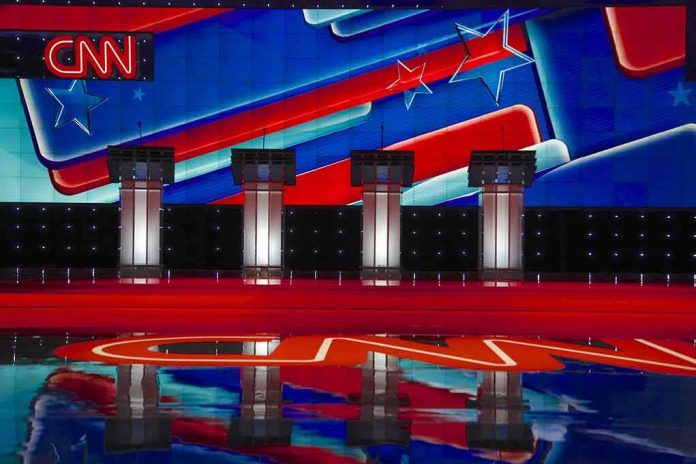
When Don Lemon says Donald Trump “played CNN like puppets,” he is really describing a structural collision between a ratings‑driven media ecosystem and a political actor unusually adept at turning outrage into audience—and the evidence suggests both sides knew they were in a mutually profitable loop, even as they now disagree about who was really in control.
Key Points
- Lemon explicitly agrees that Trump manipulated CNN’s coverage but frames it as a business decision: executives saw Trump as “good for business” even as he dominated the news agenda.
- Independent research shows Trump’s ubiquity across the media was driven by his sheer newsmaking dominance and broader industry incentives, not by CNN alone.
- Lemon’s critique of corporate media—“equal parts scared and equal parts greed”—echoes a wider pattern of ex‑insiders describing self‑censorship and commercial pressure on political coverage.
- Evidence on both sides points to a feedback loop: Trump supplied constant conflict and spectacle; media outlets amplified it for ratings within a polarized, algorithmically amplified information environment.
Trump as “Media Genius” and Lemon’s Core Claim
On Trevor Noah’s podcast What Now?, Don Lemon accepts Noah’s premise that Donald Trump is a “media genius” who played CNN and other outlets “like puppets.” In the exchange, Noah asks whether CNN ever realized Trump was manipulating them; Lemon answers, “Oh, yeah,” and adds that executives “maybe knew somewhere in the beginning, but it was good for business.”[3] That phrase encapsulates his view: Trump’s behavior was not merely covered because it was news; it was recognized inside the building as a ratings engine.
Lemon reinforces this by invoking CBS’s Les Moonves, who famously remarked during the 2016 campaign that Trump was “bad for the country but good for business”—a line that has become shorthand for the industry’s willingness to monetize political chaos.[3] In Lemon’s telling, CNN occupied the same tension: acknowledging Trump’s danger on air while benefiting from the audience and revenue his constant provocations generated.
Importantly, Lemon makes a distinction between executive strategy and direct editorial control. He says former CNN president Jeff Zucker “got hip to it really early” but “never told us what to say,” describing the guidance more as “let him talk and fact check.”[3] That is a subtle but crucial nuance: the network did not manufacture Trump’s words, but it did decide to air them extensively, often live and unfiltered, in ways that maximized their impact.
What the Broader Data Says About Trump’s Media Dominance
Lemon’s insider account sits within a larger empirical record about the Trump era. When scholars at Harvard’s Shorenstein Center analyzed coverage of Trump’s first 100 days in office, they found that 41% of all news stories were about him, an unprecedented level of concentration.[10] Republican voices accounted for roughly 80% of the newsmaker commentary in those stories, indicating that Trump and his allies were setting the agenda while media institutions followed, rather than initiating it themselves.
Ratings data tell a complementary story. Nielsen figures reviewed by the Washington Post show that cable news viewership climbed across CNN, Fox News, and MSNBC during Trump’s rise and presidency.[12] That growth was not CNN‑specific; it was an industry‑wide surge, suggesting that Trump’s ability to command attention created commercial opportunities up and down the dial. From this vantage point, Trump did not merely play one network; he exploited the business logic of contemporary political media.
CNN’s own performance in the years after Trump helps qualify Lemon’s implication that the network’s fortunes were uniquely tied to him. CNN reports that it ranked as the #1 digital news outlet in the United States for 2024 and reached the most cable viewers in January 2025, after Trump had left office.[11] Those figures indicate a durable digital presence and audience beyond wall‑to‑wall Trump coverage, even if the Trump era provided an initial ratings jolt.
Fear, Greed, and Corporate Self‑Censorship
Lemon’s critique goes beyond Trump to the incentives shaping corporate media generally. On Noah’s podcast he describes news organizations as “equal parts scared and equal parts greed,” arguing that self‑censorship is driven by commercial imperatives—especially mergers, acquisitions, and the desire to avoid regulatory or political backlash.[3] His example is a CBS journalist whose vetted segment on immigrant detention was allegedly pulled for political reasons. The story, he says, was solid; it was the institution’s fear of blowback that kept it off the air.
Here, the evidence is thinner. Lemon does not provide the journalist’s name, segment title, or date, which makes the incident hard to verify. That lack of specific identifiers weakens the claim as proof in itself. However, his broader description of chilling effects inside large news organizations aligns with what other ex‑anchors and reporters have said as they moved into independent media: that corporate structures and advertiser pressures narrow the range of language, topics, and frames considered acceptable.
Mehdi Hasan, another Noah guest and a former MSNBC host, offers a parallel account. Hasan has cited internal guidance at mainstream outlets discouraging use of terms like “occupation,” “apartheid,” or “genocide” in coverage of Israel–Palestine, arguing that such constraints reflect institutional discomfort with stark moral language rather than journalistic standards alone.[8][18] Taken together, these testimonies point to a pattern in which major newsrooms temper their coverage to avoid conflict with owners, advertisers, or powerful political actors.
When Media Amplify “Dark” Political Personalities
Structural research helps explain why figures like Trump become central characters in this environment. A cross‑national analysis in Journalism & Mass Communication Quarterly finds that traditional media “systematically amplify certain political actors, particularly those with dark personality traits.”[13] Traits such as narcissism, aggression, and a willingness to flout norms lend themselves to dramatic visuals and conflict‑heavy narratives; they generate exactly the kind of high‑engagement content that both television programming and social media algorithms reward.
On social platforms, that dynamic is intensified. Work auditing Twitter’s (now X’s) recommendation engine shows that algorithmic amplification tends to favor right‑leaning news sources and emotionally charged, toxic, or low‑credibility information.[15][17] Politicians and influencers who specialize in outrage, conspiracy, or theatrical confrontation gain disproportionate visibility because the system is tuned to engagement, not accuracy or civic value.
Trump’s approach to media—provocative tweets, unfiltered rally clips, constant attacks on enemies—slots neatly into this architecture. Social media lets him bypass gatekeepers and set the daily agenda; cable networks then reinvent that stream of content as panels, breaking news banners, and live special reports.[16][18] Lemon’s “media genius” framing is less about intellectual brilliance than about instinctive mastery of this feedback loop.
Did CNN Know It Was Being “Played”? Assessing the Competing Cases
At the heart of Lemon’s claim is intent: not just that CNN covered Trump heavily, but that executives understood they were being used and carried on because it was profitable. On the evidence available, that is plausible but not conclusively proven.
On Lemon’s side, we have his direct testimony as a long‑time anchor: that leadership recognized Trump’s value as a ratings draw, compared him to Moonves’s “good for business” formulation, and encouraged anchors to keep him talking while fact‑checking rather than limiting exposure.[3] We also have the broader pattern of corporate media leaning into high‑conflict political coverage because it is commercially attractive, documented in both academic work and other insider accounts.[13][18]
On the counter‑side, the Shorenstein and Nielsen data show Trump’s dominance was systemic. He was the central subject for 41% of news stories in his first 100 days; cable audiences rose across networks, not just at CNN.[10][12] From this perspective, CNN’s behavior could be seen less as conscious self‑betrayal and more as rational adaptation to an extraordinary news environment created by a president who generated major stories almost daily.
What is missing in both directions are primary internal documents: emails, memos, or meeting transcripts in which CNN executives explicitly talk about keeping Trump front‑and‑center for ratings despite misgivings, or conversely about actively resisting his gravitational pull. Without that forensic record, we are reliant on recollections and high‑level metrics. Lemon’s narrative is coherent with what we know about media incentives; the counter‑evidence reminds us those incentives applied far beyond one network.
Lemon’s Own Experience of Corporate Pressure and Authenticity
Lemon’s reflection on “who owns your voice” is not just metaphorical; he describes literal pressure to shape his speech and identity to fit audience expectations. Early in his CNN career, he says, viewer hate mail targeted his accent, and he felt compelled to modify it to conform more closely to standard American broadcast speech.[3] For a journalist of color, that kind of feedback is not simply aesthetic; it is part of a longer history in which mainstream outlets police what counts as a “neutral” or “trustworthy” voice.
He also recounts friction over work schedules and personal time. After years on air, Lemon wanted breaks akin to those built into shows like Saturday Night Live or John Oliver’s weekly program, both of which operate on seasonal cycles. CNN, with its continuous news model, pushed back, and the impasse contributed to the end of his contract.[3] While some details in his retelling—such as the reference to “The Daily Show” as a CNN program—are imprecise, the underlying tension between industrial churn and personal sustainability is consistent with how cable news typically operates.
Lemon’s later arrest while covering a protest and the seizure of his phone for months underscores another layer of constraint: legal pressure on journalists in contentious political environments.[5] His description of colleagues becoming more fearful about subpoenas, device searches, and surveillance software reflects a growing concern in the profession about how easily reporting can be entangled with law enforcement and national security claims.
One of CNN’s best-known former anchors is making an admission that conservatives have argued for years. Appearing on Trevor Noah’s What Now? podcast, Don Lemon said CNN executives recognized early on that Donald Trump was dominating the news cycle and benefiting from the…
— Common Sense with Chad Law (@chadparkerlaw) June 26, 2026
Media, Manipulation, and the Audience’s Role
Ultimately, the question of whether Trump “played” CNN cannot be settled without acknowledging the audience’s complicity. Media organizations are commercial entities that respond to demand; algorithms are designed to maximize engagement; political actors exploit both. Trump supplied polarizing content; viewers watched; platforms and networks amplified; critics and allies alike shared and commented, driving the cycle further.
Studies of media effects on voting and political behavior have found that exposure to partisan outlets and sensational coverage can significantly shape citizens’ knowledge, attitudes, and choices.[21] Research on social media polarization concludes that while platforms are not the sole cause of division, they are a “key facilitator,” intensifying sectarianism and eroding trust.[18] In that landscape, a politician skilled at generating viral conflict will always have an advantage—especially when major news brands feel compelled to chase the same attention metrics as everyone else.
Lemon’s admission therefore matters less as a confession about one network’s past mistakes than as a window into the structural incentives that will shape coverage of the next disruptive political figure. If executives continue to treat “bad for the country, good for business” as an acceptable trade‑off, the media system will remain vulnerable to manipulation by any actor—left, right, or otherwise—who understands how to weaponize outrage for audience.
Sources:
[3] Web – One of the most interesting parts of this conversation with Don was …
[5] Web – Eugene and I sat down with Don Lemon and we ended up talking …
[8] Web – Don told me he’s 60 and I genuinely didn’t believe him. Some people …
[10] Web – Don told me he’s 60 and I genuinely didn’t believe him. Some people …
[11] Web – News Coverage of Donald Trump’s First 100 Days
[12] YouTube – I’ve studied 1000’s of polls. This is Trump’s biggest midterm red …
[13] Web – CNN RANKED #1 DIGITAL NEWS OUTLET IN THE US FOR 2024
[15] Web – CNN loses nearly 70% of its viewers since Trump left office – Facebook
[16] Web – In Suspense: Donald Trump’s Efforts to Undermine Public Trust in …
[17] Web – CNN’s David Chalian breaks down a new poll showing just 31% of …
[18] Web – Cable news viewership is down since 2020 — but up in the Trump era
[21] Web – Unique Personalities in the Limelight? A Cross-National Analysis of …