
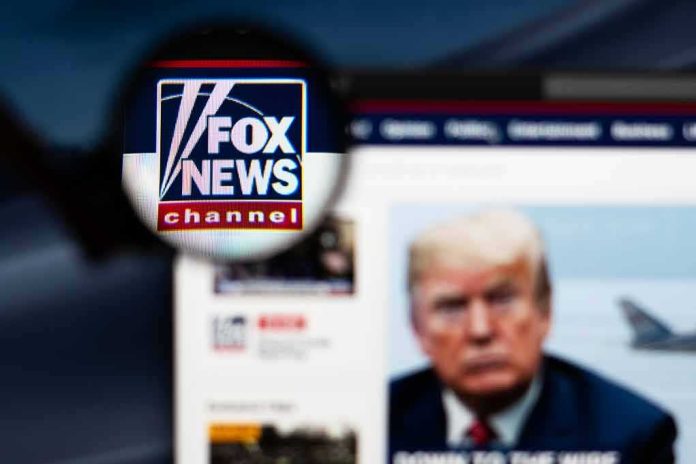
When politicians expect ideological media to behave like campaign infrastructure, conflict is inevitable; what looks like friendly coverage to an editor can feel like sabotage to a candidate whose measure is minutes, placement, and tone.
The Short Version
- President Trump publicly alleged that Fox News gave disproportionate airtime to Democratic opponents and underplayed his rallies, framing the network as “doing little to help” Republicans.
- His complaints cited specific recent Fox interviews with Democratic candidates and asserted that limited rally coverage weakened Republicans’ electoral prospects.
- Fox’s own election output simultaneously showcased Trump’s rallies and endorsements, and carried strategic analysis favorable to Republicans, complicating a simple “blackout” narrative.
- The dispute is about prominence and agenda-setting power, not about whether coverage existed; measuring adequacy requires data Fox and its critics have not publicly supplied.
The core of the dispute: visibility, not existence
Trump’s critique rested on two linked assertions: that Fox booked Democratic opponents at Republicans’ expense and that it slighted his rallies. He named Democratic guests as evidence of a skewed booking slate and argued that Republicans were being “blurred out” of the picture. Outlets that covered the posts tallied recent Fox interviews with Democratic candidates to illustrate his charge, and documented his claim that the network soft-pedaled rally coverage in key states. In one instance, a show had mentioned his Ohio event just before he complained—briefly, and through a narrow clip—underscoring the heart of the conflict: adequacy and placement, not simple presence or absence of coverage.
Trump’s rhetoric also extended the critique to stakes—he suggested Fox’s treatment was “the only reason” a race remained close—without pointing to a specific contest or a causal mechanism beyond exposure. That is not unusual in campaign messaging, but it is analytically shaky. Airtime can matter; proving it requires systematic evidence that neither side presented in public: comparable bookings by party, segment duration and time-of-day, lead-story frequency, and audience delivery across the relevant period.
Fox’s counter-picture: rallies, endorsements, and GOP framing
Set against the allegation is Fox’s own record highlighting Trump’s midterm push: live blogs and segments described him intensifying efforts for Republican candidates, previewed and recapped rallies across states, and framed the election as a referendum on his second-term program. Coverage linked him explicitly to named GOP contenders and carried campaign analysis on tight races and strategic demographics. In other words, the network could readily point to material documenting Trump’s role as party standard-bearer and promoter of down-ballot Republicans.
This does not invalidate Trump’s narrower point about prominence; a network can both feature a candidate and still leave him dissatisfied with the mix of guests, the length of live cut-ins, or the share of critical commentary versus laudatory interviews. It does, however, undercut any strong claim of a categorical blackout. What remains is a dispute over editorial emphasis—how often rallies lead an hour, whether live coverage yields to correspondent stand-ups, and how much oxygen rival campaigns receive in the same window.
Why the argument keeps recurring: incentives and leverage
Ideological alignment does not erase newsroom incentives. A partisan-leaning outlet still manages a portfolio of programming—interviews that create friction, segments that test the base, counter-voices that sustain the appearance (and sometimes the reality) of independence. For a political leader whose metric is mobilization, the optimal mix looks different: maximum favorable exposure, minimal platforming of opponents, and prominent live coverage of rallies. When those objectives diverge, pressure campaigns follow, especially when the politician believes he moves the network’s audience and, by extension, its ratings.
That power struggle is bidirectional. Trump watches and engages the network even as he berates it; Fox features and criticizes him in alternating turns. On-air assessments from senior voices that question his strategy sit beside friendly interviews and rally hits. The coexistence of positive coverage and pointed criticism makes simple narratives of loyalty or betrayal unsatisfying to both sides and perpetuates the cycle of grievance and response.
🚨 TRUMP BLASTS FOX NEWS FOR GIVING DEMOCRATS TOO MUCH AIRTIME AHEAD OF MIDTERM ELECTIONS
President Donald Trump renewed his criticism of Fox News on Sunday, October 25, accusing the network of giving Republican opponents disproportionate coverage while sidelining GOP candidates…
— MDBayNews (@MDBayNews) October 25, 2026
What it would take to resolve the claim empirically
There is a clean way to test the accusation: code Fox’s election-period programming and quantify it. That means logging every candidate booking and rally mention by date and show; classifying live versus taped segments; measuring segment and promo duration; tagging lead-story status; recording daypart and audience delivery; and coding tone reliably enough to survive scrutiny. The same should be done for the named Democratic interviews cited as triggers, with a side-by-side tally of comparable Republican bookings. Absent this, both sides trade in anecdotes—a handful of Democratic hits and a brief rally tease here; a weekend of live shots and candidate endorsements there—none dispositive on balance or adequacy.
Even then, causation is a separate hurdle. Did Fox’s mix of exposure move votes? Research on Fox’s broader effects suggests exposure can shape attitudes and electoral outcomes, with early studies estimating modest but meaningful Republican gains in markets where the channel became available, and later work tracing influence on knowledge and vote share across cycles. Those findings establish that media environments matter; they do not, by themselves, confirm that a particular week of bookings swung a particular race without race-level modeling that controls for confounders.
How much media influence is plausible?
Scholarly estimates vary, but a reasonable synthesis is this: partisan media exert their clearest effects on audiences predisposed to agree, and shifts in attention or presentation can nudge participation and preference at the margins. In closely divided electorates, such margins can be decisive, which is precisely why placement, repetition, and live coverage loom so large to campaigners. That logic explains Trump’s ire even if his evidence is incomplete, and it explains Fox’s editorial hedging even if its brand leans right. A network that understands its agenda-setting power will distribute it carefully; a politician who has ridden that power will demand more of it, more often.
Practical takeaways for readers who want to know what’s real
First, distinguish visibility from existence: the question is how prominent, not whether present. Second, treat any singular clip or booking as anecdote; ask for the run of show across weeks. Third, be skeptical of monocausal claims about electoral outcomes without controls and counterfactuals. Finally, recognize the structural tension at work: editorial discretion, audience retention, and brand credibility on one side; mobilization, message discipline, and loyalty tests on the other. Until one side relinquishes its imperatives, this argument will recur every cycle, at roughly the same points on the calendar.
Sources:
mediaite.com, forbes.com, thehill.com, themirror.com, rawstory.com, foxnews.com, mccourt.georgetown.edu, econ.umd.edu, ideas.repec.org, eml.berkeley.edu