
When a nation’s most sensitive technologies hinge on a handful of companies and a few decisive leaders, the real risk is often less a stolen file than a compromised judgment call; counterintelligence today is as much about governing executive access and influence as it is about catching a hand in the safe.
The Short Version
- U.S. intelligence reportedly assessed that a Chinese intelligence service targeted Nvidia’s CEO through Alice Huang, prompting surveillance and a board inquiry at the company.
- The stakes are structural: Nvidia sits at the core of advanced AI chips central to U.S. power, making executive access a national-security surface, not a private matter.
- Public evidence to date points to targeting and investigation rather than proven compromise; Nvidia’s board said it has no reason to believe secrets were lost while its review proceeds.
- Policymakers responded with oversight demands and legislative calls around export controls and AI governance, including a bipartisan House request for testimony.
How this story fits the modern counterintelligence problem
Classic spycraft—dead drops, couriers, and clandestine documents—has given way to something subtler in the technology sector: cultivating proximity to decision-makers who can open doors, shape export-control debates, or signal strategic intent. According to reporting based on U.S. intelligence assessments, Alice Huang was recruited by China’s Ministry of State Security and developed a relationship with Jensen Huang, Nvidia’s CEO, to gather intelligence and potentially influence advanced-chip access decisions. That allegation does not rest on rumor alone; outlets report that agencies conducted electronic surveillance of Alice Huang for at least a year, indicating a live counterintelligence investigation rather than idle speculation.
Why target Nvidia’s leader? Because Nvidia’s advanced AI accelerators are the fulcrum of modern AI capabilities and the associated geopolitical leverage. The chips themselves are controlled by a patchwork of U.S. export rules, licenses, and “small yard, high fence” policies, but corporate leadership calls—product roadmaps, go-to-market choices, gray-market clampdowns, distributor restructuring—can alter access in ways regulators then chase after. That is why cultivating influence, even without a single purloined schematic, can carry strategic weight.
What is actually established—and what is not
Three pillars are sufficiently established to treat this as serious: first, the intelligence assessment and surveillance reported by major outlets; second, Nvidia’s board launching a formal investigation, which signals the allegations cleared the threshold for corporate governance and risk review; third, a strong policy response, including Senate rhetoric and a bipartisan House request that Jensen Huang appear before the Select Committee on the Chinese Communist Party and relevant committees. This is not a tabloid cycle; it is a counterintelligence and oversight matter involving one of the world’s most consequential firms.
What has not been shown publicly is just as important. Nvidia’s board stated it has no reason to believe U.S. national security or company secrets were compromised—while still pledging to “examine all available information”. There is no public record of stolen designs, altered export decisions attributable to the relationship, or deliberate breaches by Jensen Huang. The reporting characterizes him as a target, not a proven collaborator. That distinction matters: being targeted by an adversary intelligence service, being compromised, and knowingly abetting espionage are three different conditions. The first appears credibly alleged; the latter two remain unproven in public materials.
The governance surface: how leaders become vectors of risk
Technologically dominant firms are built around crown-jewel IP, but they also rely on executive discretion—partnership approvals, distribution models, and compliance priorities—that shape where the chips ultimately land. Modern export controls try to fence off the most advanced capabilities to China while permitting commercial trade in less sensitive goods. That doctrine works only if there is alignment across policy, enforcement, and corporate governance. Where leaders’ personal relationships create undisclosed conflicts or channels of influence, the “fence” can be walked around without ever picking a lock.
Nvidia’s response—retaining the CEO while opening an independent board inquiry—tracks standard fiduciary playbooks: preserve operational stability, investigate thoroughly, and avoid prejudging outcomes that could rattle markets or undermine ongoing cooperation with governments. At the same time, lawmakers are leveraging this episode to push structural fixes: tighter statutory oversight of advanced-chip access, clearer reporting obligations, and sharper tools for closing gray-market routes.
What U.S. policymakers are really trying to solve
Since 2019, U.S. policy has shifted from episodic sanctions to a comprehensive campaign to limit China’s access to advanced semiconductors, tools, and software. The first Trump administration expanded controls through entity listings and targeted restrictions; subsequent policy refined the approach into a narrow yard with a high fence—tight constraints around the most advanced nodes and AI accelerators, while allowing less sensitive trade to continue. In parallel, enforcement actions have targeted routing schemes and end-run conduct across the semiconductor value chain, raising the cost of “clever” channeling through third countries or cloud intermediaries.
This is the landscape in which the Nvidia case sits. The government worries less about overt theft—which traditional counterespionage can sometimes catch—and more about how influence and access can bend export-control outcomes at the margins. Congressional calls to question a single CEO are not just theater; they are mechanisms to test whether corporate governance supports, or undermines, the national strategy.
Competing narratives and how to weigh them
There is, predictably, a narrative clash. On one side: an intelligence-driven suspicion of a Ministry of State Security recruitment effort targeting a U.S. tech leader, accompanied by surveillance and a high-stakes board inquiry. On the other: Nvidia and Jensen Huang’s own statements asserting no compromise, characterizing interactions as business-related, and reaffirming commitments to U.S. national security while customers, they say, lack access to trade secrets in any case. The former case rests on classified assessments and investigative process; the latter on corporate assurances during that process. Both can be true at once until evidence shows otherwise, which is why the sober position is to pursue facts through closed-door briefings and measured public reporting, not to declare either exoneration or guilt ahead of findings.
Political actors add friction. Senate leaders have linked the matter to presidential decision-making and legislative priorities, raising the temperature and the stakes. Yet the most concrete sign this is not merely partisan is the bipartisan House request for testimony across multiple committees—a signal that at least part of Congress intends to treat this as a governance and export-control oversight exercise, not only a cudgel.
Six Years Buried. Two Weeks Exposed.
This follows my November 10, 2026 post, Fang Fang, Alice Huang, and the MSS Playbook, and picks up what has happened since.
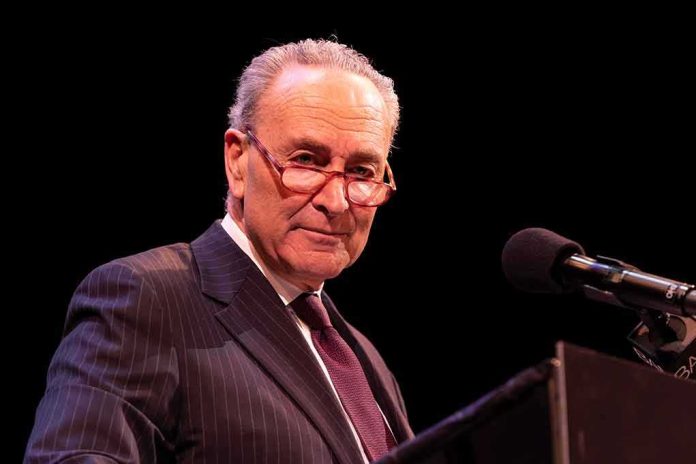
Schumer stood on the Senate floor and called Trump's handling of the Nvidia matter a dereliction of duty. The claim… pic.twitter.com/lpvf7uym4A— Ma'iingan (@walkswithu) November 12, 2026
What a responsible outcome looks like
Three tests will determine whether this episode strengthens, rather than weakens, the U.S. technology-security posture:
First, a clear, classified record of what intelligence showed and when—and, to the extent possible, a declassified summary for public accountability. If there was an intelligence memo circulated to senior policymakers, committees should obtain it, understand its confidence levels, and map any recommended mitigations to actual actions taken.
Second, a forensic answer to the only question that ultimately matters for national security: Was sensitive information accessed, transmitted, or leveraged to shape policy or market access? That requires device and communications reviews, access-log audits, distributor scrutiny, and coordination with the Commerce Department’s Bureau of Industry and Security. A public-facing conclusion can be brief but should be concrete.
Third, governance fixes scaled beyond a single company. Executive-conflict policies, mandatory disclosure triggers for foreign-contact risks at key suppliers, secure-communications protocols for senior leaders, and closer alignment between corporate compliance and evolving export rules are all overdue in a sector where individual judgment calls can move markets—and national capabilities—overnight.
Sources:
twitchy.com, nytimes.com, bbc.com, cnn.com, bloomberg.com, afp.com