House Republicans passed the SAVE America Act to require proof of citizenship and photo ID for federal voting, and Democrats are scrambling to stop it in the Senate.
Story Highlights
- House approved the SAVE America Act 218-213; Senate prospects face a filibuster wall.
- Bill requires documentary proof of U.S. citizenship to register for federal elections.
- Bill adds a nationwide photo ID requirement that leaders say most Americans back.
- Opponents claim the plan burdens voters; supporters say it closes loopholes.
House Passage Sets Up a Senate Showdown
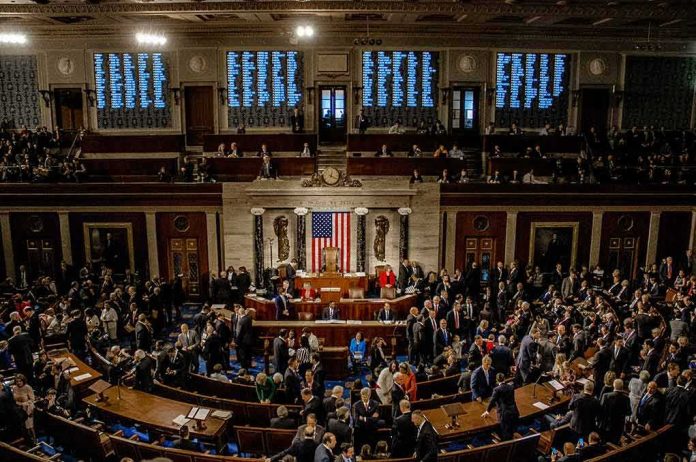
House leaders advanced the Safeguard American Voter Eligibility, or SAVE America Act, on a narrow 218-213 vote. One Democrat joined Republicans. The bill now moves to the Senate, where Democrats threaten a filibuster. Reports say Republicans count about 50 votes, short of the 60 needed to break debate. The White House supports stronger verification, but the Senate calendar and rules remain the roadblock. The House vote underscores a clear split over how to police federal voter rolls.
The Senate picture remains fluid. Senate leaders signaled no immediate plan to bring the bill back if a cloture vote fails. That leaves backers weighing options, including fresh floor time or attaching elements to must-pass measures. Opponents aim to stall momentum and keep current registration rules. Both sides read 2026 midterm pressure into the timing. For now, the measure’s future hinges on whether supporters can flip holdouts or adjust text to attract a few cross-party votes.
Core Requirements: Proof of Citizenship and Photo ID
The bill requires documentary proof of United States citizenship to register for federal elections. States could not process a federal voter application without that proof. The text points to acceptable documents like a United States passport or other official proof tied to citizenship. The bill also adds a nationwide requirement to show an eligible photo identification before voting. These provisions tighten the National Voter Registration Act framework for federal contests.
House sponsors argue the photo ID rule reflects broad public support. They cite data showing strong backing among Republicans, Democrats, Hispanic Americans, and Black Americans for photo ID at the polls. Supporters say these steps help restore trust, set a simple standard across states, and ensure only citizens decide federal offices. They frame the change as common sense, like showing ID for everyday tasks, but more vital because elections decide national policy.
Supporters Say It Closes Loopholes; Critics Warn of New Burdens
County officials note the measure would amend federal law to require documentary proof of citizenship at registration. That change would force updates to forms, training, and verification systems. Backers counter that citizenship has always been required to vote in federal races and say documentation simply verifies that rule. Critics, including civil rights groups, argue the bill will burden people without ready access to passports or birth certificates and could slow registration.
Advocacy groups on the left label the plan “suppression” and compare it to past restrictions. They argue there is no evidence of widespread noncitizen voting and warn millions could face new hurdles. Republican leaders reply that one illegal vote cancels a lawful one, and the federal standard will deter fraud attempts. Independent coverage confirms steep Senate resistance, which keeps these arguments live on cable news and online as both parties rally their base.
What Changes for Voters if It Becomes Law
If enacted, new voters for federal elections would need to provide a qualifying citizenship document when registering. Voters would also need to show an eligible photo ID at the polls. States that already check ID would tighten to the federal list. Mail and in-person processes would be retooled to match the federal rules. States that do not require documentation today would have to add new checks before accepting federal registrations.
Stories, by Stripped Out News:
Election Reform Debate Reaches Boiling Point Amid Partisan Tensions
Senator Slotkin's remarks on SAVE America Act spark controversy and criticismhttps://t.co/zquHFIPzxeStripped Out News pulls from 200+ sources, removes the bias, and delivers the…
— Stripped Out News (@Strippedoutnews) July 15, 2026
For now, nothing changes until the Senate acts. House passage puts pressure on senators from competitive states. Supporters highlight that many states already ask for identification in some form. They argue a consistent national rule for federal elections is overdue. Opponents will continue to call it unnecessary and harmful. The next Senate moves will tell whether tighter federal standards arrive before the 2026 general election or stall until a future Congress.
Sources:
redstate.com, politico.com, roy.house.gov, majorityleader.gov, naco.org, northjersey.com, en.wikipedia.org, michwomen.com, congress.gov, docs.house.gov, brennancenter.org, bipartisanpolicy.org, academic.oup.com