The moral line that keeps pluralistic politics from curdling into a blood feud is simple: you do not celebrate political violence. When that line blurs—even in memes and throwaway jokes—trust corrodes, risk tolerance for the next act of violence rises, and the center of public life shifts from persuasion to payback.
The Short Version
- CNBC’s Joe Kernen publicly condemned people “still celebrating” Charlie Kirk’s assassination and rejected any association with them, a stance that spotlights the ethics of how a society reacts to political violence.
- Public reaction split: some accounts cheered or mocked online, while high-profile figures—across media and politics—denounced such celebration as grotesque and dangerous.
- Claims about “one side” celebrating rely on exemplars amplified by news and social algorithms; that dynamic routinely turns a handful of viral posts into an indictment of a whole camp.
- The durable way forward is cultural: stop rewarding transgression-as-spectacle in coverage and feeds, and reassert norms that treat assassination as beyond politics entirely.
Kernen’s on-air rebuke and why it landed
When an anchor on a business network pauses the market talk to draw a bright moral line, it is not punditry; it is boundary-setting. Joe Kernen did exactly that, saying he sees people “still celebrating” Charlie Kirk’s killing and that he wants “nothing to do” with them. His objection was not procedural but ethical: celebrations of assassination dehumanize opponents and invite more of the same. That message resonated because it matched the instinct of most Americans—left, right, and unaffiliated—who view political murder as a civic red line and public glee over it as an obscenity.
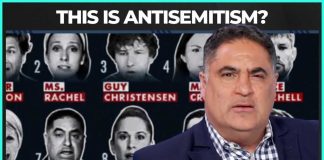
The amplification effect also mattered. Kernen’s critique came amid a wave of social clips and write-ups highlighting tasteless posts and stunts that mocked Kirk’s death, which, once surfaced by large accounts and outlets, read as evidence of a broader “camp” ethos. In that atmosphere, his refusal to normalize the spectacle carried weight: it modeled a response that withholds attention—and status—from transgressive performativity instead of feeding it.
What the record shows—and what it doesn’t
Two claims sit side by side: that left-leaning voices openly celebrated Kirk’s killing, and that such celebration is overstated or atypical. The evidence is asymmetrical. There are documented instances of online mockery and “celebration” that were aggregated by right-leaning media and commentators; those exemplars are real, and they were widely circulated as proof of a cultural rot on the left. At the same time, prominent figures publicly condemned the celebratory reactions, including allies of Kirk and mainstream outlets covering the backlash; denunciation, not defense, dominated institutional response.
That pattern aligns with how conflict gets framed in modern media ecosystems. News incentives and platform algorithms prioritize the vivid, the transgressive, and the enraging; a handful of grotesque posts can become the face of “the other side,” crowding out the more mundane majority response of silence, grief, or condemnation. Communication research has mapped this repeatedly: episodic, conflict-forward frames convert extreme exemplars into moral verdicts about whole groups, intensifying polarization while offering little guidance on de-escalation.
Mechanism: how a few posts become a “camp” indictment
Three engines drive the conversion of isolated celebration into a perceived mainstream stance. First, attention economics: provocative content—especially around violence—travels farther and faster, giving outlier reactions algorithmic lift. Second, curation bias: outlets select the most clickable examples to illustrate a larger narrative, a process framing theory describes as elevating certain aspects of reality to define problems and assign blame. Third, social identity dynamics: once an exemplar is coded as representative of “them,” it hardens in-group outrage and narrows space for nuance. Together, these forces make it easy to “prove” that a side celebrates violence by spotlighting the worst five posts in a universe of millions.
Kernen’s intervention pushed against that gravity. By refusing association with celebrants, he simultaneously acknowledged the exemplars and rejected their elevation. The logic is conservative in the small-c sense: sustain the civic norm by starving its violators of credibility and oxygen, even—or especially—when they claim to act in your cause or damage your adversaries.
Competing views, weighed on evidence rather than vibes
Advocates who argue that celebration is concentrated on one political side point to curated compilations of left-identified posts and stunts, presented as symptomatic of a cultural sickness. These compilations exist and they were widely shared; they establish that celebratory content was not imaginary. But they do not establish prevalence. The counter-view—raised by commentators skeptical of sweeping indictments—is that such reactions were fringe and rapidly condemned by mainstream voices. The strongest public-facing data in this record supports the latter frame at the institutional level: denunciation by recognized figures and coverage emphasizing revulsion rather than justification were the norm.
Both realities can be true: a nontrivial subset celebrated; the mainstream recoiled. The mistake is converting that subset into the story of an entire electorate. That conversion is not evidential; it is rhetorical. And it is precisely the move that escalates grievance cycles and licenses reciprocal extremism.
CNBC’s Joe Kernen hits Utah Governor Spencer Cox with a harsh reality check after Cox attempted to “both sides” political polarization while promoting his new book, “Off Ramp.”
What Kernen said was absolutely correct.
On the eve of the one-year anniversary of Charlie Kirk’s… pic.twitter.com/XqFX6ylTjI
— Overton (@overton_news) September 9, 2026
The stakes beyond one tragedy
Every assassination and every attempted one is a stress test of a society’s informal guardrails. Formal law can punish the murderer; it cannot alone maintain the taboo that politics stops short of blood. Culture does that. The cultural work—by leaders, media, and ordinary citizens—is to stigmatize celebration, resist the seduction of viral cruelty, and keep exemplars in proportion. That means declining to universalize the ugliest posts into a collective indictment, even as we refuse to excuse them. It also means coverage choices that contextualize rather than carnivalize, and platform policies that demote engagement bait built on another human being’s death.
Practical norms that actually reduce harm
There is no speech code that can fully govern an open society, and attempts usually backfire. What works is recommitting to durable norms that cross factions: leaders call out their own side’s dehumanization; editors and producers refuse formats that turn atrocity into spectacle; audiences deny their clicks to performative cruelty. Kernen’s on-air stance is exemplary in this modest, powerful sense: he did not litigate every post or spin a conspiracy; he reaffirmed a boundary and declined association. In a fragmented media environment, those small refusals scale—one segment at a time, one feed at a time—into the culture we keep.
Sources:
thegatewaypundit.com, podcasts.apple.com, thefederalist.com, bbc.com