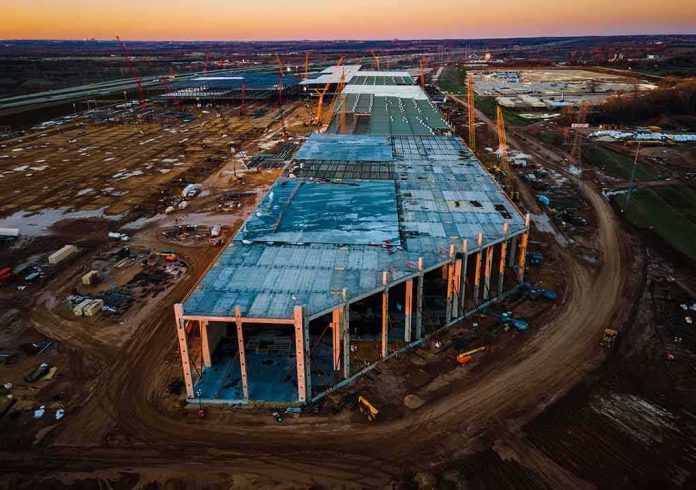
America just got two real nuclear construction wins after years of talk and delay.
Quick Take
- TerraPower won the first Nuclear Regulatory Commission permit for a full commercial advanced reactor in the United States.
- The company also began construction in Wyoming on its Natrium project, a 345-megawatt sodium-cooled fast reactor.
- Kairos Power started work on Hermes 2 in Tennessee, a demonstration reactor tied to a commercial power deal.
- The revival is real, but both projects still face fuel, licensing, and execution risks.
TerraPower Breaks a Long Stalemate
TerraPower became the first company to secure a Nuclear Regulatory Commission permit to build a full commercial advanced nuclear reactor in the United States. The permit lets the company begin nuclear-related construction at its Wyoming site. TerraPower CEO Chris Levesque said the project puts the firm on track to be “the next commercial nuclear power station to go online in the U.S.” That is a major shift after years when many Americans doubted new reactors would ever rise again.
The Wyoming project centers on Natrium, a 345-megawatt sodium-cooled fast reactor paired with thermal storage. TerraPower said construction began in 2024 and that the project is intended to become a fully functioning commercial power plant. Utility Dive reported that initial work is limited to non-nuclear site features, while nuclear construction must wait for later approval from the Nuclear Regulatory Commission. That matters because the headline is real, but full operation is still years away.
Kairos Power Adds Another Milestone
Kairos Power also moved from paper to dirt at its Hermes 2 project in Oak Ridge, Tennessee. The company says Hermes 2 is a commercial-scale demonstration reactor designed to produce up to 50 megawatts and supply the Tennessee Valley Authority grid and Google data centers. It also has a larger deal with Google to deliver 500 megawatts by 2035, with Hermes 2 as the first step. For conservatives worried about soaring power demand, that kind of private capital is hard to ignore.
Kairos’s move is important because it shows this is not just a single-company story. It is part of a wider push by private firms, utilities, and big technology companies to secure steady power for data centers and industry. The Tennessee project also gives the public a clearer sign that advanced reactor builders are trying to prove they can move beyond designs and into actual construction. Still, a demonstration reactor is not the same as a proven fleet.
The Big Question Is What Comes Next
The strongest case for caution is simple: construction is not the same as commercial operation. TerraPower still needs separate approval to load fuel and start running the plant, and its early work is only part of the full buildout. The broader nuclear industry also has a long record of cost overruns and delays, which keeps skeptics focused on whether these projects can meet their timelines and budgets. That history is why many readers will want results, not speeches.
Projects Under Construction (Advanced/Pilot)
•TerraPower Natrium (Kemmerer, WY): Site preparation and non-nuclear construction are underway to replace a retired coal plant. Backed by the Department of Energy (DOE), this 345 MW sodium-cooled fast reactor is designed with… https://t.co/Foc2uETC9b— 🇺🇸MagAmerican🇺🇸 (@JAG582000) July 3, 2026
Even so, the facts now point to a genuine change in direction. The United States had not seen this kind of advanced reactor progress in decades, and both TerraPower and Kairos have now crossed major construction thresholds. Supporters see a chance to rebuild American energy strength with reliable nuclear power instead of depending on unstable foreign supply chains or intermittent energy sources. The next test is whether these projects finish on time, on budget, and in working order.
Sources:
redstate.com, news.futunn.com, nuclearinnovationalliance.org, facebook.com