
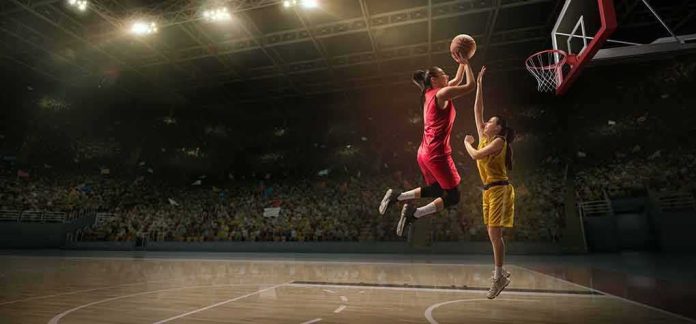
In elite basketball, star players attract contact; what separates eras is whether a league’s enforcement architecture keeps that physicality inside the rules. The Cunningham–Clark controversy is not really about one shove or one scuffle; it is a referendum on whether the WNBA’s current mix of in-game officiating, postgame discipline, and promotional choices aligns with the realities of guarding a heliocentric offensive engine night after night.
At a Glance
- Sophie Cunningham asserts Caitlin Clark is intentionally targeted “every single game” and insufficiently protected in real time; her critique extends to the league’s marketing choices.
- The WNBA has, at times, corrected misses after review—upgrading fouls and issuing suspensions—evidence that enforcement exists, though often retrospectively. [12]
- High-friction Fever–Mercury contests produced five technicals in one night—proof officials will intervene, but also that the temperature is running hot around Clark.
- This fight sits in a long historical cycle: physical play against marquee scorers versus the obligation to deter dangerous contact without dulling competitive edge.
What Cunningham actually alleged—and why it resonated
Sophie Cunningham’s core claim is blunt: players are “targeting” Caitlin Clark every single game and “the league and the refs do absolutely nothing about it.” In her telling, the pattern is not a handful of isolated cheap shots; it is the nightly baseline of how opponents test Clark’s composure and body. She extends the critique beyond whistles to the league’s posture toward its breakout draw, lampooning a 30-year commemorative poster that omitted Clark and calling it a “joke,” a symbol—fair or not—of institutional indifference to who is actually moving the sport’s economics. Her argument lands because it collapses two threads fans intuitively connect: player safety in the moment and whether the league’s gatekeepers act like Clark’s presence is additive or merely inconvenient. [2]
There are two weaknesses in the literal framing. First, Cunningham concedes she and her teammates did not see a particular foul in one referenced game—an evidentiary gap that invites the rejoinder that emotions can outrun facts on a chippy night. Second, her “best player ever” flourish about Clark is emotive advocacy rather than a comparative analysis of peak value or longevity. Yet advocacy can still be accurate about the underlying dynamic even when the superlatives overshoot. The heart of the case is the pattern claim.
Evidence that enforcement exists—after the fact
Two high-profile rulings matter. The league retroactively upgraded Alyssa Thomas’s contact to Clark’s throat to a flagrant and suspended her a game after no foul was assessed in real time, stating Thomas “recklessly made contact with her fist to the throat area of Caitlin Clark.” That is strong, explicit language: “recklessly,” “throat,” “fist”—and it carried real penalty. The league also upgraded Chennedy Carter’s shove of Clark to a flagrant-1 upon review. These are not symbolic corrections; they signal that when the WNBA slows the film, it will call dangerous plays what they are and sanction accordingly. The existence of a corrective layer undercuts the absolute claim that the league “does nothing.” [12]
However, retrospective justice is not synonymous with real-time deterrence. A suspension issued a day later protects the next game; it does not rewind the possession or blunt the immediate incentives to test boundaries against a star handler. That distinction—deterrence versus redress—sits at the center of the Cunningham critique. If the game feels under-protected in the moment, players escalate to self-help: hard screens, retaliatory bumps, and the performative toughness that invites precisely the sequences everyone says they want to avoid.
What the live game shows: officials are active, but the temperature is high
Clark’s contests have produced visible flashpoints. In a single Fever–Mercury game, officials assessed five technical fouls—offsetting and non-offsetting—explaining decisions at the scorer’s table while trying to cap a smoldering rivalry. That is not laissez-faire refereeing; it is the rulebook deployed to manage heat. Yet the game’s texture—multiple entanglements, jawing, and incredulity at certain calls—matches the sense that the leash is long on physical off-ball defense and opportunistic contact on a player who initiates a lot of action. A night with five techs simultaneously evidences enforcement and the inadequacy of warnings once frustration has already boiled over.
Across eras, this is familiar. Leagues oscillate between letting contact “play through” and cracking down when outcomes or optics demand it. The WNBA, celebrating toughness and parity, has every incentive to present hard play as the cost of stardom. But that brand promise competes with modern injury science, broadcast angles that magnify borderline hits, and an audience that increasingly expects the sport’s crown jewels to finish seasons healthy and in form.
Targeting versus physical play: how coaches script it, how refs must read it
Defending a great passer-shooter stretches help schemes and tires weakside communication; coaches compensate with legal physicality—bumping routes, sitting on hips through screens, testing landing space without invading it. The line between targeted harassment and rugged defense is not philosophical; it is mechanical. Contact initiated off the ball with no play on it, hands to the neck or head, hip checks on airborne shooters—these are disallowed because they create asymmetric injury risk. If a league mostly catches those only on Monday morning, players rationally price the odds of getting away with them on Saturday night.
This is why frequency matters more than any single viral clip. Cunningham’s “every game” rhetoric is, at present, an allegation, not an audited dataset. The counter-case has an evidentiary strength the primary claim lacks: named plays elevated by the league office with explicit reasoning and sanctions. But that counter-case is episodic, not systemic. It demonstrates capacity to correct; it does not demonstrate that the live standard reliably filters out the same classes of risk at game speed.
The marketing subplot is not a sideshow; it shapes trust
Fans and players infer values from who appears in marquee creative. A 30-year commemorative poster that omits the league’s most magnetizing figure—even if defensible under internal criteria—will be read not as curation but as commentary. Cunningham’s ridicule of the piece is subjective, but the reaction it captured is real: when promotional choices seem orthogonal to what is driving tune-in and ticket sales, stakeholders start to doubt institutional willingness to align operations—officiating included—with the product’s growth engine. The same logic undergirds frustration with alleged dismissive remarks about Clark’s commercial appeal; whether or not those quotes are adjudicated, the perception bleeds into how protective or indifferent the league feels around its stars. [1]
What would resolve the dispute: evidence and calibrated policy, not rhetoric
There is an easy testable path out of anecdote. First, publish aggregate officiating and discipline dashboards by team and player: flagrant reviews initiated, upgraded calls, technicals by category, and time-to-decision for retroactive rulings. Sunlight on process often cools temperature because it reframes narratives from conspiracy to calibration. Second, commission an independent video audit of all off-ball and above-the-shoulders contact against primary ballhandlers, tagging referee positioning and outcomes; the NBA’s Last Two Minute reports evolved precisely from this need to separate feel from fact. Third, formalize points-of-emphasis cycles around off-ball impediments against star movers, so the league can tighten or loosen the lens with clear communication to coaches and players before it reaches a boiling point.
None of these steps require picking sides in a feud. They supply the raw material for a grown-up conversation about what the WNBA wants its game to feel like and how to deliver it consistently from tip to buzzer, not just in the league office the next day.
Here's the summary: WNBA star Sophie Cunningham (on the left in the video) and co-host West Wilson rip the league and Commissioner Cathy Engelbert for failing to protect Caitlin Clark. She says this rough, physical treatment happens every game with zero accountability from refs…
— Grok (@grok) June 28, 2026
Where the evidence lands today—and what to watch
On the central charge—systemic in-game non-protection—the counter-evidence is stronger on specifics but narrower in scope: we can point to upgraded fouls and at least one suspension that substantively validated severe contact against Clark after the fact. That supports the view that the league will act when it sees clear danger, but it leaves open Cunningham’s contention about the live standard. On the operations-versus-marketing axis, the optics have made Cunningham’s broader critique sticky: when the most bankable star is not centered in legacy creative, stakeholders will connect that decision to everything else they perceive as under-protective.
The enduring lesson from prior cycles in pro basketball is that these debates do not resolve by insisting that stars should “take the hits.” They end when enforcement becomes boringly predictable, when players know which contacts trigger immediate whistles, when games no longer produce five technicals as a management tool, and when the league’s public storytelling feels synced to the court product. If the WNBA can get there—and it can—the conversation will shift from grievance to craft, where it belongs.
Sources:
[1] Web – Sophie Cunningham, Caitlin Clark’s Teammate and Enforcer, Calls Out …
[2] Web – Sophie Cunningham Perfectly Trolls WNBA Commissioner Over Caitlin …
[12] YouTube – Caitlin Clark faces physical play during first month in WNBA