A former trucker’s warning lands hard because it connects two anxieties at once: the fear of being robbed from the street and the fear of being replaced from above.
Story Snapshot
- An armored truck robbery in Philadelphia drew attention because investigators said a former Brinks employee was among the accused.[1]
- The same story was framed around trucking, labor infiltration, and the push toward machines, turning one crime into a broader argument about power in freight work.[2][3]
- Industry analysis says automation is already changing trucking through dispatching, route optimization, maintenance, and remote monitoring rather than instant full replacement.[4]
- Economists and industry analysts agree the real question is not whether technology will enter trucking, but how much human labor remains and who pays the transition cost.[6]
Inside the Heist Narrative
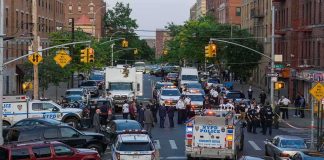
Philadelphia police and the Federal Bureau of Investigation (FBI) investigated a June armored truck robbery outside a Home Depot parking lot after a former Brinks employee and two other men were accused of orchestrating the theft of about $2 million.[1] Investigators said one suspect stayed with the driver while another stole the money, and they believed the employee had inside knowledge before being suspended and terminated.[1]
That detail matters because it makes the case feel bigger than a simple robbery. It suggests how vulnerable trucking operations become when trusted access, hurried schedules, and valuable cargo all meet in the same lane, and it gives the “infiltration” theme its emotional force.[1] The public heard a criminal case; the broadcaster heard a warning about who gets inside the system and who profits when trust breaks down.[2][3]
Why Automation Became Part of the Same Story
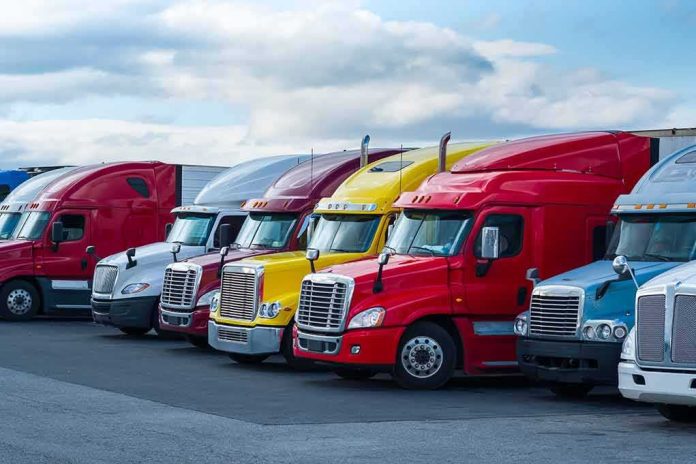
The trucking industry is already changing through technology that chips away at the old image of a driver doing everything alone. The North American Council for Freight Efficiency says jobs are evolving through dispatching, route optimization, predictive maintenance, and remote monitoring, while companies such as Aurora, Kodiak Robotics, and Gatik are using phased autonomy with remote operators watching fleets from centralized hubs.[4]
That does not match the panic headline that machines will erase trucking overnight. The same industry source rejects that claim and argues the shift will be slower and more uneven.[4] Still, even gradual automation can feel like replacement to drivers whose work gets reduced from skilled judgment to supervision, compliance, and waiting for software to finish the job.[4]
What the Other Side Says
Industry and policy sources also make a narrower argument: trucking firms adopt automation because it improves performance, cuts operating costs, lowers fuel use, and speeds delivery.[6] The St. Louis Federal Reserve says automation can displace workers, but it also treats that result as a broad labor-market effect of technology rather than proof of a coordinated plot against truckers.
That distinction matters. A market-driven explanation says companies chase efficiency whenever they can, while a labor-critical explanation says weak enforcement, low pay, and constant pressure to do more with less create the conditions in which experienced drivers get squeezed out.[6] Both can be true at the same time: a company does not need a conspiracy to produce a system that feels hostile to the people doing the work.
The Real Battle Is Over Control of the Freight Floor
The deeper issue is not just whether a truck can drive itself. It is who controls the freight floor when the job becomes fragmented into monitoring, routing, software oversight, and remote intervention.[4] Once that happens, the driver is no longer the central actor. The human becomes one more layer in a system increasingly managed by code, cost targets, and compliance rules.
That is why the story resonates beyond one robbery or one podcast clip. It combines a real criminal case, a real inside-job vulnerability, and a real technological transition that already favors centralized control over independent judgment.[1][4] If trucking keeps moving in that direction, the fight will not be about whether machines arrive. It will be about which workers remain visible when they do.
Sources:
[1] YouTube – Ex-Trucker: Gang Heists, Infiltration of the Workforce and the Attempt …
[2] Web – [PDF] How Do Truckers Perceive and Respond to the Risks from …
[3] YouTube – Trucking WIll END with AI & Mass Layoffs ‼️ (Reaction)
[4] Web – An Ethical Exploration of Automating the Trucking Industry
[6] Web – Why Truckers Shouldn’t Worry about Automation Eliminating Their …