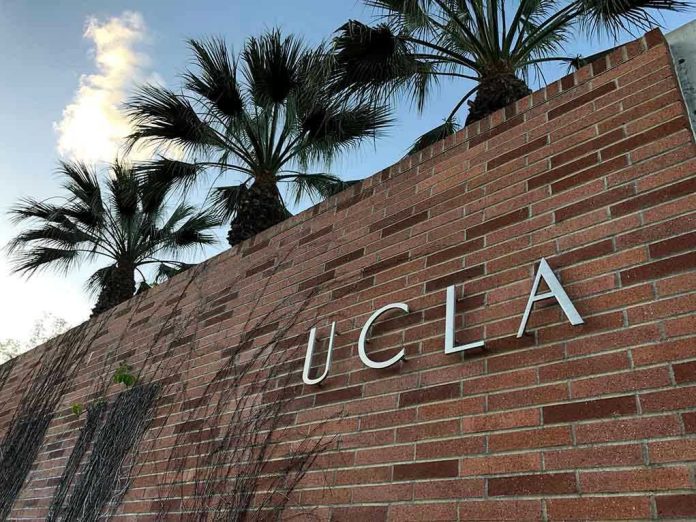
A California judge’s ruling just told America’s universities they can punish professors to satisfy an online mob—even when the professor refused to treat students differently by race.
Quick Take
- A California Superior Court judge finalized a decision upholding UCLA’s 2020 suspension of lecturer Gordon Klein after he rejected a request for race-based grading leniency during the George Floyd protests.
- The court found UCLA acted within administrative discretion to respond to “extraordinary public outrage,” a conclusion critics say chills academic freedom and due process for faculty.
- UCLA said it supports expression while enforcing a “respectful environment,” while Klein’s attorney argued the “safety” rationale was unsupported and the process was unfair.
- The case highlights how “safety” and reputational risk have been used by institutions to justify rapid discipline during political flashpoints.
The Email That Sparked a Suspension
UCLA lecturer Gordon Klein, a long-time instructor in the school’s business program, became the target of a campus firestorm in June 2020 after responding to a student email that requested leniency for black students amid George Floyd-related protests. Klein’s reply rejected race-based treatment and argued that students should be evaluated equally. After the email circulated widely online, UCLA suspended him for roughly three weeks, citing student “safety” concerns.
That sequence—an internal exchange, then public outrage, then rapid administrative punishment—became a familiar pattern during the 2020 era of ideological enforcement in higher education. In Klein’s case, administrators reportedly feared campus unrest if the school did not act. UCLA ultimately reinstated him, but the suspension had already branded him publicly and triggered a legal fight that would drag on for years, ending with a ruling that largely favors institutional power over individual faculty protections.
What the Court Decided—and Why It Matters
After Klein sued UCLA and the UC Regents for claims including breach of contract and reputational harm, the case went to a bench trial in 2025. Judge H. Jay Ford III issued a preliminary ruling on December 1, 2025, and finalized judgment in early February 2026, rejecting Klein’s objections and ending the case in UCLA’s favor. Reporting on the decision indicates the court accepted UCLA’s ability to suspend Klein in response to intense public backlash.
For Americans who still believe universities should be laboratories of free inquiry, the core issue is not whether people disliked Klein’s tone or disagreed with his judgment. The core issue is whether contractual promises of academic freedom mean anything when administrators face outside pressure. A ruling that blesses discipline driven by “public outrage” signals that faculty rights can shrink precisely when speech becomes controversial—when protections matter most.
Competing Narratives: “Safety” vs. Mob Pressure
UCLA framed its actions as necessary to maintain a respectful, safe campus environment, and a senior communications official said the university respects the court and supports expression within fair processes. Klein’s attorney, Steven Goldberg, argued the decision was indefensible and that UCLA acted to appease a mob rather than address a real threat. The reporting also reflects a central dispute: UCLA cited safety concerns; critics argue no concrete evidence justified treating Klein as a danger.
This tension exposes how elastic the concept of “safety” can become when it is used as an administrative trump card. If “safety” means protection from emotional discomfort or political anger, then virtually any unpopular viewpoint can be reclassified as harmful. Under that logic, campus administrators are incentivized to act quickly, punish visibly, and sort out fairness later—because reputational risk becomes the immediate driver, not truth or consistent rules.
A Broader Pattern in Higher Education
Klein’s case is being discussed alongside other controversies that critics describe as academic “cowardice,” including disputes involving antisemitism and ideological pressure campaigns at major universities. The common thread is not that every incident is identical, but that institutions repeatedly appear to prioritize crisis management over neutral standards. When universities enforce political fashions through disciplinary power, they degrade trust in education and push more families to question whether campuses still teach merit, equality, and reason.
Shame on UCLA: The Cowardice of Academiahttps://t.co/fav5soLKPE
— PJ Media (@PJMedia_com) February 19, 2026
Limited information is available in the provided research on whether Klein will appeal or how UC-wide policies might change after this judgment. What is clear is the precedent the ruling signals to faculty nationwide: administrators may be legally protected when they discipline instructors to calm outrage, even when the underlying dispute centers on refusing racial preferences. For conservatives, that should raise a sober question about whether “academic freedom” now exists mainly on paper.
Sources:
California Superior Court Judge Affirms ‘Mob Rule’ at UCLA
Opinion: Rutgers administration’s cowardice
Jewish UC Regents officials, donors refuse to condemn UCD prof for threats to Zionist journalists
Campus Cowardice and Where the Buck Stops