
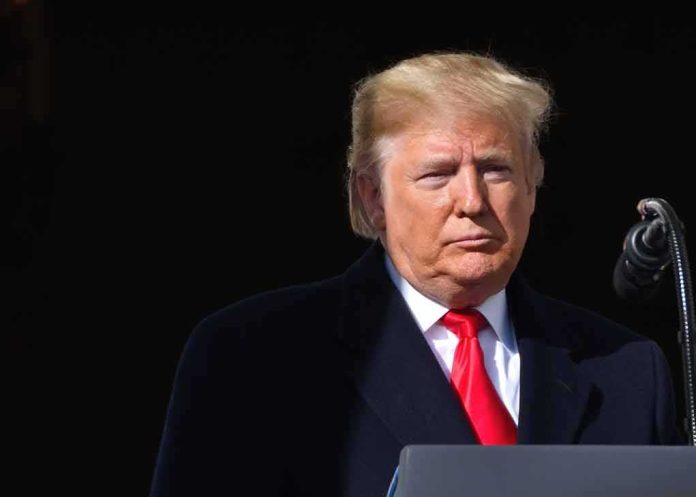
Two wartime leaders just walked into the White House with President Trump, and what they decide on Iran, Gaza, and Ukraine could reshape global security while most Americans feel shut out of the room.
Story Snapshot
- Israeli Prime Minister Benjamin Netanyahu and Ukrainian President Volodymyr Zelenskyy met separately with President Trump in Washington while in town for Senator Lindsey Graham’s funeral.
- Netanyahu’s visit centers on Israel’s security, the war in Gaza, and Iran, as he seeks to influence U.S. policy and repair a strained relationship with Trump.
- Zelenskyy is pressing for stronger U.S. support and more control over air defense systems as Ukraine faces continued Russian attacks, often using Iranian-made drones.
- The closed-door talks highlight how life-and-death decisions on war, peace, and nuclear risks are made by a small circle of powerful leaders, far from public oversight.
Why Netanyahu and Zelenskyy Are in Washington Now
On Tuesday in Washington, President Trump held back-to-back Oval Office meetings with Ukrainian President Volodymyr Zelenskyy and Israeli Prime Minister Benjamin Netanyahu, timed around the funeral of Senator Lindsey Graham at the National Cathedral. Both leaders are wartime heads of state seeking Trump’s ear at a moment when Israel is fighting in Gaza and facing Iran, and Ukraine is still locked in a brutal war with Russia. Their visits turn a day of public mourning into a day of quiet, high-stakes diplomacy inside the White House.
Netanyahu’s office has said the trip is an official visit to Washington that includes attending Graham’s funeral and a White House meeting with Trump. In a post on X, Netanyahu wrote that his goal in coming was “to safeguard Israel’s security, strengthen its power, and expand the circle of peace around us.” That language signals more than a courtesy call. It shows he is using this visit to push U.S. policy on Gaza, Iran, and wider regional deals at a time when many Israelis and Americans question whether their leaders still share the same values and priorities.
Netanyahu’s Security Agenda: Iran, Gaza, and Regional Power
Reporting from multiple outlets says Iran and Gaza are at the core of Netanyahu’s agenda with Trump, not just ceremonial events or trade disputes. Analysts note that Netanyahu moved up earlier Washington trips when U.S.–Iran talks heated up, aiming to stiffen the American stance on Tehran’s nuclear and military programs. During past visits, he has stressed that his “first and foremost” goal is to shape any deal on Iran so it covers more than just nuclear fuel, and to make sure Israel’s red lines are respected. This week’s meeting continues that pattern: use face time with the U.S. president to lock in promises while public opinion at home grows more skeptical of both governments.
Several think tank and media analyses describe this visit as “high-stakes” because it comes after U.S. and Israeli strikes on Iranian nuclear sites and amid a grinding war in Gaza. Netanyahu is expected to push for tougher terms on Iran, for restocking Israel’s weapons after months of fighting, and for support on hostages still held in Gaza. Officials and experts also mention regional issues such as a framework deal with Lebanon and possible expansion of the Abraham Accords, which would widen Israel’s ties with Arab states. All of this unfolds while many Americans, left and right, feel foreign policy is run by a small group of elites who rarely explain the risks to ordinary families paying the human and financial costs.
Zelenskyy’s Push for Support and Protection
Zelenskyy’s meeting with Trump was described by both sides as positive, focused on Ukraine’s need for stronger air defenses and more control over key systems. After the talks, Zelenskyy said they discussed letting Ukraine manufacture its own interceptors for Patriot missile batteries, a step that would give his country more independence in defending its cities. He also stressed the need to “reinvigorate” diplomacy, signaling that, even in war, Ukraine wants political paths forward and not just endless fighting. For an American audience watching inflation, aid debates, and domestic needs pile up, this raises hard questions about how these commitments are made and monitored.
Recent meetings between Netanyahu and Zelenskyy themselves also show how their wars are linked by Iran’s role. Zelenskyy has told Netanyahu about Russian strikes on Ukrainian cities and ports using Iranian-made drones and warned about deepening military ties between Moscow and Tehran. Netanyahu has responded by promising continued humanitarian help, such as aid on landmines, but has stayed away from major weapons transfers. Their shared concern over Iran’s reach—from Ukraine’s skies to Israel’s borders—hangs over the separate sessions with Trump, where decisions about sanctions, strikes, and nuclear rules may be made behind closed doors.
Closed-Door Choices and Public Frustration
White House officials say Netanyahu’s meeting with Trump was expected to cover Iran, a U.S.–Israel framework with Lebanon, and expanding the Abraham Accords. Yet many of the most sensitive topics—intelligence on Iran, possible military action, the future of Gaza—remain hidden from public view and even from many in Congress. Past reporting notes that Netanyahu has sometimes rushed to Washington when U.S.–Iran talks picked up, hoping to “stiffen” Trump’s resolve and steer the outcome. That pattern plays into a wider feeling among Americans that major foreign policy choices happen in private, with average citizens left to deal with the economic strain, energy shocks, and security fears.
Tonight on Fine Point…
President Trump Holds White House Meetings with Fellow Wartime Leaders Israeli Prime Minister Netanyahu & Ukrainian President Zelenskyy…Will These Talks Bring an End to the Bloodshed?
New York Becomes The First State to Ban Data Centers…Will This Give… pic.twitter.com/uUEt2GsFNf
— One America News (@OANN) July 28, 2026
For conservatives worried about globalism, high energy costs, and weak borders, and for liberals worried about widening inequality and war impacts on civilians, this day in Washington will reinforce a shared belief: a small group of powerful leaders can shape war and peace with little real accountability. Trump, Netanyahu, and Zelenskyy are making decisions that touch nuclear risks, long wars, and taxpayer money, while ordinary Americans struggle to keep up with basic costs at home. These meetings show how far the modern security state has drifted from the simpler promise that government would serve the people first, not the permanent interests of the deep state and global power politics.
Sources:
facebook.com, youtube.com, usatoday.com, president.gov.ua, turkiyetoday.com, nypost.com, aljazeera.com, jpost.com, cnn.com, dawnmena.org, atlanticcouncil.org, jinsa.org