President Trump is amassing unprecedented naval and air firepower in the Middle East as Iranian regime collapse appears imminent, positioning America for potential military strikes that could finally end decades of Tehran’s nuclear threats and terrorist sponsorship.
Story Highlights
- Three carrier strike groups and advanced F-22 and F-35 squadrons deployed to Middle East by mid-February 2026
- Trump administration backs Iranian protesters after thousands killed by regime forces in 2025-2026 uprisings
- Iran’s Supreme Leader Khamenei rejects nuclear deal terms while conducting provocative drills in Strait of Hormuz
- European leaders predict Iranian regime’s final days as US military prepares for weeks-long operations
Massive Force Deployment Signals Readiness for Action
The United States deployed the USS Abraham Lincoln carrier strike group to the Middle East on January 26, 2026, marking the beginning of an extraordinary military buildup. The strike group includes guided missile destroyers, cruisers, F/A-18 Super Hornets, F-35C Lightning II fighters, and advanced helicopter squadrons. By February 13, the USS Gerald R. Ford redirected toward the region for extended operations, while preparations began for the USS George H.W. Bush to join the fight. This represents the largest concentration of American naval power in the Persian Gulf since Operation Iraqi Freedom.
Advanced Air Assets Echo Previous Successful Strike Operations
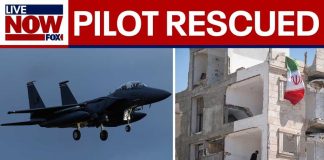
President Trump ordered a surge of America’s most sophisticated warplanes to the theater throughout February 2026. F-22 Raptors arrived at RAF Lakenheath on February 17, staging for Middle East deployment alongside 18 F-35 Lightning IIs from United Kingdom bases. Vermont-based F-35 squadrons already operate in-region, joined by F-15 Eagles, F-16 Fighting Falcons, and A-10 Warthogs. P-8 Poseidon maritime patrol aircraft now surveil the Strait of Hormuz, while E-3 AWACS, E-11 battlefield management planes, RC-135 reconnaissance aircraft, and aerial refueling tankers provide critical support capabilities reminiscent of 2025’s Operation Midnight Hammer strikes against Iranian nuclear facilities.
Iranian Regime Faces Existential Crisis From Protests and Pressure
The military buildup responds directly to Iran’s brutal crackdown on nationwide protests that began in late 2025, killing thousands of Iranian citizens demanding freedom from the oppressive theocratic regime. President Trump publicly encouraged protesters to “keep protesting” and promised “help on the way,” applying maximum pressure sanctions targeting Iran’s oil exports and financial networks. Supreme Leader Ali Khamenei rejected Trump administration demands for a nuclear agreement banning all uranium enrichment, while Iranian Armed Forces Chief Abdolrahim Mousavi threatened “vengeful blows” and shifted military doctrine to an offensive posture. German Chancellor Merz assessed Iran’s regime as being in its “final days or weeks” as internal collapse accelerates.
Strategic Implications for American Security and Energy Markets
Iran’s Islamic Revolutionary Guard Corps conducted naval drills in the Strait of Hormuz on February 16, threatening the waterway through which 20 percent of global oil supplies flow. IRGC commanders declared their “finger on the trigger” and warned of havoc against nations supporting the United States. Secretary of State Marco Rubio indicated openness to diplomacy regarding Iran’s ballistic missile programs and militant proxies, but remains skeptical of Tehran’s willingness to negotiate in good faith. Iran’s Foreign Minister claimed a “path for deal started,” yet no substantive progress emerged as Khamenei maintains his hard line, forcing Trump to prepare credible military options that protect American interests, support freedom-seeking Iranians, and prevent a nuclear-armed terrorist state.
The Trump administration’s decisive military posture demonstrates strength and resolve after years of weak Biden-era appeasement that allowed Iran to advance its nuclear program and fund terrorism across the region. With America’s military superiority clearly established and Iranian regime survival in question, the next weeks will determine whether Tehran accepts reality or faces the consequences of continued defiance. Unlike previous administrations that telegraphed weakness, President Trump backs his words with overwhelming force, giving Iranian protesters hope while protecting Americans from a regime that has threatened our nation for over four decades.
Sources:
United States military buildup in the Middle East during the 2026 United States-Iran crisis
US Amasses More Airpower in Middle East Amid Iran Tensions