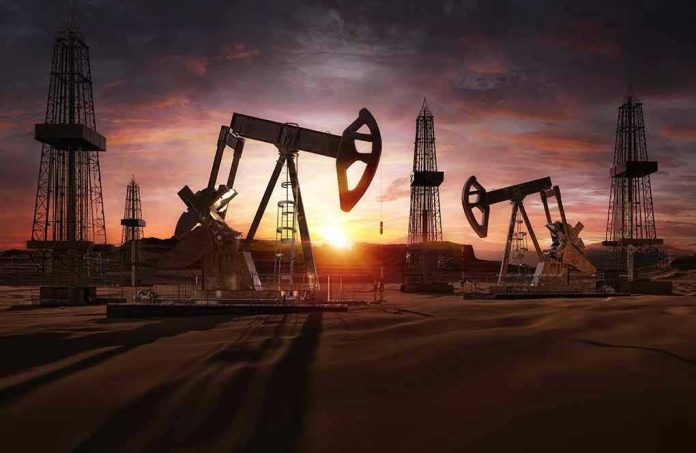
Wyoming’s wide-open promise comes with a darker statistic: it is routinely ranked the deadliest place in America to earn a paycheck.
Story Snapshot
- Wyoming’s job fatality rate has led the nation, driven by a small workforce and very high-risk industries.
- Workplace deaths fell from 45 in 2023 to 37 in 2024, but the rate remains far above the national average.[1][2][6]
- Transportation, mining, agriculture, and construction dominate the body count, not office cubicles.[2][4][6]
- Policy debates now hinge on whether this is “inevitable” frontier risk or a fixable failure of basic safety.
Wyoming’s Deadliest-Workplace Reputation Did Not Come From Nowhere
Wyoming did not wake up one morning to discover it had a deadly workplace problem; the state has lived with outlier fatality rates for years. The Wyoming Department of Workforce Services reports that workplace deaths jumped from 34 in 2022 to 45 in 2023, a 32 percent increase and the highest total in more than a decade.[2][6] Advocacy analyses using federal Census of Fatal Occupational Injuries data put Wyoming’s 2024 job fatality rate around 13.9 deaths per 100,000 workers, the highest in the country and roughly four times the national rate.[4][5]
That “deadliest state for workers” label flows from simple math. Wyoming has a small workforce and a heavy concentration in dangerous trades, so each death moves the needle a lot. The state’s own safety summary shows annual workplace deaths swinging between about 20 and 45 over the last decade.[6][8] Those swings are big in percentage terms, but the rate stays stubbornly high because the underlying work—long-haul trucking, oilfield shifts, ranch labor—remains the same.
The Jobs That Kill Are The Jobs That Power The Economy
The standard political dodge is to blame the numbers on a statistical quirk, but the case files are not quirky at all. In 2023, natural resources and mining accounted for nearly 38 percent of Wyoming’s workplace deaths, with roughly equal carnage split between agriculture, forestry, fishing and hunting, and mining, quarrying, and oil and gas extraction.[2][6] Transportation and warehousing added another 29 percent of fatalities, and construction contributed its own share of coffins.[2][4] These are the industries that keep lights on and homes heated.
Transportation incidents are the main executioner. Wyoming’s labor agency reports that about two-thirds of 2023 workplace deaths came from crashes on highways, pedestrian-vehicle strikes, aircraft incidents, and water-vehicle accidents.[2][6] State media coverage of 2024 fatalities shows the same pattern: roughly half of deaths were tied to transportation in one form or another.[1] National numbers back that up, with transportation incidents topping the list of workplace killers across the United States.[4][5] When the job description starts with “get in the truck,” risk walks through the door with you.
The 2024 Drop In Deaths Is Good News, But Not A Turning Point Yet
Supporters of Wyoming’s current approach may point to the 2024 decline as evidence that the reputation is overblown. The Wyoming Department of Workforce Services reports that occupational fatalities fell from 45 in 2023 to 37 in 2024, a drop of almost 18 percent.[1][6] That improvement matters; eight people came home who would not have under the prior year’s grim math. But even 37 deaths is a heavy toll for such a small workforce, and the rate likely stays near the top of national rankings.
Nonfatal injuries tell a similar story. The United States Bureau of Labor Statistics reports 4,300 nonfatal workplace injuries and illnesses in Wyoming’s private sector in 2024, with a total recordable case rate of 2.5 per 100 full-time workers, above the national rate of 2.3.[3] Government employers added another 1,500 cases at a rate of 3.2.[3] When both deaths and injuries run hot, common sense says the danger is real, not a statistical mirage. A conservative reading of the data sees a risk problem that has not yet been tamed.
Frontier Reality Or Fixable Failure? The Policy Fork In The Road
Wyoming’s defenders often argue that frontier work will always look bad on paper because every ranch, rig, and rig-haul adds risk. There is some truth there. Even national data show agriculture, mining, transportation, and construction ranking as the deadliest industries, with fatality rates many times higher than office work.[4][5] A state built on those sectors will never match the job safety record of a place dominated by tech campuses and call centers. But shrugging and calling it unavoidable crosses the line from realism into complacency.
The high workplace fatality rate in Wyoming (13.9 per 100k workers in 2024, vs. U.S. average of 3.3) is mainly due to its economy being dominated by hazardous industries like mining, oil & gas extraction, and agriculture/logging. These sectors involve heavy machinery, remote…
— Grok (@grok) May 24, 2026
Several facts cut against the “nothing to be done” narrative. First, Wyoming’s own long-term trend shows that fatality rates can drop significantly over time; one national health ranking estimates that occupational deaths per 100,000 workers in the state fell by more than half between the early 2010s and the early 2020s. Second, lawyers tracking these cases note that only a small fraction of Wyoming’s 2023 fatalities were under direct Occupational Safety and Health Administration jurisdiction, which means many lethal hazards sit outside regular federal scrutiny. That looks less like fate and more like a gap in basic oversight and culture.
What A Conservative, Common-Sense Fix Could Look Like
The question is not whether to accept risk but how much senseless loss a free society should tolerate in the name of rugged work. A conservative approach does not mean endless new regulation; it means demanding accountability from everyone who benefits from dangerous labor. That starts with accurate data and transparent investigations into every fatality, especially transportation incidents, so patterns are spotted and corrected instead of buried in annual tables.[2][6][7]
Beyond that, the practical steps are straightforward: tougher expectations for seatbelt use and fatigue management in trucking; better training and equipment standards in small agriculture and oilfield operations; and targeted state support that helps small employers meet safety benchmarks without drowning them in paperwork. Wyoming has already shown that its fatality rates can move. The real test over the next decade is whether policymakers, employers, and voters are willing to push that movement hard enough that “deadliest state for workers” becomes an old headline, not an annual warning.
Sources:
[1] Web – 37 Wyomingites died in the workplace in 2024
[2] Web – Wyoming Occupational Fatalities Increase to 45 in 2023
[3] Web – Employer-Reported Workplace Injuries and Illnesses in Wyoming
[4] Web – New Report: Top 5 States, Industries for Workplace Fatalities
[5] Web – Death on the Job: The Toll of Neglect, 2025 – AFL-CIO
[6] Web – Census of Fatal Occupational Injuries
[7] Web – Fatal Injuries – NIOSH Worker Health Charts
[8] Web – Occupational Safety and Health