
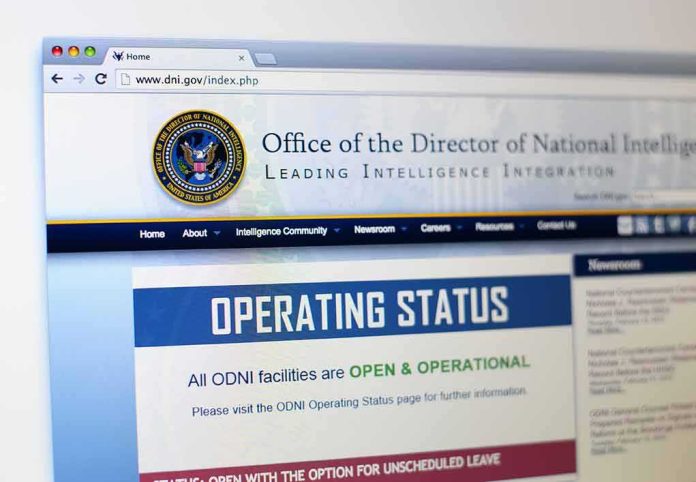
The central issue is not whether some Biden-related allegations were false; it is whether U.S. intelligence institutions crossed the line from cautionary risk management into active narrative shaping during the 2020 campaign. The record supplied here supports a serious case that they did, at least in part, while also showing why officials believed they were responding to real Russian-disinformation risks.
Intro Header
- The most consequential fight was over provenance, not just politics: who knew what about the laptop, and when.
- House Republicans say declassified material shows intelligence and FBI contacts helped frame the story as Russian disinformation before the public could judge it on the merits.
- The strongest counterpoint is equally important: the 51-officials letter was hedged, and at least one prominent Biden-bribery allegation was later exposed as false.
- The broader pattern is familiar in election years: agencies tend to optimize for avoiding a foreign-interference failure, while critics read that same caution as suppression.
The 2020 laptop dispute was really a battle over institutional trust
What makes this episode durable is that it sits at the intersection of three things Americans rarely get to evaluate cleanly at the same time: a sensational political allegation, a genuine foreign-interference environment, and intelligence agencies that almost never explain their internal judgments in public. House Republicans now argue that newly declassified records show the FBI and aligned intelligence officials did more than warn about risk; they say the government helped condition platforms and the public to treat Biden-related material as tainted Russian disinformation, even before the New York Post story fully landed. That is a far stronger accusation than simply “they were skeptical.”
The countercase is not trivial. In October 2020, 51 former intelligence officials said the laptop emails had “all the classic earmarks of a Russian information operation,” but the letter also said the signers did not know whether the emails were genuine and had no evidence of Russian involvement. That wording matters. It reads less like a categorical claim that the material was fake than like a warning about possible provenance contamination. In intelligence work, that distinction is the whole game.
How the suppression theory is supposed to work
The House Judiciary report’s core theory is procedural, not theatrical. According to the committee, the FBI obtained the laptop in late 2019, then ran a months-long effort to “prebunk” the eventual New York Post report and prime Big Tech to expect a Russian hack-and-leak narrative. If that sequence is accurate, the significance is obvious: officials would not merely have been expressing an opinion about uncertain material; they would have been seeding a reputational frame that could alter moderation decisions before the article was even public.
That is where the alleged intelligence-community mechanics become important. The PJ Media summary says a special team, “Round River,” operated through the election, with analysts adding material to confidential-source files to mark certain reporting as Russian disinformation and providing defensive briefings to congressional members who encountered the “Ukraine narrative.” House Republican materials similarly describe internal intelligence efforts that were, in their view, designed to muddy the waters around Biden-family allegations. If true, this would not prove a conspiracy to elect Biden, but it would show a government apparatus using disinformation logic to manage political information in a way that predictably benefited one side.
Why the strongest counterargument still has real force
The best rebuttal is that the threat environment was not invented out of thin air. By 2021, U.S. intelligence analysis found that proxies of Russian intelligence were promoting and laundering misleading Biden narratives to media, officials, and Trump-adjacent figures. That later assessment does not retroactively validate every 2020 judgment, but it does make the basic caution plausible. Intelligence officers trained on election interference are rarely rewarded for waiting until a foreign operation has already metastasized. Their default is to warn early, even at the cost of looking overcautious later.
Then there is the Smirnov problem. PBS and AP reported that former FBI informant Alexander Smirnov was set to plead guilty to lying about a phony bribery scheme involving the Bidens, and that an FBI field office had investigated the allegation and recommended closing the case in August 2020. That does not absolve the FBI of anything. But it does show that at least one loud anti-Biden allegation circulating in the ecosystem was fabricated. Once that fact is on the table, the intelligence community’s instinct to distrust some Biden-related sourcing looks less like pure political protection and more like a tradecraft response to a polluted information stream.
The real weakness in the official caution argument is timing and asymmetry
Even if intelligence officials were justified in being wary, the more troubling question is whether they applied that wariness evenly. The report and related Republican material allege that the FBI did not merely maintain internal skepticism but helped shape how platforms, congressional offices, and the broader information environment interpreted the story. That is the difference between internal analysis and external narrative management. The former is normal; the latter, if established, is extraordinary.
The White House’s later framing sharpened that suspicion by asserting that at least 51 former intelligence officials coordinated with the Biden campaign and that the letter was routed through CIA prepublication review while several signatories held ongoing contractual relationships with the agency. Republican investigators have also tied Antony Blinken to the origin of the effort, saying the campaign sought “talking points and cover.” Those claims are serious, but they still depend heavily on committee summaries and declassification-driven interpretation rather than a full public documentary record. The evidence points toward coordination, but the exact boundary between campaign-adjacent advocacy and institutional misuse remains the crux.
Date: August 8–9, 2026 (circulation)
Event: Circulating Catherine Herridge Documents Claim — China Blackmail of Biden Family in Presidential Daily Brief + Intelligence/Media Cover-Up
Post:
Description:
High-engagement video claiming investigative journalist Catherine Herridge…— Megan Heaton (@meganheat) August 10, 2026
What this episode says about intelligence, elections, and the modern media system
The deeper lesson is structural. Intelligence agencies are built to minimize the chance of being blindsided by a hostile foreign operation; campaigns are built to weaponize ambiguity before voters settle the matter themselves. When those logics collide, institutions often choose the safer path for themselves, not the cleaner path for the public. That is why disputes like this never die cleanly. Each side can point to a real danger: one side to disinformation laundering, the other to information suppression.
On the record provided here, the strongest conclusion is not that the intelligence community proved a Biden-family scandal was invented, nor that it proved a coordinated plot to exonerate Joe Biden. It is that government and intelligence actors appear to have treated Biden-related material through an anti-Russian lens so aggressively that critics now have a credible argument that the process itself distorted public debate. At the same time, the existence of false allegations like Smirnov’s and the documented history of Russian proxy activity make it impossible to collapse the story into simple censorship. The lasting importance of the episode lies in that tension: once election-season intelligence framing gets ahead of verification, the public may never know whether it was protection, prudence, or political intervention.
Sources:
pjmedia.com, judiciary.house.gov, pbs.org, govinfo.gov, grassley.senate.gov, oversight.house.gov