
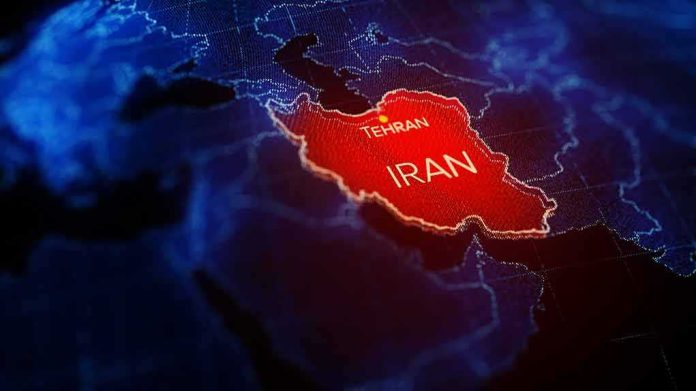
When a single precision strike wiped out Iran’s supreme leader and much of his war room, it did more to shake a hostile regime than decades of speeches from Washington ever did.
Story Snapshot
- Israel and the United States killed Supreme Leader Ali Khamenei and key commanders in a pinpoint strike in Tehran, triggering open war.
- The attack decimated Iran’s top military braintrust, forcing rushed replacements and emergency crackdowns to prevent unrest.
- Mojtaba Khamenei was wounded yet quickly named new supreme leader, deepening fears of a harder, more security‑driven regime.
- Iran’s new commanders vow to “open the gates of hell” on the United States and Israel, raising the risk of wider regional conflict.
The strike that decapitated Iran’s leadership
On February 28, 2026, a joint United States–Israeli airstrike hit the Office of the Supreme Leader in Tehran, killing Ayatollah Ali Khamenei and many of his top military and security chiefs. Reports say senior figures were meeting there to plan defenses against an expected attack when precision munitions destroyed the compound. The blast killed Revolutionary Guards chief Mohammad Pakpour, senior adviser Ali Shamkhani, defense minister Aziz Nasirzadeh, and other key officers in one blow. State media confirmed Khamenei’s death on March 1 after initial denials.
The strike did not only target officials; it hit Khamenei’s family as well, killing several relatives and leaving his son Mojtaba Khamenei wounded but alive. Within a week, an Interim Leadership Council and Iran’s formal process for choosing a new leader moved to appoint Mojtaba as the new supreme leader. Analysts note he had long held power behind the scenes, and his selection signals a continuation, and likely hardening, of the Islamic Republic’s core direction rather than reform. This violent shift at the top has become the defining moment of the current Iran–Israel war.
Rapid reshuffle and rule by the gun
The attack wiped out “almost the entire Iranian military braintrust,” forcing Tehran to promote new commanders quickly to plug holes in its war machine. Iranian media and outside analysts describe a rushed reshuffle: General Ahmad Vahidi was tapped to lead the Revolutionary Guard, while other senior officers were moved into key posts to restore command chains. Western intelligence and regional experts say power has now concentrated heavily in the hands of the Revolutionary Guard, making Iran function more like a military junta than a traditional clerical state.
Inside Iran, security forces moved fast to keep control during the shock. The Revolutionary Guard and other units imposed strict curfews, digital blackouts, and dense checkpoints in major cities like Tehran, Mashhad, and Isfahan. These measures aimed to prevent protests or uprisings at a moment when people saw the regime’s weakness on full display. At the same time, leaders launched internal purges and intelligence audits to find who helped Israel and the United States target such a sensitive site. That hunt for “traitors” fits a wider pattern many Americans recognize: when elites fail, they often crack down on ordinary citizens instead of cleaning up their own corruption.
“Gates of hell” threats and a dangerous new phase
After the strike, Iran’s new and surviving commanders tried to show strength, promising massive revenge against the United States and Israel. Senior officers repeatedly warned they would “open the gates of hell” on American and Israeli targets if attacks continued. Revolutionary Guard spokesmen said the enemy should expect “continuous punitive attacks,” while military leaders vowed “huge and destructive consequences” for Israel. These phrases have been echoed in state media and shared widely online as Iran fires missiles and drones at bases and ships across the region.
For many viewers in the United States, these threats land in a familiar way. Americans on the right and left have watched for years as foreign regimes chant death to America while Washington’s own leaders promise “red lines” and “maximum pressure,” yet rarely fix the deeper problems at home. Now, as President Trump and a Republican Congress confront a wounded but angry Iran, both hawks and doves worry the clash of hardliners could drag ordinary citizens into a long, grinding war that does little to make their lives better.
Fragile regime, hardline succession, uncertain future
Experts disagree on whether this “decapitation” strike will truly break the Islamic Republic or push it to tighten control. Some analyses argue the loss of so many senior figures has fractured leadership, weakened decision‑making, and made it harder for Iran to coordinate retaliation or negotiate. Others note that authoritarian systems often respond to outside shock by closing ranks. Early intelligence estimates say the government is not at immediate risk of full collapse, even after Khamenei’s death.
What most sources agree on is that Mojtaba Khamenei’s rise marks a more hardline turn. He is seen as less flexible than his father and more closely tied to security organs that already dominate Iran’s politics. Power now sits heavily with the Revolutionary Guard, whose leaders are openly promising endless revenge rather than reform. For Americans who feel ruled by distant, unaccountable elites at home, the picture in Tehran looks disturbingly familiar: a small circle of powerful men clinging to control with guns, secret police, and war rhetoric, while millions struggle to chase a basic dream of safety and decent work.
Sources:
pjmedia.com, rasanah-iiis.org, inss.org.il, nytimes.com, moneycontrol.com, reuters.com, jiss.org.il, gsi.s-rminform.com, osw.waw.pl, setav.org, researchcentre.trtworld.com, hiia.hu, aljazeera.com, atlanticcouncil.org, theguardian.com, bbc.com, pbs.org, youtube.com