
Congress’s unanimous contempt vote against Leon Black is not just a reprimand of one high-profile witness; it is a case study in how modern subpoena fights actually work—where the House’s formal powers meet a practiced playbook of litigation, delay, and negotiated disclosure.
At a Glance
- The House voted unanimously to hold Leon Black in contempt for refusing to comply with subpoenas tied to the Jeffrey Epstein investigation.
- Black skipped a subpoenaed deposition and sued to block enforcement, arguing the subpoenas were invalid.
- Oversight’s contempt action followed months of demands for testimony and documents, including nondisclosure agreements (NDAs).
- Historically, contempt is a pressure tool; real consequences hinge on criminal referral, civil enforcement, or negotiated compliance.
What Congress Did—and Why It Matters
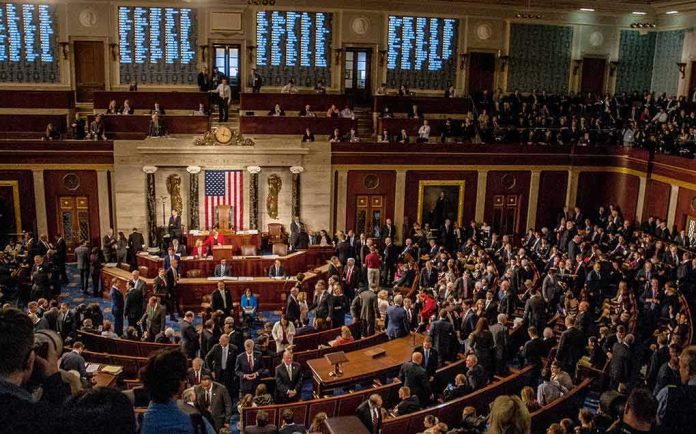
The House of Representatives unanimously found Leon Black in contempt of Congress for refusing to comply with subpoenas issued in a probe examining Jeffrey Epstein’s network and the systems that allowed him to operate for years. The path to the floor vote was linear and unusually bipartisan: the Oversight Committee first subpoenaed Black for a deposition and documents, focusing in part on nondisclosure agreements he entered into with women connected to Epstein; it then advanced a contempt resolution on a unanimous vote after he declined to appear and withheld subpoenaed material. This unanimity in committee and on the House floor is rare and signals the institution’s judgment that Black’s resistance crossed a red line in a high-stakes inquiry.
Black’s counter-move—skipping his scheduled deposition and filing a lawsuit in federal court arguing the subpoenas are invalid—tracks a familiar defense strategy in congressional investigations. It shifts the fight from the hearing room to the courthouse and forces the House to choose its enforcement channel. The contempt vote, on its face, is neither a conviction nor a finding of criminal wrongdoing; it is an assertion of Congress’s investigative prerogatives, meant to compel compliance rather than punish speech.
How Congressional Contempt Is Enforced
Congress has three enforcement levers, each with different timelines and practical bite. First is criminal contempt: after a contempt certification, the U.S. Attorney for the District of Columbia can present the matter to a grand jury under 2 U.S.C. § 192; willful noncompliance is a misdemeanor carrying potential fines and up to one year’s imprisonment. Second is civil enforcement: the House can sue to enforce a subpoena, seeking a court order compelling compliance—with contempt of court as the backstop if the witness still balks. Third is inherent contempt: once used to detain recalcitrant witnesses directly, it has fallen into disuse for nearly a century and today survives mostly as historical memory rather than an operational tool.
In practice, modern Congresses default to criminal referrals and civil actions rather than inherent detention; even then, litigation often yields delay and bargaining rather than swift accountability. That gap between statutory muscle and practical results is precisely why a unanimous House contempt vote carries reputational weight: it is the clearest available signal that the chamber will escalate to courts or prosecutors if voluntary cooperation fails.
Inside the Black Subpoena Dispute
The Oversight Committee’s interest in Leon Black is straightforward: he had sustained personal and financial ties to Epstein, and the panel sought testimony and NDAs that could illuminate who knew what, when—and how private agreements may have curtailed public accountability. Committee leaders said Black appeared once voluntarily but then refused to provide the fuller testimony and documents the subpoenas demanded, culminating in his failure to appear for a scheduled deposition. The committee subsequently noticed and approved a contempt report and moved the resolution to the House floor, where it passed without dissent.
Black’s legal strategy is equally clear. His suit contends the subpoenas are invalid, a claim that typically challenges Congress’s legislative purpose, scope, or procedural footing. Pre-enforcement challenges of this sort face long odds for outright dismissal of a subpoena, but they can slow the process and narrow disputed requests once a court gets involved. If past is prologue, the likely near-term outcomes are either a negotiated narrowing and production schedule or parallel tracks: a civil enforcement case seeking a court order and a criminal referral that pressures compliance while courts sort the merits.
Why NDAs Sit at the Center of the Inquiry
Nondisclosure agreements are not inherently suspect; they are routine in commercial settlements and privacy-sensitive matters. But when an NDA purports to restrict testimony about criminal conduct or intimidate potential witnesses, it collides with strong public policy interests. That is why lawmakers have zeroed in on NDAs in the Epstein context: they want to map whether confidentiality terms were used to suppress facts essential to law enforcement and public oversight. The committee’s document demands focus on the agreements themselves—signatories, terms, consideration—and on the pattern they establish, not simply the existence of settlements.
Congress’s authority to seek such materials rests on its broad investigatory power to inform legislation; the Supreme Court has long upheld that power when tied to a legitimate legislative purpose, which can include transparency and remedies for systemic failures exposed by high-profile scandals. If courts perceive the subpoena to be pertinent to such a purpose—and tailored enough to avoid needless exposure of unrelated private data—they tend to side with Congress on production, sometimes with confidentiality protections layered in by court order or committee procedures.
The Institutional Stakes: Power, Process, and Precedent
Unanimous contempt is not common, and it resonates beyond a single witness. First, it reaffirms that private citizens—even the most resourced—do not get to unilaterally decide the scope of their cooperation with a duly authorized investigation. Second, it tests the modern enforcement toolbox: will prosecutors take up the referral, will courts expedite civil enforcement, and will the parties reach an accommodation short of judgment? Third, it lays down precedent for how Congress approaches NDAs when they intersect with allegations of serious misconduct; whichever way this dispute resolves, future committees will cite it.
None of this guarantees immediacy. Criminal contempt involves prosecutorial discretion and trial risk; civil suits can outlast a congressional session; inherent contempt is unlikely to be revived in practice. But the reputational and strategic costs of stonewalling grow with each formal step. The signal to witnesses in other investigations is unmistakable: stalling may buy time, not impunity.
UPDATED: This afternoon, the House of Representatives voted to hold Leon Black in contempt of Congress, saying he violated subpoenas when he didn't appear for a deposition or turn over nondisclosure agreements. https://t.co/fMbiEm60VT
— Erin Mansfield (@_erinmansfield) September 17, 2026
What to Watch Next
Three milestones will define the arc from symbolic to substantive. First, whether House counsel files or advances civil litigation to enforce the subpoenas on a court-supervised schedule. Second, whether the contempt certification triggers prosecutorial action under § 192, which can compress timelines and sharpen incentives to comply. Third, whether the parties negotiate a framework: targeted NDA production with redactions, in camera review, or a phased deposition under agreed ground rules. These are the pathways that routinely convert a blanket refusal into usable evidence and testimony—precisely what Congress needs to legislate credibly on transparency, survivor protections, and the integrity of financial and institutional gatekeepers.
Sources:
nypost.com, oversight.house.gov, nbcnews.com, oversightdemocrats.house.gov, bloomberg.com, cnbc.com, cnn.com, cbsnews.com, reuters.com, apnews.com, congress.gov