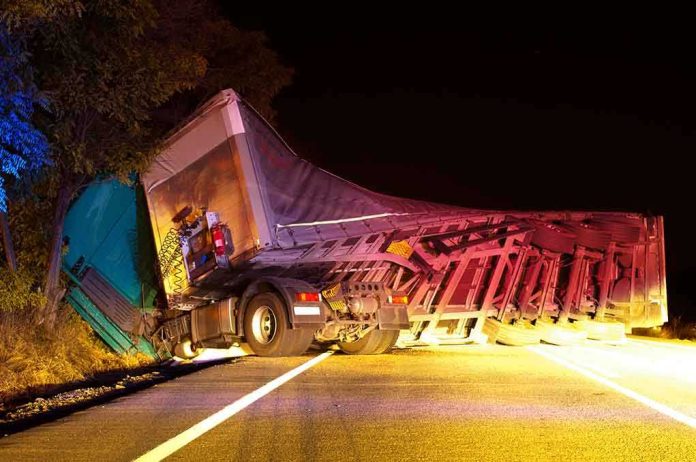
Three dead on a Southern California freeway, a semi-truck driver in cuffs, and a federal detainer quietly turning a crash into a national Rorschach test on borders, booze, and basic accountability.
Story Snapshot
- California prosecutors charged 21-year-old Jashanpreet Singh with gross vehicular manslaughter and drug-related driving offenses after an eight-vehicle crash killed three people [2][4].
- The Department of Homeland Security said Singh is an Indian national in the country illegally; immigration authorities lodged a detainer [4].
- Federal sources told one outlet Singh first entered via the El Centro border sector in 2022 and was released pending proceedings [3].
- Jail records placed Singh in San Bernardino County custody with $250,000 bail during early coverage [2].
What prosecutors filed and what that signals
San Bernardino County prosecutors filed three counts of vehicular manslaughter with gross negligence and a count tied to driving under the influence of a drug that caused injury after an eight-vehicle collision on Interstate 10 near Ontario killed three people [2][4]. The charging mix signals the state’s theory: impairment, recklessness, and foreseeable harm. The district attorney’s office said additional charges could follow as investigators finalize toxicology and crash reconstruction, which often sharpen questions about speed, braking, and lane control [4].
California Highway Patrol arrested Singh following the pileup, and coverage described a crash scene consistent with high kinetic energy and limited reaction margin [2]. Jail records reflected his booking at West Valley Detention Center with bail set at $250,000, corroborating an active criminal case and contemporaneous custody status [2]. Those data points matter because they anchor the timeline to verifiable county systems, reducing speculation about whether the case was real-time or retrospective rumor.
Immigration status claims and the evidence line
The Department of Homeland Security told reporters Singh is an Indian national without lawful status in the United States, and that an immigration detainer was placed on him, signaling removal interest if the county releases him [4]. A separate report quoted federal sources who said Border Patrol first encountered Singh in the El Centro Sector in March 2022 and released him into the interior pending a hearing [3]. These assertions frame a policy debate, but they largely arrive through media relay rather than public primary documents.
That evidence line has strengths and gaps. Two outlets independently reported the unlawful-presence claim and the detainer, aligning with common immigration enforcement protocol in county jails [2][4]. However, neither outlet published an A-file record, an encounter report, or the detainer form, which means the public still relies on agency statements rather than the underlying paperwork. A careful reader should treat the immigration narrative as strongly asserted but awaiting documentary publication, a distinction that helps separate facts from fervor.
Causation, culpability, and the guardrails of common sense
Crash culpability turns on conduct behind the wheel. Prosecutors allege drug impairment and gross negligence, which, if proven, supply causation regardless of immigration status [4]. Conservative common sense separates two questions. First, did the driver commit crimes that killed people? That rests on toxicology, vehicle dynamics, and witness evidence. Second, did federal and state systems clear or miss preventable risks? If an unlawful entrant gained a commercial foothold despite pending proceedings, voters deserve to know which checkpoints failed and why.
Side claims require discipline. Some commentary treats immigration status as the cause of the crash. The public record does not show that link; it shows alleged intoxication and negligent driving [2][4]. Other commentary dismisses status as irrelevant. That ignores that immigration custody, licensing vetting, and employer compliance are legitimate public-safety levers. The right standard threads the needle: judge crash guilt by evidence of impairment and negligence, and judge policy by whether institutions enforced the rules they already have on the books.
What to watch next and how to think like an adult
Three disclosures will clarify everything. First, the criminal complaint and probable-cause statement will specify speed, drug toxicology, witness timelines, and any post-crash conduct such as flight or refusal testing. Second, the immigration detainer and encounter history will confirm status, 2022 processing, and any notice-to-appear milestones. Third, licensing and carrier records will show who verified eligibility to drive a commercial rig and how employment screening worked. Until then, anchor on charged counts, detainer confirmation, and verifiable jail records [2][3][4].
Sources:
[2] Web – Semi-truck driver arrested in deadly crash on Southern California …
[3] Web – Illegal immigrant trucker accused in fatal California crash released …
[4] Web – Truck driver in country illegally was under influence of drugs in …