The controversy over Portland Public Schools’ back-to-school video is not really about whether a drag performer appeared on camera — that much is documented and undisputed. The genuine question, and the one that will keep recurring in districts across the country, is who gets to decide what a public school district’s official voice should sound like, and whether “branding” language dressed up as inclusion can substitute for the plainer, harder work of educating children.
Key Points
- Portland Public Schools posted an official 2026-27 welcome-back video opening with drag performer Poison Waters, identified as an “advocate, educator and host.”
- The video promoted new district guiding principles — “excellence,” “purpose,” and “radical joy” — aimed primarily at staff and principals, not students.
- No independent reporting disputes that the video occurred or what was said in it; the dispute is over interpretation, motive, and appropriateness.
- Portland Public Schools has not issued a public on-record explanation for the casting choice, leaving critics’ framing largely unanswered.
- The episode fits a broader, costly national pattern of schools becoming flashpoints in disputes over LGBTQ visibility and institutional messaging.
What the District Actually Put Out
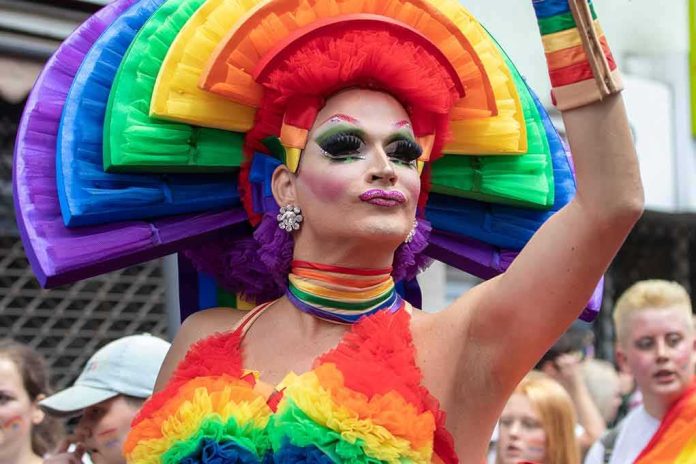
On August 28, Portland Public Schools’ official social media account released a “Welcome Back” reel aimed at teachers, principals, and staff, built around three district watchwords for the coming year: excellence, purpose, and radical joy. Drag performer Poison Waters — legal name Kevin Cook, a fixture of Portland’s drag scene for decades — opened the video and delivered its central message directly to camera: “I’m here to wish you all a successful 2026-2027 school year and to thank all the amazing principals, teachers, and staff for your dedication to your students and their learning,” followed by a closing line tying the sentiment together: “together we rise with excellence and purpose”.
Several outlets independently confirmed the same sequence and the same quoted language, which removes any real doubt about the basic facts. What’s notable, and what critics have seized on, is sequencing: a cultural performer, not a classroom teacher or administrator, was chosen as the video’s opening voice — a decision that reads, fairly or not, as a branding choice rather than an instructional one.
“Radical Joy”: Vision Statement or Marketing Copy?
Phrases like “radical joy” occupy an odd rhetorical space in institutional communication. They are meant to signal warmth, resilience, and inclusion, but to a skeptical audience they can sound like consultant-speak imported from a nonprofit strategic plan rather than language rooted in curriculum or classroom practice. The district paired the phrase with hashtags such as #TogetherWeRise and #radicaljoy, reinforcing that this was social-media branding first and foremost, not a lesson plan or policy announcement. That distinction matters: a district’s public voice and a district’s academic priorities are related but not identical things, and conflating a promotional video with actual instructional choices is exactly the kind of inferential leap that deserves scrutiny in either direction.
To be fair to the record, nothing in the available reporting shows the video displaced instructional time, altered curriculum, or diverted academic resources. The criticism is about symbolism and priorities — a legitimate area of public debate for a taxpayer-funded institution — not about a documented policy failure. Whether that symbolism was appropriate is, ultimately, a values judgment voters and parents are entitled to make for themselves; it is not something the available facts settle one way or the other.
A Familiar Battle Line, Not an Isolated Incident
Drag performance in or adjacent to public schools has become one of the more reliable flashpoints in American education politics over the past several years, running parallel to fights over library book displays and “drag story hour” events at public libraries. The Ninth Circuit Court of Appeals has already had to adjudicate this terrain directly, upholding a preliminary injunction against a Montana law banning drag story hours in schools and libraries on First Amendment grounds — treating the underlying activity as protected expressive speech rather than dismissing the dispute as pure culture-war noise. That a federal appellate court has taken the constitutional question seriously tells you something important: this is no longer a fringe disagreement, but a recognized legal and political fault line running through public institutions nationwide.
Public Schools in Portland, Oregon Welcome Students Back With Message From a DRAG QUEEN (VIDEO) https://t.co/vZyAMG1Lv0 #gatewaypundit via @gatewaypundit
— Terry Petty (@tp517_petty) September 1, 2026
The financial and civic cost of these recurring conflicts is not trivial, either. Researchers at UC Riverside, UCLA, the University of Texas at Austin, and American University estimated that culturally divisive conflicts cost U.S. school districts roughly $3.2 billion during the 2023-24 school year alone, a figure that captures administrative time, legal exposure, communications damage control, and lost instructional focus. The National Education Association has separately documented that this kind of polarized conflict tends to chill open dialogue in classrooms rather than resolve anything, leaving both students and staff worse equipped to discuss contested topics productively.
What’s Genuinely Contested — and What Isn’t
Readers should be precise about where the real dispute lies. That Poison Waters appeared in an official PPS video, that the language used was “radical joy” and “excellence and purpose,” and that the message was staff-facing rather than a classroom lesson — none of this is in serious question across the available reporting. What remains unresolved is motive and consequence: why the district chose this particular messenger, whether taxpayer or vendor funds were involved in producing the reel, and whether this reflects an isolated communications decision or a broader pattern in how the district brands itself. Portland Public Schools has not offered a public, on-the-record explanation addressing any of these points, which leaves the field open to critics’ framing by default rather than by demonstrated fact.
That gap is worth naming plainly. In the absence of a district statement, the controversy is being interpreted almost entirely through the lens of outside commentary — much of it from outlets with clear editorial positions on drag and LGBTQ visibility in public life. That doesn’t make the underlying facts wrong; it does mean the public conversation is running ahead of any institutional accountability, which is its own kind of problem for a public agency answerable to parents and taxpayers.
Why This Keeps Happening
Every few months, a different district somewhere in the country becomes the next data point in this same argument, because the underlying tension — between institutions signaling cultural values and communities expecting narrowly educational focus — has no settled resolution, legal or otherwise. Until school boards and communications offices treat these choices with the same deliberation they’d apply to curriculum decisions, expect the pattern to repeat, with each new instance absorbed instantly into a national argument that has very little to do with the specific school, the specific video, or the specific children it was ostensibly made for.
Sources:
thegatewaypundit.com, thepostmillennial.com, antiwokeschools.com, newswav.com, pdx.edu, pps.net