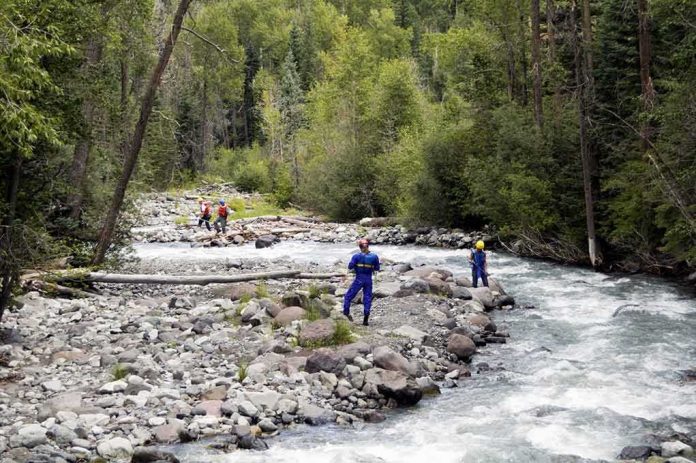
Five adults walked into a quiet Ohio river on a summer night, and within minutes, a whole family was gone while two small children watched from shore.
Story Snapshot
- Five adults died in the Scioto River after a rescue attempt turned into a chain drowning
- A terrified child under 10 ran to the road and flagged down a driver who called 911
- Deputies say the group came to fish; one person chose to swim and began to struggle
- Media rushed to blame “bad choices,” while questions about river safety still hang in the air
How a quiet fishing trip turned into a chain drowning
Delaware County Sheriff Jeffrey Balzer says the group came to the Scioto River near the O’Shaughnessy Reservoir on a summer Sunday evening to relax and fish. They picked a public fishing area along Riverside Drive, just north of the Columbus Zoo, a spot locals know and use often. At some point after 9 p.m., one adult decided to get into the river to swim. That simple choice was the first link in a deadly chain.
Officials say the swimmer began to struggle in the water, and two other adults went in to try to save that person. They also started to struggle, likely pulled by currents or caught in a drop-off they did not expect. Then, according to the sheriff, up to two more adults entered the river, trying to help their friends or relatives as panic grew. Within a few minutes, the rescue effort had turned the entire river edge into a crisis.
The desperate dash for help and the final count
While the adults fought the water, two children under ten watched the chaos unfold. One of them ran from the river to Riverside Drive, where a passing driver saw a terrified child and stopped. The child told the motorist that his family was in the river. That driver dialed 911, pulling a chain of professionals into the story that was now the group’s only hope.
Firefighters and deputies reached the river soon after the call. They found two adult women in the water and pulled them out, but doctors later pronounced both dead at local hospitals. The night turned from rescue to recovery. Teams with boats and underwater gear searched into the early morning hours for three missing men. By Monday afternoon, officials confirmed they had found all three male victims in the river, bringing the final toll to five adults: two women and three men.
Who this group was and what we still do not know
Sheriff Balzer said it appears the group included two sets of parents, two children, and at least one other adult. Because authorities have not released names yet, the exact family ties remain unclear, including whether all five were related or part of a larger extended group. Deputies also report a language barrier with the children, which may be slowing efforts to fully map out every person’s role that night.
Officials say there was no boat involved at the scene and have not said anyone was drinking. The sheriff has been direct about this gap: it is unclear if alcohol played any part in what happened. That means one common media angle—the idea of a drunk group acting foolishly—is not backed by facts at this point. There are also no public autopsy or toxicology reports yet, so people who jump to blame alcohol are chasing a story they cannot prove.
Media blame versus hard questions about water safety
National and local outlets moved fast, pushing out headlines within about twenty-four hours that all echoed the same theme: parents rush into river to save swimmer and drown. Many pieces lean on a “dumb rescue” idea, where the main lesson is that people should not jump in after a struggling swimmer. That framing fits a common pattern, but it also lets public agencies off the hook too quickly.
Water safety experts say chain drownings like this, where untrained rescuers die trying to help, make up a large share of recreational drowning deaths each year in the United States. That means this is not just about one family making a bad choice; it is about a known risk that repeats over and over. A serious approach, grounded in common sense, asks why we keep seeing the same kind of tragedy at popular public spots without stronger guardrails.
Hidden currents, missing warnings, and what families should demand
The Scioto River near the O’Shaughnessy Reservoir is a “popular fishing area,” yet reports so far say nothing about warning signs, clear depth markers, or rescue gear at that exact access point. If the water there has strong currents, sudden drop-offs, or debris that traps swimmers, then families should know that before anyone slips off their shoes and walks in. The fact that five adults drowned in seconds suggests this was more than a calm swimming hole with a simple mistake.
Five people drowned trying to rescue a struggling swimmer from the Scioto River in Ohio on Sunday evening.
A group of five adults, two children, and possibly another person were out on the river to enjoy a night of fishing.
At some point, one adult went into the water to swim…
— Rose (@901Lulu) July 21, 2026
From a conservative, common sense view, the lesson is not to shame parents who died trying to save someone they loved. The lesson is to ask why our local governments and state agencies treat river access like an honor system. If officials know certain spots are dangerous, they should post bold warnings, restrict risky entry points, and make sure basic rescue tools are on site. Families should push for those answers now, before this river claims another group of people who thought a summer night by the water was safe.
Sources:
nypost.com, theguardian.com, foxnews.com, youtube.com, abc6onyourside.com