
The most revealing measure of a democracy’s health isn’t the margin of victory; it’s whether the loser accepts the result. The United States passed that test in court after 2020. It has struggled ever since to pass it in public life.
At a Glance
- Courts across jurisdictions rejected the core allegations in the 2020 postelection lawsuits; the litigation campaign failed to change outcomes.
- Cory Booker’s critique rests on a documented pattern: rhetoric that primes supporters to doubt adverse results and a legal strategy that mobilizes, signals, and delays more than it persuades judges.
- President Trump’s recent framing emphasizes “earning confidence” and expanding an election “integrity army,” while avoiding explicit claims that votes were changed; critics argue the effect still erodes trust.
- Delegitimization—portraying political defeats as system failures—has durable downstream costs: lower trust, harder governance, and incentives for repeat disputes.
What Booker Is Arguing—and Why It Resonates
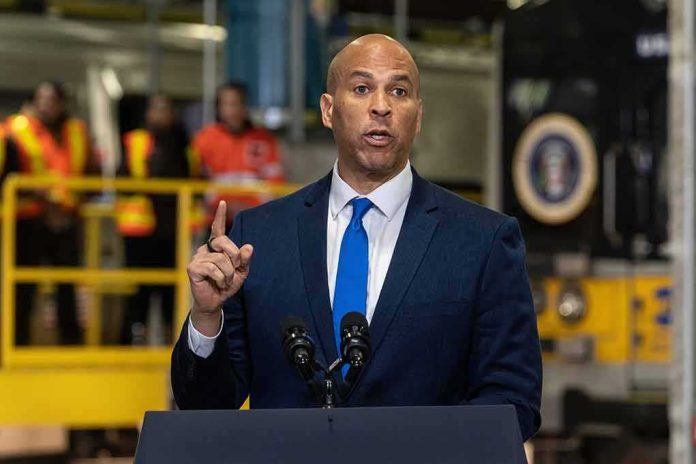
Senator Cory Booker’s charge is blunt: Donald Trump undermined one election and is poised to undermine another. Strip it of partisanship and you reach a testable core—did the postelection litigation and messaging of 2020 meaningfully establish fraud or lawless tabulation, or did it principally create a narrative of illegitimacy that outlived its courtroom defeats? On the legal record, the answer is clear. Across dozens of cases, state and federal judges—including Republican appointees—rejected claims aimed at changing outcomes, often in emphatic terms. The Supreme Court declined to take up key matters that might have altered results. The courtroom phase ended with no proof of widespread fraud that could have changed the winner.
That posture gives Booker’s warning its footing: if courts ended the dispute but the losing narrative persisted, then the delegitimization campaign did not depend on legal success. It depended on repetition and reach. In this sense, the risk he flags is not hypothetical; it is behavioral. When political leaders teach supporters to see defeat as evidence of a broken system, they build muscle memory to contest the next loss, too.
How the Post-2020 Strategy Worked (and Didn’t)
The postelection playbook blended lawsuits, press conferences, and social media claims designed to keep multiple possibilities alive at once: that something went wrong; that courts might intervene; that certification should slow; and that supporters should remain mobilized. Election-law specialists predicted at the time that these cases were unlikely to change outcomes absent razor-thin margins and credible evidence—conditions largely not met. After the filing blitz, the bottom line matched the forecast: of more than 60 cases, only one produced a favorable ruling of limited scope; nothing altered the presidential result.
Yet litigation’s value is not binary win-or-lose. Even losing cases can delay, feed content cycles, and offer selective snippets for downstream narratives. Brookings summarized the judicial ledger as decisively unsuccessful overall, with a small minority of favorable judicial votes later amplified by advocates to imply greater traction than existed. That pattern—legal failure paired with narrative persistence—anchors the concern that tactics proven ineffective in court can still be effective in politics.
Trump’s Current Framing: “Earning Confidence,” Not Weakening It
President Trump’s more recent posture stresses exposure of “vulnerabilities,” the expansion of a partisan “election integrity army,” and a stated intent “not to weaken confidence” but to earn it by rapid fixes. In a primetime address, he did not claim specific votes were altered in 2020, even as the rhetoric suggested systemic risk and foreign interference in general terms. Coverage across outlets converged on the same contour: an emphasis on risk and grievance without new proof that tabulations were changed or outcomes corrupted.
Two truths can sit together but pull in opposite directions. On the one hand, process scrutiny is legitimate—elections benefit from audits, transparent rules, and trained observers. On the other, persistent insinuations of theft unbacked by dispositive evidence function as delegitimization by accumulation. Voters hear the drumbeat, not the legal fine print. When the same leader who declined to concede in 2020 promises an even “bigger and stronger” integrity force while assuring a fair election, supporters and skeptics will parse not just the words but the history that trails them.
Delegitimization: Mechanism and Consequences
Delegitimization is not a slogan; it is a process. Politically, it works by redefining defeats as proof of corruption, recasting neutral institutions as hostile, and normalizing conditional acceptance of results. Communication researchers and comparative politics scholars have documented how repeated claims of systemic bad faith degrade trust in referees—election administrators, courts, even local canvassing boards. In the electoral domain, disinformation compounds the problem, corroding confidence even when procedures function as designed.
The near-term effects are visible: lower faith in official counts, pressure on election workers, and an incentive structure that rewards raising objections as a show of loyalty. The long-term effects are more corrosive. If a substantial share of citizens believes rules only bind the other side, peaceful rotation in office—the stabilizing norm of modern republics—weakens. The United States has robust guardrails: decentralized administration, bipartisan canvasses, judicial review. But those guardrails, by design, cannot substitute for political leadership that accepts loss as part of the constitutional bargain.
Sen Cory Booker (D-NJ) on Trump whether Trump will seek to meddle in 2026 elections:
“I think a criminal who undermined one election is very likely to undermine another” pic.twitter.com/27h3ulh1lq
— Susan Miller (@SusanMilier) September 29, 2026
Where the Real Disagreement Lives (and What Would Resolve It)
The genuine debate is not whether the 2020 litigation changed outcomes—it did not. It is whether the ongoing focus on “vulnerabilities” and partisan monitoring restores or reduces public confidence. Advocates of expansive monitoring argue that visibility deters mischief and reassures skeptical voters. Skeptics counter that labeling these deployments as an “army” and weaving them into a yearslong narrative of “stolen” elections signals presumption of bad faith and primes conflict at the polls.
There is a straightforward way to resolve the tension in practice. If the aim is truly to earn confidence, then commit, in advance and in public, to accept certified results absent specific, court-tested evidence sufficient to change the outcome. Pair that commitment with investments everyone can see: recruitment of poll workers across parties, clear rules against intimidation, rapid post-election audits where statutes require them, and an agreement to litigate process disputes quickly and abide by final judgments. The courts have already shown they can adjudicate; the missing ingredient is a shared willingness to let judgments end the fight.
What to Watch Next
Booker has placed a marker: that a leader who refused to accept one defeat is likely to contest the next. The counter-marker from Trump is equally clear: that he is safeguarding elections, not sabotaging them. The test will not be what either side says now, but how they behave on the back end of real returns. Watch for three signals. First, whether claims focus on concrete, litigable defects tied to margins or on ambient suspicion. Second, whether court losses end the public contest or become grist for further doubt. Third, whether the machinery around “integrity” deters misconduct or chills participation. The republic doesn’t need everyone to like every result. It needs enough leaders to accept them.
Sources:
english.ahram.org.eg, judicature.duke.edu, nbcnews.com, brookings.edu, apnews.com, nytimes.com, factcheck.org, pbs.org, time.com