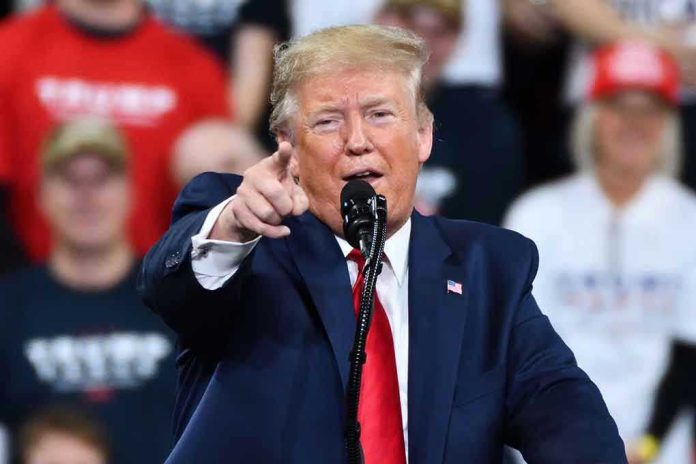
Presidents do not stumble into escalation; they prepare the ground, test leverage in public, and hold executable options in reserve. In mid-2026, President Trump made clear he was nearing such a pivot on Iran—signaling a possible “massive attack,” convening senior advisers on strike intensification, and pairing threats with a narrow diplomatic offramp—while the military and legal machinery that enables rapid escalation spun up in parallel.
The Short Version
- Trump said he was close to deciding on a larger military escalation against Iran and that plans were ready if he chose to proceed.
- Reporting described Situation Room deliberations and an operational plan under consideration for a major strike package.
- The White House framed Iran policy as an ongoing, decisive campaign, even as Trump kept channels for talks open.
- The decision space was shaped by theater realities—munitions inventories, regional risk—and by War Powers timelines.
What Trump actually committed to: a live decision with real options on the table
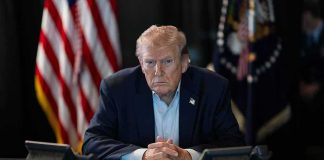
In late July 2026, Trump said plainly he was “considering a massive attack” on Iran and “close to making a decision,” language that signaled more than rhetorical brinkmanship and aligned with simultaneous internal deliberations on intensifying strikes. Within forty-eight hours, multiple outlets reported a meeting with top advisers and cabinet officials to decide whether to expand the military campaign—evidence that the president’s public posture mirrored a real option set being weighed at the highest levels. The Associated Press later reported that an executable plan existed—advertised by Trump as “the biggest attack since World War II”—before he chose to hold off, underscoring both the gravity of the contemplated action and the reversibility inherent in presidential crisis management.
Two additional features defined the moment. First, Trump linked his decision to ongoing battlefield conditions and longer-term consequences, including further action after preceding strikes and regional escalation—a framing consistent with an iterated campaign rather than a one-off sortie. Second, he coupled threats with a last-chance invitation to talks, a classic coercive diplomacy posture that preserves pressure while leaving a narrow political offramp.
How the escalation machinery works: planning, posture, and political time
When a president signals a “big decision,” the military staff work is already well underway. The New York Times’ description of advisers debating intensification and weighing the constraint of dwindling air-defense munitions points to a familiar calculus: target sets and sequencing are scoped by planners, but executable timelines are gated by magazine depth, basing access, and air-defense suppression capacity. The existence of a named operational campaign—Operation Epic Fury in White House materials—reinforces that this was not ad hoc punishment but a rolling concept of operations designed to impose costs on Iran’s regime while shaping its future choices.
The legal clock matters too. The administration had formally notified Congress that hostilities against Iran had resumed, a move it saw as opening a new 60‑day window for operations without fresh authorization—an interpretation rooted in the War Powers Resolution’s notify-or-terminate framework, and one that modern presidents have used to maintain strategic flexibility during active crises. That legal runway does not dictate strategy, but it does structure tempo: decision points tend to cluster near the start and the edge of those windows as presidents balance military utility, congressional politics, and alliance management.
Why this decision window opened: the regional escalatory ladder
Escalation is not created in the Oval Office; it is triggered by adversary moves and opportunity costs in the theater. U.S. officials had already called Iran’s direct ballistic missile strike on Israel a major escalation in 2024—an inflection that altered both threat perception and allied expectations, and that made a more forceful U.S. response politically and strategically plausible two years later. By mid‑2026, a steady drumbeat of U.S. and Iranian strikes, maritime harassment near the Strait of Hormuz, and proxy activity across Yemen and the Gulf produced a cockpit crowded with risks: energy-market shock, partner pressure for more decisive action, and the perennial danger that limited retaliation could spiral into a larger war if air defenses were stressed and miscalculation crept in.
Inside that environment, presidents face a sharp trade: escalate to reestablish deterrence, or restrain to prevent horizontal spread. The reported consideration of magazine depletion for air-defense interceptors is the kind of unglamorous constraint that can, by itself, dissuade a decision to go big on a given night; executing at scale without a robust defensive backstop invites unacceptable risk to forward-deployed forces and regional infrastructure.
Coercive diplomacy, not performative bluster
Trump’s pattern—telegraphing a potential “massive attack” while advertising that new talks could avert it—fits the textbook logic of coercive diplomacy: pair credible military options with a conditional political offer, then force the adversary to choose between pain and concessions. The White House’s own rhetoric described objectives as “clear and unchanging,” and the campaign as “decisive,” language meant to reassure domestic and allied audiences that the pressure track had coherence even as the president kept the endgame ambiguous by design. The AP’s description of a held-in-reserve strike plan reinforces that the threat component was real, not merely a bargaining chip conjured for headlines.
To be clear about the record’s limits: the available reporting documents deliberation and readiness, not a final order to execute. But in modern U.S. crisis practice, that is the crux—decisions are often staged, with options kept warm as presidents harvest marginal gains from signaling, probe for diplomatic texture, and wait for either provocation or opportunity to harden choice into command.
The constitutional backdrop: fast moves, bounded duration
Every Iran decision since 2019 has sat inside a familiar legal shape. The War Powers Resolution requires notification within 48 hours and termination within 60 days absent authorization; administrations typically argue that ceasefires or shifts in operational scope reset the clock, while critics contend that hostilities are continuous and thus require explicit congressional sanction. In July 2026, the administration’s notification to Congress that hostilities had resumed fits that lineage—a bid to preserve agility while respecting the statute’s procedural hooks. Analysts at Brookings and elsewhere have traced how decades of practice have moved the center of gravity toward the executive in limited conflicts, even as serious scholars debate the constitutional and policy wisdom of that drift.
The practical effect is straightforward. Presidents retain the freedom to escalate rapidly within weeks, provided they can point to self-defense or ongoing hostilities; if they want a sustained major campaign, they need either an authorization or a plausible theory that the fight has ended and restarted. The 2026 Iran episode unfolded on exactly that track, with the “big decision” moment landing squarely inside the 60-day architecture.
🇺🇸🇮🇷 There are two potential escalation windows in the Iran war.
The first is October. If Washington expects a major Iranian move, Trump could try to preempt it and seize the initiative before the midterms.
But what comes afterward is even more concerning.
“𝘍𝘳𝘰𝘮 𝘵𝘩𝘦… https://t.co/kjVyucoczp pic.twitter.com/vYhEOhpdco
— Mario Nawfal (@MarioNawfal) September 17, 2026
What to watch when a president says he is “close”
Three signals separate theatrics from imminent action. First, synchronized reporting of high-level decision meetings—especially when sources reference munitions, air defenses, or tanker cycles—points to genuine operational gating rather than speechwriting. That was present here. Second, explicit linkage of military options to a narrow diplomatic offramp is a hallmark of coercive bargaining, not domestic posturing; Trump’s “last chance” talk track met that standard. Third, a White House narrative that casts ongoing operations as a named campaign indicates sustained pressure, not a discrete punitive strike—again present in 2026.
The final wildcards are adversary behavior and alliance politics. Iran’s choices—ballistic fires, maritime harassment, or restraint—directly shape U.S. timelines. So do requests and risk tolerances from Gulf partners and Israel. In 2026, those dynamics produced a classic holding pattern: pressure maintained, options primed, diplomacy kept ajar. A president “close to a decision” is often exactly where U.S. strategy intends to be—ready to swing hard, but collecting value from the threat itself as long as the balance of risk and leverage permits.
Sources:
theamericanconservative.com, theguardian.com, axios.com, cnbc.com, apnews.com, nytimes.com, thehill.com