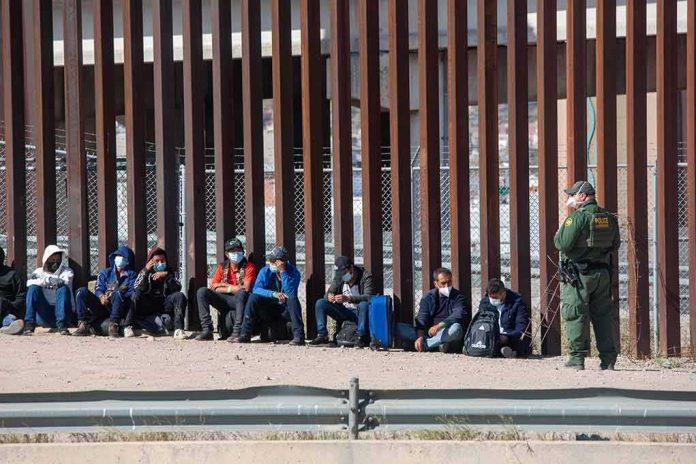
Mass crossings at Ceuta are never just about one bad night at a fence; they are the predictable outcome of a border regime that sits at the intersection of EU law, Spanish policy, Moroccan leverage, and the physics of the Strait—when any one piece shifts, the whole system lurches, and people die.
The Short Version
- Ceuta’s surges are system failures, not isolated incidents; they emerge from legal changes, bilateral politics with Morocco, and the mechanics of sea crossings.
- Local leaders declared a humanitarian emergency and Madrid deployed troops—evidence of an acute state-managed crisis, not routine irregular migration.
- Reported death tolls reached into the dozens as thousands entered, many by swimming; returns were later coordinated with Morocco at scale.
- A cited Supreme Court ruling on “pushbacks” and Morocco’s variable border posture shaped both the incentive structure and Spain’s response window.
Ceuta’s design problem: why the enclave breaks under pressure
Ceuta is a compact Spanish enclave on the African shore, fronting Morocco and the short, treacherous waters of the Strait of Gibraltar. It is one of two EU land borders with Africa, and thus a pressure valve for regional displacement, smuggling markets, and diplomatic signaling. The city’s perimeter fence deters land entries, but a barrier that extends into the water can be skirted by swimmers with minimal gear; when sea conditions are favorable and controls on the Moroccan side relax, the route becomes viable for thousands at once. In those windows, tactical capacity—boats, thermal cameras, and rescue coverage—matters less than the upstream political and legal conditions that determine how many people try in the first place.
That interplay is why surges at Ceuta feel sudden yet are structurally predictable. In 2021, after a diplomatic rift, Moroccan forces “relaxed the last control mechanisms,” and roughly 8,000 people entered in two days—an immediate humanitarian crisis that Spain could not absorb operationally. The same mechanics recur: when Morocco loosens controls, when courts constrain rapid returns, when traffickers read policy shifts as opportunity, the deterrence calculus flips. The result is a flood that no municipality of 80,000 can manage on its own.
What the latest surge tells us: mechanism, scale, and state response
Recent reporting describes an extraordinary sea-led influx into Ceuta: tens of thousands crossing from Morocco over a short span, many by swimming around the breakwater; dozens of deaths concentrated at beaches such as Tarajal, from drowning and crowd crush; and a local system overwhelmed—shelters, policing, sanitation—until Spain surged military and police assets. The regional president declared an “absolute humanitarian and social emergency,” a term chosen to trigger Madrid’s intervention. Spain’s Interior Ministry then led a two-track response: reinforce the fence line and reception capacity, and negotiate rapid, coordinated returns with Moroccan authorities. Officials stated that tens of thousands were returned within days, a scale feasible only when bilateral cooperation is active.
These operational facts carry two implications. First, border governance at Ceuta is co-produced: Spain controls its perimeter and legal process, but outcomes hinge on Moroccan enforcement and willingness to receive returnees. Second, the state’s own posture—troop deployments, emergency declarations, and mass returns—is an acknowledgement that Ceuta is a national, not municipal, problem. That is not a confession of culpability for the deaths; it is proof that crisis management, when deterrence has already failed, sits squarely with Madrid.
Law in the water: how judicial rulings reshape incentives
Ceuta officials have linked the surge to a Spanish Supreme Court ruling that barred immediate returns of people who arrive by sea without due process—closing a space that, historically, allowed swift “hot returns” without individual assessment. The legal principle is straightforward: collective expulsions violate fundamental rights; each person must have access to procedures that test protection claims. The policy effect, however, is more complex. When a binary, fast-turnback tool disappears, the message—accurate or not—can be simplified into “if you make it to shore, you stay for a while.” For traffickers and social networks, that is a change in expected value; for rescue planners, it is a forecast of higher volumes at sea, where risk compounds quickly in currents and cold shock.
Two guardrails matter here. First, judicial constraints do not “cause” mass crossings; they alter the cost-benefit calculus at the margin for people already primed to move. Second, legality and deterrence are not zero-sum in principle, but they can be in practice if alternatives—lawful channels, pre-screening, work visas—do not scale in tandem. In that vacuum, sea routes expand. The state then faces the least-worst choice set: rescue first, process later, and negotiate returns where lawful and safe.
Morocco’s role: the decisive variable you cannot command
Every serious analysis of Ceuta converges on one hard fact: Spanish outcomes depend on Moroccan choices. When Rabat enforces, flows fall; when it relaxes, volumes soar. That dependency is not a moral judgment but a structural one—shared borders are shared systems. Reports during the surge describe swimmers leaving from Fnideq and other points, with Moroccan forces stopping some and allowing others to pass; once people are in the water, Spanish services are on the hook for rescue under maritime law and common decency. Coordination later enabled rapid returns—again, a reminder that deterrence at Ceuta is a bilateral instrument, not a unilateral switch in Madrid.
This dependence explains the volatility of narratives. Critics inside Spain frame mass entries as a failure of the central government; officials point to external proximate causes and traffickers; humanitarian groups track the death count and due-process deficits. All three can be partly true at once. The critical analytic task is to disaggregate: who controlled what, when, and with what foresight.
EXCLUSIVE: Spain rejects US language placing Ceuta in Moroccan territory as crossings surge
Pages 86 and 87 of a late-April U.S. House Appropriations Committee document state that the Spanish-administered cities are located in Moroccan territory and back State Department… pic.twitter.com/hsSaJIIWcQ
— DannyKPolitics (@DannyKPolitics) July 31, 2026
The human toll: risk concentration at Tarajal and along the breakwater
Death at Ceuta is rarely random; it concentrates where topography and crowd dynamics collide. Tarajal beach sits beside infrastructure that funnels movement toward narrow passages and the waterline. When thousands move on rumor and tide tables, you get surges at the breakwater, swimmers clinging to jerrycans and inner tubes, and a steep gradient between those who can manage a two-hour swim and those who tire in minutes. Reporting from multiple outlets lists drowning as the primary mechanism of death, with some fatalities from crush injuries near the fence. These are not unforeseeable hazards; they are the predictable outcomes of mass maritime attempts under-resourced for rescue.
Accountability, without theatrics
Assigning responsibility in a binational maritime surge requires more than visceral footage. The evidence available supports several firm claims. First, the scale was extreme by any historical measure; officials cited figures in the tens of thousands over a short period, overwhelming reception capacity. Second, the decision to declare an emergency and deploy troops confirms that Spain treated the event as a state-level crisis. Third, returns were executed rapidly in coordination with Morocco, indicating functional cross-border channels once the crisis peaked. Fourth, there is no primary-source admission by the Spanish government that its policies “caused” the deaths; its public posture emphasized rescue, order, and legal process.
The inferential case against Madrid—that policy signals reduced deterrence and that planning failed to pre-position rescue assets at scale—cannot be proven or dismissed conclusively with the current public record. That requires dispatch logs, after-action reports, and a legal timeline of the Supreme Court ruling’s implementation. Until those documents are public, the only honest position is this: Spain managed a crisis it did not prevent; Morocco’s posture shaped the inflow; law constrained immediate returns; and the sea turned these interacting choices into lethal risk for the most vulnerable.
What would durable competence look like?
Three strands define serious preparedness. First, bilateral predictability: a routinized, resourced cooperation regime with Morocco that makes sudden enforcement relaxation costly and early-warning sharing automatic. Second, lawful capacity: surge-ready reception and screening that meet due-process standards without signaling impunity, with pre-planned, rights-compliant return channels for those not eligible to remain. Third, maritime realism: permanent rescue readiness calibrated to spiky volumes—more boats, better surveillance of launch sites, and public messaging that is accurate about legal outcomes and frank about the danger of the route.
None of this is glamorous; all of it is measurable. If, at the next surge, Ceuta can absorb several thousand arrivals without emergency declarations, if drownings are near-zero because rescue assets are pre-positioned with real intelligence, if return and protection decisions are made quickly and individually, then the system will have matured. If instead we see the familiar pattern—diplomatic friction, rumors of legal safe passage, swimmers at Tarajal, and a scramble to deploy troops—then we have learned nothing, and the strait will keep sending back bodies.
Sources:
redstate.com, aljazeera.com, theolivepress.es, facebook.com