
The core issue is not whether criticism of Israel or its lobbying ecosystem is allowed; it is whether a politician’s wording crosses from hard-edged advocacy into an old and recognizable antisemitic trope. In Ilhan Omar’s case, the historical record shows why the controversy never faded: the language was specific enough to be read as money-and-influence innuendo, and the official reaction was severe enough to make that reading institutionally consequential.
Intro
- The most durable fact in the record is Omar’s “Benjamins”/“AIPAC” exchange, which critics read as invoking a trope about Jewish money and political power.
- Her defenders have a narrower but real argument: the text names AIPAC, a lobbying organization, and Omar later framed her complaint as a broader critique of political influence and money in Washington.
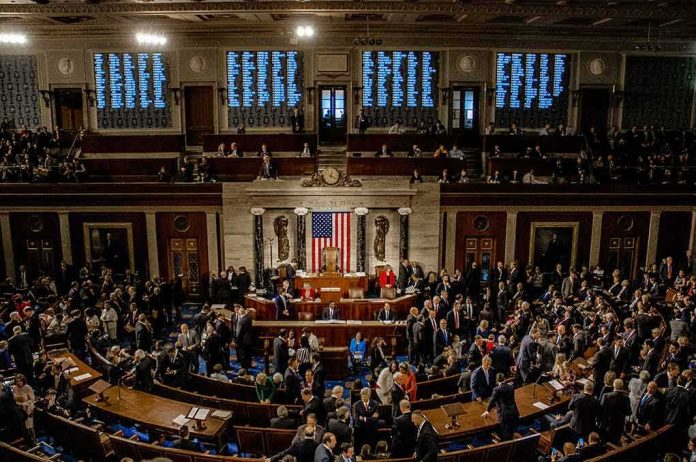
- The House did not treat the matter as a minor social-media dustup; Democratic leaders condemned it, and the chamber later adopted a resolution denouncing the comments as antisemitic.
- The strongest evidence supports a judgment about language and public meaning, not a courtroom-grade finding of intent. That distinction matters.
Why the wording became explosive
Omar’s controversy did not turn on a policy argument in the abstract. It turned on phrasing: “It’s all about the Benjamins baby,” followed by her answer, “AIPAC,” when asked what money she meant. Reporting at the time described the exchange as immediately triggering criticism because it echoed a long-standing antisemitic motif in which Jews are imagined as controlling politics through money and hidden influence. That is why the reaction was so broad. The dispute was not just about whether AIPAC is a legitimate target of criticism; it was about whether the words selected carried an implication far larger than the nominal target.
The political system treated the matter that way. House Democratic leaders publicly condemned the tweet as using “anti-Semitic tropes and prejudicial accusations about Israel’s supporters,” which is an important clue that the backlash was not confined to partisan opponents. Omar then apologized, saying, “I unequivocally apologize,” and acknowledging that she had learned about “anti-Semitic Jewish tropes,” language that confirmed she understood the remarks had been widely received as offensive. Congress later codified that judgment in H.Res.241, which says the tweets “suggest Jewish people are buying political support” and expressly condemns the comments.
The strongest case against the anti-Semitism charge
Still, the most responsible reading is not the most inflammatory one. The public record available here does not show Omar explicitly saying Jews as Jews were the target. The most direct textual target is AIPAC, a lobbying organization, and the later congressional record preserves Omar’s own broader explanation: she said she was discussing the political influence in America that makes it acceptable to talk about the NRA, fossil fuel industries, or Big Pharma, but not about a powerful lobbying group influencing policy. That is not an accidental detail. It is the central defense, and it is materially consistent with a money-in-politics framing rather than an openly ethnic one.
That defense has force, but only up to a point. It answers the question “what institution did she name?” better than it answers the question “what cultural association did she trigger?” MERIP’s contemporaneous analysis argued that criticism of the Israel lobby is not inherently antisemitic and framed the controversy as a manufactured outrage around legitimate political speech. As a matter of principle, that position is coherent. As a matter of public reception, it does not erase the fact that many listeners heard something else entirely. Political language is judged both by stated target and by recognized implication; Omar’s words, in this episode, were read through both lenses at once.
Why intent is harder to prove than reception
The deepest weakness in the accusation is evidentiary. The materials here are rich in reaction and thin in proof of intent. They include news accounts, the apology, and the House resolution, but not sworn testimony, internal drafts, deleted posts, or direct documentary evidence showing that Omar intended to invoke antisemitic imagery rather than to attack a lobbying network. That matters because motive is not the same thing as effect. A statement can be rhetorically careless, politically corrosive, and widely understood as antisemitic without a record that proves the speaker consciously meant that result.
That is why a careful historian or analyst should resist two equally lazy moves. One is to declare the matter settled beyond nuance, as if the congressional condemnation were a judicial finding. It was not. A resolution records institutional judgment; it does not conduct adversarial fact-finding. The other is to dismiss the controversy as pure bad-faith fabrication, as if the repeated references to money, lobbying, and Jewish influence had no semantic history. They do. Reporting from BBC, Politico, Time, PBS, and NPR shows a broad elite consensus that the wording sounded antisemitic, and that consensus itself became part of the story.
The congressional response changed the meaning of the episode
What makes this episode politically durable is not merely the tweet but the response architecture around it. Democratic leaders condemned the remarks. The House took up the issue. The language entered the official record. Once that happened, Omar was no longer arguing with critics on the internet; she was arguing with a chamber that had already translated a dispute over language into an institutional judgment about prejudice. That is one reason later explanations never fully reset the narrative. A public apology can narrow the controversy, but it cannot retroactively delete the first hearing millions of people had of the line.
The broader pattern is familiar in American politics. Criticism of pro-Israel lobbying is often judged not only on substance but on whether the phrasing evokes older stereotypes about Jewish money, dual loyalty, or hidden control. That is a fragile line, and Omar stepped squarely onto it. Her defenders are right that the textual target was a lobbying organization and that anti-lobbying critique is legitimate in principle. Her critics are right that the wording was laden with historical baggage and was received, by major institutions as well as by the broader press, as antisemitic.
What this episode really shows about American politics
The lasting lesson is not that all criticism of AIPAC or Israel is suspect. It is that political speech is judged in context, and context includes history, syntax, audience memory, and institutional consequence. Omar’s case became a test of whether a legislator can attack a lobbying network using language that sounds to many people like an old ethnic accusation. The answer, in practice, was no: the reaction was too broad, the apology too explicit, and the congressional condemnation too formal for the controversy to remain a mere squabble over interpretation.
At the same time, the evidence does not support pretending that the only honest reading is the most punitive one. The record here shows a politician who named a lobby, then defended herself by describing a broader argument about money and influence in American politics. That does not cleanly erase the trope problem, but it does explain why the dispute never resolved into a simple binary. It was, and remains, a case where intent, wording, and public meaning diverged sharply; in modern politics, that divergence is often enough to define the entire career-long echo of a single sentence.
Sources:
twitchy.com, bbc.com, timesofisrael.com, pbs.org, foxnews.com, en.wikipedia.org, npr.org, time.com