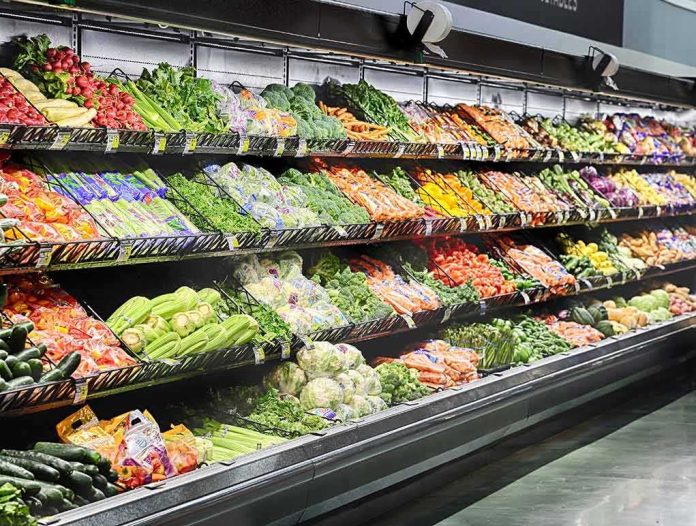
When a normally rare parasite suddenly sickens more than a thousand people, it is not a freak event but the visible tip of how modern food systems, global produce trade, and basic sanitation intersect — and sometimes fail.
At a Glance
- A large cyclosporiasis outbreak has pushed Michigan’s annual case count from about 50 to nearly 1,000, driven by a diarrhea-causing parasite linked to contaminated food.
- Health officials’ working hypothesis points to imported fresh produce — especially bagged salads, herbs like cilantro and basil, and berries — as the most plausible source.
- National CDC surveillance shows simultaneous Cyclospora spikes in multiple states, consistent with past seasonal, produce-driven outbreaks rather than person-to-person spread.
- The illness is miserable but treatable: explosive watery diarrhea, cramps, and fatigue that can last weeks, usually resolved with a specific antibiotic regimen.
- For consumers, the realistic defenses are meticulous handling and washing of raw produce, attention to symptoms, and prompt medical care — not abandoning fruits and vegetables altogether.
From a Rare Illness to a Statewide Surge
Cyclosporiasis, the intestinal illness caused by the parasite Cyclospora cayetanensis, has historically been a relative rarity in Michigan; typical years see roughly 50 confirmed cases. In the current outbreak, that baseline has been shattered. State health officials report case counts climbing from around 170 in late June to more than 700 in early July, with social-media tallies and physician commentary now placing Michigan’s total near or above 1,000 cases. The Michigan Department of Health and Human Services (MDHHS) has formally declared this a fast-moving outbreak and is treating it as a significant public health event.
Clinically, these are not minor stomach bugs. Patients describe days to weeks of watery or “explosive” diarrhea, severe abdominal cramping, bloating, loss of appetite, and fatigue. While deaths have not been reported, the duration and intensity of symptoms have driven a surge in urgent-care visits and stool testing across the state, and a noticeable strain on outpatient practices. Infectious disease physicians interviewed in local reports emphasize that they are already seeing more cases in a few weeks than they typically see all year.
What Cyclospora Is — And How It Spreads
Cyclospora cayetanensis is a microscopic protozoan parasite that infects the small intestine. The illness, cyclosporiasis, is acquired when a person ingests food or water contaminated with feces containing Cyclospora oocysts — the parasite’s environmental stage. Unlike many common gastrointestinal infections, Cyclospora does not efficiently spread directly from person to person. The oocysts shed in stool must spend time in the environment to become infectious, which means transmission almost always involves a contaminated food or water source rather than simple household contact.
That detail explains why cyclosporiasis so often appears as clusters and outbreaks tied to specific foods. In the United States, the Centers for Disease Control and Prevention (CDC) and the Food and Drug Administration (FDA) have repeatedly linked Cyclospora outbreaks to fresh, often imported produce: mesclun or bagged lettuce mixes, cilantro, basil, raspberries, sugar snap peas, and similar items eaten raw. Cooking readily kills the parasite; the risk concentrates in foods that are consumed fresh, rinsed at best, and distributed widely through retail and food-service channels.
The Michigan Outbreak: What We Know and What We Don’t
MDHHS has been explicit on two points. First, this is a confirmed cyclosporiasis outbreak: multiple laboratories have identified Cyclospora in patient stool samples, and the geographic pattern of cases, initially concentrated in counties around Southeast Michigan, is consistent with a foodborne exposure. Second, as of the most recent public statements, no single produce item, grower, or distributor has been definitively identified as the source.
Behind that caution, however, sits a strong working hypothesis. MDHHS leaders, along with infectious disease experts interviewed on regional radio and television, repeatedly describe contaminated produce as the most likely cause of the surge. That view is not speculative; it reflects both the epidemiology of this outbreak and decades of national data. Patients in Michigan and other states overwhelmingly report no recent international travel, which effectively rules out the classic travel-associated route and points toward food consumed within the U.S. The timing is also telling: CDC surveillance shows that “Cyclospora season” in the U.S. begins around May 1, with 145 domestically acquired cases in 17 states already logged by mid-June, and multiple clusters under active FDA traceback investigation.
When investigators interview Michigan patients, they focus on what was eaten in the 14 days before illness onset, looking for shared items that recur across cases: particular brands of bagged salad, specific herbs, fruits, or restaurant dishes. Similar methods have pinpointed earlier outbreaks — for example, a 2018 U.S. outbreak linked to pre-packaged salads and a 2015 Canadian outbreak traced to imported sugar snap peas. That process takes time, especially when supply chains involve multiple intermediaries and imported ingredients; MDHHS and federal partners are still in that phase.
This Fits a Larger Pattern: Seasonal, Imported-Produce Outbreaks
To make sense of Michigan’s numbers, it helps to zoom out. Since the mid-1990s, cyclosporiasis has emerged in wealthy countries not as a random sporadic illness but as a recurring foodborne problem tied to global produce trade. Reviews of major outbreaks in North America and Europe show a consistent pattern: cases spike in late spring and summer, almost exclusively among people who ate specific types of raw produce, often imported from regions where Cyclospora is endemic (Mexico, Guatemala, Peru, and others).
Recent CDC and CIDRAP reporting underscores that the same pattern is repeating now. In one recent season, federal surveillance recorded 2,173 lab-confirmed Cyclospora infections across 33 states, with several clusters linked to basil and cilantro. The current national tally — 145 domestically acquired cases in 17 states as of mid-June — is earlier-season surveillance, not the final count. States like New York, Texas, Illinois, and now Michigan are reporting sharp increases, and investigators “strongly suspect” contaminated fresh produce because so few patients report travel outside the U.S.
In that context, Michigan’s outbreak looks less like an anomaly and more like an unusually large, concentrated expression of a recurring risk: a contaminated produce supply feeding into a regional distribution network, intersecting with busy summer eating habits.
Symptoms, Diagnosis, and Treatment: Miserable but Manageable
For individual patients, the central reality of cyclosporiasis is the symptoms. They typically begin 2 to 14 days after exposure and can persist for weeks if untreated. Watery or explosive diarrhea is the hallmark, often accompanied by abdominal cramps, bloating, nausea, loss of appetite, weight loss, and fatigue; some people develop low-grade fever. Symptoms may wax and wane, misleading patients into thinking they are recovering only to relapse.
Diagnosis requires specific stool testing; routine panels may miss Cyclospora unless the parasite is explicitly ordered or laboratories use multiplex assays that include it. In Michigan, physicians have begun to think of Cyclospora when presented with prolonged summertime diarrhea, particularly when multiple family members or dining companions are affected and travel history is negative. Once identified, treatment is straightforward for most patients: a course of the antibiotic trimethoprim-sulfamethoxazole (often known by brand names such as Bactrim or Septra) reliably clears the infection. For patients allergic to sulfa drugs or those who are pregnant or immunocompromised, management requires more nuance but remains feasible under specialist guidance.
Although hospitalizations do occur — CDC reports around 20 hospitalizations among the 145 nationally surveilled cases early in the season — deaths are rare. The main burden is days to weeks of lost productivity, health-care costs, and, in large outbreaks, pressure on urgent-care clinics and diagnostic laboratories.
What Consumers Can Realistically Do
Outbreak stories naturally prompt the question: should people stop eating fresh produce? The evidence does not support that extreme. Fruits and vegetables remain vital for long-term health, and most produce is safe. The more realistic goal is risk reduction, particularly during known Cyclospora seasons and in regions experiencing outbreaks.
Public health guidance, echoed across multiple Michigan broadcasts, focuses on a few practical steps.
First, treat raw produce as a food that requires deliberate handling. Wash hands before and after preparing fruits and vegetables. For leafy greens, discard outer leaves and rinse remaining leaves individually under running water. Herbs like cilantro and basil, which have repeatedly been implicated in past Cyclospora clusters, benefit from the same leaf-by-leaf rinsing and, when feasible, cooking rather than raw use.
Second, be strategic about foods that are inherently hard to clean. Raspberries and certain peas have textured surfaces that can harbor contaminants even under running water; experts in Michigan have recommended favoring frozen raspberries or processed products like jams and pies during the outbreak, and cooking snow peas and similar vegetables rather than eating them raw. Refrigerate produce promptly after purchase; while cold does not kill Cyclospora, it slows bacterial growth and supports overall food safety.
Third, pay close attention to symptoms. In an outbreak setting, persistent watery diarrhea lasting more than a couple of days — especially with cramping and fatigue — warrants medical evaluation, not just home remedies. Prompt diagnosis helps both the patient and the broader investigation, because confirmed cases inform traceback analyses and can reveal shared foods.
System-Level Lessons: Surveillance, Trade, and Sanitation
Beyond individual behavior, the Michigan outbreak highlights structural issues. Cyclospora is a nationally notifiable disease; CDC already monitors cases year-round through its surveillance program and flags potential clusters tied to common food sources. That system is working as designed, detecting the current spike and triggering FDA traceback investigations.
However, surveillance only detects downstream illness; it does not by itself fix upstream contamination. The root causes sit in agricultural and sanitation practices in producing regions. Cyclospora contamination typically reflects human feces entering irrigation water or contacting produce in fields or processing facilities. Reviews of parasitic diarrhea globally consistently identify lack of toilets, open defecation, and unsafe water as key drivers — conditions that apply in many export-farming communities.
Regulators have begun to respond. FDA has launched targeted Cyclospora surveillance for certain imported produce items and issued guidance to industry on preventing contamination. Yet outbreaks continue, reflecting the complexity of enforcing standards across borders and diverse agricultural systems. Michigan’s surge is a reminder that the health costs of inadequate sanitation do not stay local; they travel along supply chains and appear as “explosive diarrhea” in clinics thousands of miles away.
Looking Ahead: Living With Seasonal Parasite Risk
Realistically, the U.S. is not going to eliminate Cyclospora from the global food system in the near term. The parasite’s biology, the diversity of produce sources, and uneven sanitation infrastructure make that a long-haul challenge. What is achievable is a combination of better upstream control, sharper surveillance, and more informed consumers and clinicians.
For Michigan residents, the current outbreak will eventually crest and decline, as contaminated lots are consumed or removed from circulation and public awareness changes behavior. For farmers, importers, and regulators, the episode adds to a growing case file arguing for stricter water quality standards, better fecal contamination controls, and more robust traceability for high-risk fresh produce. And for physicians and patients, it reinforces a simple but consequential message: prolonged summer diarrhea is not “just a bug” to ride out; in the age of globalized food, it is often a clue to a larger, systemic problem that deserves both treatment and reporting.
Sources:
washingtontimes.com, pritzkerlaw.com, michigan.gov, youtube.com, fox2detroit.com, abcnews.com, facebook.com, wjr.com, instagram.com, clickondetroit.com, cdc.gov, pmc.ncbi.nlm.nih.gov, cidrap.umn.edu, fda.gov
"As an outbreak of a parasitic gastrointestinal illness sweeps through Michigan, doctors' offices, urgent care clinics and hospital emergency departments are seeing a rise in visits from people concerned they may have cyclosporiasis." https://t.co/s1QYOI4BSg
— Niraj Warikoo (@nwarikoo) July 8, 2026