Washington just reopened huge swaths of the Pacific to American boats, and the real fight is not about fish — it is about who controls the ocean: coastal families in U.S. territories or distant green lobbies in D.C.
Story Snapshot
- A Trump proclamation reopens parts of Pacific national monuments to American commercial fishing after a decade of near-total bans.
- Supporters say it restores access to U.S.-flagged fleets, cuts red tape, and strengthens seafood security for places like American Samoa.
- Opponents claim it weakens marine protections and risks biodiversity loss inside a monument built for conservation.
- The real question: can tightly managed U.S. fisheries both feed Americans and protect remote island ecosystems better than foreign fleets can.
How Pacific fishing grounds were locked up, then reopened
Barack Obama dramatically expanded the Pacific Remote Islands Marine National Monument in 2014, turning more than 400,000 square miles of the central Pacific into one of the largest protected ocean areas on earth.[3] His proclamation barred commercial fishing in the expansion zone and allowed only limited noncommercial or research fishing.[3] Those rules shut out American longline and tuna fleets that had used these waters for years, including vessels tied to canneries and jobs in American Samoa.
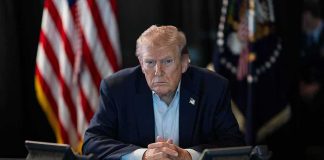
Donald Trump’s April 17, 2025 proclamation, “Unleashing American Commercial Fishing in the Pacific,” flipped that script.[7] The White House explained that earlier monument decisions had “appropriated and withdrawn” over 400,000 square miles from entry, and framed the new move as restoring access for U.S.-flagged vessels.[7] The change focuses on waters between 50 and 200 nautical miles around Jarvis Island, Wake Island, and Johnston Atoll inside what is now called the Pacific Islands Heritage Marine National Monument.[2] Nearshore waters closer to the islands remain closed.[1][3]
What the new policy actually allows on the water
The Western Pacific Regional Fishery Management Council, which advises on fisheries from Hawai‘i to American Samoa, has now taken final action to match federal rules with the proclamation.[3] Its recommendation: reopen commercial fishing from 50 to 200 nautical miles around Jarvis, Wake, and Johnston while keeping the 0 to 50 mile zone under monument-style protection.[1][3] Similar steps are moving ahead for Rose Atoll, the Marianas Trench Islands Unit, and the Papahānaumokuākea Marine National Monument, all under the umbrella of Trump’s separate order on restoring seafood competitiveness.[1][2][3][5]
The council stresses that “this is not about removing monument protections,” but about letting tightly managed fleets operate again under long-standing rules.[1][3] Any reopened fishing would still require federal permits, detailed catch reporting, gear restrictions, area closures, and science-based catch limits.[1][3] From a common-sense conservative view, that looks less like a free-for-all and more like swapping a blanket ban for a regulated working landscape — think national forest with logging plans, not clear‑cutting.
The economic stakes for American fleets and island communities
Trump’s team ties this Pacific shift to a bigger “America First Fishing Policy.” The fact sheet notes that about 90 percent of seafood eaten in the United States is imported, creating a twenty‑billion‑dollar trade deficit.[7][7] Supporters argue that when Washington locks up U.S. waters far from shore, it does not save fish from nets; it just pushes harvesting into foreign fleets and foreign waters, often under weaker laws. That logic fits a basic America‑first instinct: better that our own people harvest our own resources under our rules.
🎣🇺🇸 President Donald Trump signed a proclamation restoring commercial fishing access to large portions of protected Pacific waters as part of the administration's "America First Fishing Policy."
The White House says the move will support American fishermen, create jobs and… pic.twitter.com/vYQYrnohUl
— THE INFORMANT (@TheInformantUSA) June 11, 2026
For American Samoa and other Pacific territories, this is not an abstract debate. Local canneries and support businesses rely on steady supplies of tuna and other pelagic fish from nearby federal waters. When the monument expansion cut off those grounds, local leaders said jobs and food security were put at risk. A member of Congress from American Samoa praised the proclamation and argued that the old ban “never had any science” behind it, insisting that reopening 50 to 200 miles out would not harm nearshore protections.
The conservation pushback and how the science is framed
Environmental groups and some legal scholars see the same map and tell a very different story.[1][3] The Obama‑era proclamation said the monument existed to “protect and preserve the marine environment” around these remote islands and reefs, and it drew strict no‑commercial‑fishing lines to do that.[3] Critics of the Trump action say reopening any part of these zones shrinks hard‑won protection and invites industrial fishing into what they view as core habitat for seabirds, tuna, and deep‑sea ecosystems.[1][3][6]
A law center analysis describes the 2025 proclamation as “seeking to reduce the protective scope” of the monument, warning that legal shields could erode piece by piece.[1][3] A Hawai‘i activist called the reopening of nearly half a million square miles a “profound violation of environmental stewardship and Indigenous rights.”[6] They argue that once commercial fleets return, pressure grows to relax more rules and that supposed economic gains may prove short‑lived if fish stocks suffer.[4][6] That fear reflects a precaution-first worldview that trusts static bans more than adaptive management.
Can American-style fishery management square the circle?
The deeper clash is not science versus greed; it is two visions of stewardship. One side wants remote areas cordoned off from almost all human use. The other insists that well‑regulated use can coexist with conservation and that shutting out U.S. boats only hands advantage to foreign competitors. Under U.S. law, these reopened areas still sit inside a national monument, and fishing there still falls under strict, science‑driven federal plans.[1][3]
From a conservative lens, the key test should be results, not rhetoric. If American fisheries managers can document stable or rising fish stocks while Pacific communities regain access and income, then the Trump proclamation looks like a smart correction to overreach. If catches spike and stocks fall, critics will have a point. For now, the honest answer is that the proclamation clearly restores opportunity for American fleets, while the long‑term ecological impact will depend on how firmly those existing rules are enforced in the years ahead.
Sources:
[1] Web – Restoring American Commercial Fishing in the Pacific
[2] Web – Shrinking Oceanic Protections and the Expansion of Commercial …
[3] Web – Press Release-Clarifying Impact of President Trump’s Action on …
[4] Web – Presidential Proclamation — Pacific Remote Islands Marine …
[5] X – Trump issues proclamation restoring American commercial fishing in …
[6] Web – WPFMC recommends reopening marine monuments to commercial …
[7] Web – President Trump Restores Pacific Fishing Waters