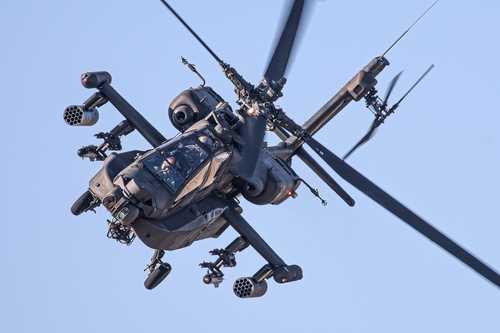
After a U.S. Army Apache crashed near the Strait of Hormuz, President Trump said Iran was to blame and vowed the United States “must” respond — raising the stakes in one of the world’s most dangerous chokepoints.
Story Highlights
- Trump said military officials told him Iran downed a U.S. Apache and vowed a response [1][6].
- U.S. Central Command said both crew members were rescued and in stable condition [1][2].
- The crash happened near the Strait of Hormuz, a vital global shipping route [1][2].
- Officials cited an Iranian drone strike, while intent and full details remain under review [1].
Trump’s Charge and the Call for Action
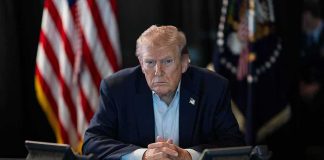
President Trump said military leaders informed him that Iran shot down a U.S. Army Apache helicopter near the Strait of Hormuz and that America “must, of necessity, respond.” He posted the statement publicly and confirmed both crew members were safe. His remarks framed the incident as an attack on U.S. forces and signaled a military answer. This message aligned with conservative priorities of strength, deterrence, and defense of American personnel abroad [1][6][8].
U.S. Central Command later said rescuers recovered the two crew members and that they were in stable condition. That report supported the administration’s claim that U.S. forces were targeted without a loss of life. The rescue itself showed rapid coordination and capability at sea. Officials said the helicopter went down during operations near the Strait of Hormuz, where any attack risks wider fallout for global energy and maritime traffic [1][2][8].
What We Know About the Cause
Reporting said a U.S. inquiry found an Iranian drone hit the Apache and caused the crash. A U.S. official quoted on background pointed to an Iranian drone, though it was unclear if the strike was deliberate or an unintended collision. That unresolved question matters for judging intent and proportional response. The Pentagon initially said the cause was under investigation, while assessments evolved as more information came in [1][2].
The location adds weight to the risk. The Strait of Hormuz is a tight waterway that carries a large share of the world’s oil shipments. Any hostile act there can rattle markets, endanger crews, and test U.S. commitments to keep sea lanes open. That is why presidents of both parties have treated threats in this corridor as serious challenges to global trade and American credibility [1][2].
Response, Proportionality, and Limits
Coverage described the administration’s approach as a proportional answer to unwarranted hostility, rather than a push for open-ended conflict. Reports said U.S. forces began strikes aimed at specific Iranian targets tied to the threat, signaling resolve while trying to avoid a larger war. This fits a deterrence model: punish the actor, protect U.S. troops, and reduce future risk, all while keeping options limited and defined [2][3].
Some facts were still developing as decisions were made. Early statements stressed that investigators were working to confirm every detail, and public records did not yet set out the full legal and operational basis for the response. That lack of public detail invites debate about authority and scope. Yet, the duty to defend U.S. personnel is clear, and credible attribution to an Iranian drone gave the White House a firm, if evolving, basis to act [1][2][3].
Accountability, Clarity, and Next Steps
Conservatives want strength with transparency. The administration can reinforce both by releasing more facts as security allows. Releasing Central Command’s after-action findings and key evidence on the drone’s origin would answer doubts and bolster deterrence. Clear communication on targets, limits, and goals helps allies and puts Tehran on notice. It also shuts down media spin that thrives on gaps in the record while our troops face risk in a hot zone [1][2].
U.S. MILITARY BEGINS STRIKES AGAINST IRAN AFTER HELICOPTER INCIDENT OFF OMAN COAST
The United States military has confirmed that it has begun carrying out strikes against Iran following a recent incident involving a U.S. Army helicopter that crashed off the coast of Oman. The… pic.twitter.com/vMMPV9MN8A
— Global World TV News (@GlobalC83910) June 10, 2026
Here is the bottom line. Iran’s actions near Hormuz crossed a line if the drone strike is confirmed, and America must keep its pilots safe and the sea lanes open. The crew rescue showed skill and resolve. A tight, proportional response can hold the attacker accountable and avoid a wider war. As more data is released, the mission should stay clear: defend Americans, deter future hits, and protect the free flow of energy that keeps families and businesses moving [1][2][3].
Sources:
[1] YouTube – Trump vows response after US helicopter crash
[2] Web – Trump vows response after Iran downs U.S. helicopter
[3] Web – U.S. says it has begun strikes against Iran following crash of Army …
[6] YouTube – Trump threatens response after helicopter downing | DW News
[8] Web – WATCH: Trump baselessly blames diversity hiring for deadly … – PBS