
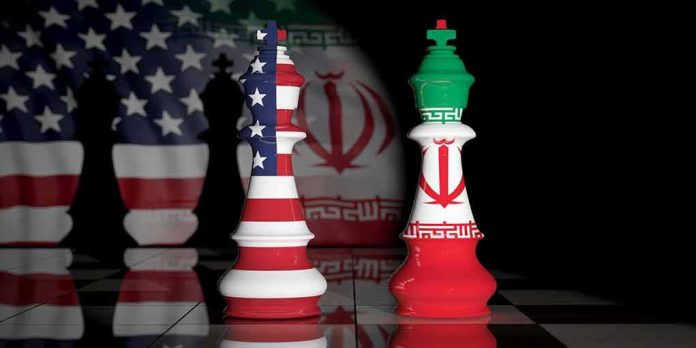
Coercive air campaigns can buy time and leverage, but they almost never settle a mature nuclear dispute; the evidence base shows they trade temporary physical damage for long-term strategic adaptation, with real risks of retaliation and economic spillover.
The Short Version
- U.S. and Israeli planners have developed specific options for renewed strikes on Iran, targeting nuclear, missile/drone, and energy infrastructure.
- Military pressure can delay and degrade, but history shows it rarely ends an entrenched nuclear capability; it often provokes dispersal, concealment, or renewed drive for deterrence.
- Iranian officials warn of escalatory retaliation, including threats to regional infrastructure and global commerce; costs and risks are not hypothetical.
- War outlays have already climbed into the tens of billions, sharpening the cost-benefit test for any renewed campaign.
What renewed strikes would aim to do—and what they actually can do
Washington and Jerusalem’s operational logic is straightforward: concentrate precision strikes against nodes that lift Iran’s offensive reach (missiles and drones), its nuclear latency (enrichment, weaponization-enabling assets, specialized R&D), and its revenue engine (energy infrastructure). The New York Times reporting describes concrete post-election options, not just rhetoric—short, intensive sorties against a defined target set. Such campaigns can impose near-term attrition on physical capacity, drain inventories, force reconstitution under duress, and create bargaining leverage while Tehran absorbs damage. In the jargon of coercive diplomacy, this is denial and risk manipulation through limited force—pressure calibrated to shape choices without seeking regime change.
But capacity destruction and strategic decision change are different problems. Programs with depth—trained personnel, proven cascades, hardened and dispersed sites, redundant suppliers—tend to rebound faster than outside observers expect. Even successful strikes leave behind tacit knowledge, cross-trained teams, and clandestine networks. The result is delay, not deletion. In case comparisons that scholars and practitioners return to—Osirak (Iraq 1981), al-Kibar (Syria 2007), North Korea in the 1990s and 2000s—the only unambiguous termination was Syria’s reactor; elsewhere, pressure yielded either temporary slowdowns or accelerated hedging.
The mechanism of adaptation: why nuclear latency is hard to bomb away
Iran’s program is no longer fragile. Years of sanctions and sabotage incentivized hardening, concealment, and supply-chain creativity. Damage to facilities can be repaired; centrifuges can be replaced; expertise cannot be unlearned. Strikes can also tighten the security bureaucracy’s political grip, amplifying voices that argue for deeper dispersal and faster latency. Analysts at the Belfer Center flagged the perverse incentive clearly after a recent strike cycle: visible vulnerability can strengthen arguments inside Tehran that only a robust nuclear deterrent ultimately guarantees regime survival. That is the core paradox—bombs that aim to stop a capability can strengthen the logic for it.
To be clear, this does not render force irrelevant. Well-designed operations can attrit inventories, complicate procurement, and raise the cost of progress. They can also widen diplomatic space for time-limited bargains. But those gains are contingent: they require follow-on containment, intrusive verification, and political channels resilient enough to translate military delay into diplomatic restraint. Absent that architecture, the baseline expectation is iterative conflict—strike, adapt, retaliate, repeat—rather than strategic closure.
Escalation pathways and the economic ledger
Proponents tend to emphasize discrete sorties; adversaries think in connected systems. Iran’s retaliation toolkit reaches beyond symmetric missile exchanges. Its commanders have telegraphed an ability and willingness to target critical infrastructure in and around the Strait of Hormuz—including data conduits and shipping choke points—raising the ceiling on indirect costs borne by third parties and global markets. Even modest disruptions in maritime flows or regional energy infrastructure reverberate through prices, insurance premia, and logistics. Those second-order effects magnify the price tag of a “short, intensive” operation, even if aircrews execute cleanly and quickly.
The fiscal costs are not theoretical. Independent tallies and think-tank estimates place cumulative war-related outlays in the tens of billions; CSIS put the figure roughly around $40 billion by midyear in one accounting, including billions to rebuild and repair damaged U.S. bases. Money is not strategy, but it is constraint: sustaining repeated strike cycles while funding munitions replenishment, force protection, and regional posture hardening forces tradeoffs elsewhere. Any cost-benefit calculus has to weigh not only the immediate battle damage but the spending tail and macroeconomic spillovers that accompany open-ended coercion.
The record on coercion: what usually moves Tehran
Pressure works best when it clarifies an off-ramp and when that off-ramp is policed by verification credible enough to withstand domestic skeptics on both sides. Sanctions episodes illustrate the point. Studies disagree on whether sanctions compelled strategic shifts or merely tactical ones, but they converge on a pattern: pressure absent diplomatic structure tends to harden positions, while pressure paired with credible relief for concrete limits can slow or cap sensitive activities—until the political scaffolding collapses. Airpower behaves similarly. It can sharpen choices, but it is not a substitute for an end-state both sides can live with. That is why expert reviews of military options for Iran repeatedly land on containment plus diplomacy as the most reliable way to manage, rather than “solve,” nuclear latency over time.
This is not a counsel of passivity. It is an argument for sequencing. If strikes are undertaken, they should be instrumental to a negotiated framework—front-loaded delays traded for verifiable constraints—rather than an end in themselves. That demands parallel planning for inspections access, monitoring technology, and phased economic incentives, with clear triggers for snapback if violations occur. Without that connective tissue, the operational brilliance of an air campaign erodes into a holding action measured in months, not years.
Risk, politics, and the decision lane ahead
Political leaders face hard asymmetries. Failure to act invites accusations of appeasement; acting invites escalation risk whose costs are paid across electorates. President Trump has, at different moments, entertained major strikes and also pulled back in pursuit of a rapid deal—illustrating that even hawkish administrations toggle between compellence and negotiation as situational facts shift. Iranian officials, for their part, signal maximum retaliation to deter attack and preserve bargaining power; those threats should be neither dismissed nor allowed to paralyze decision-making. They belong in a sober risk estimate that weighs damage achievable from the air against the predictable counters in the cyber, maritime, and proxy domains, and the probability that Tehran accelerates dispersal or weapons intent in response.
The cleanest analytical test is not whether strikes can hurt Iran—they can—but whether a specific campaign design, paired with a realistic diplomatic lane, raises the probability of durable constraints more than it raises the probability of a wider war and a faster sprint to nuclear deterrence. On the present evidence, airpower without a negotiated pathway produces delay and danger in roughly equal measure; airpower embedded in a verifiable containment regime can still serve as leverage for time-bound limits. The difference is not the ordnance. It is the plan for the day after.
What prudent strategy looks like
Three principles follow. First, define success as time gained and leverage created, not permanent disablement—then spend both quickly on inspections and caps. Second, build economic and maritime resilience in parallel to blunt retaliation externalities; harden data and energy chokepoints before the first sortie. Third, publish a credible diplomatic offer with synchronized sanctions relief and enforcement teeth; make the off-ramp visible to Tehran’s pragmatists and defensible to domestic critics. History will not flatter wishful thinking about decisive military fixes to political problems. It does, however, reward disciplined integration of force and diplomacy aimed at managing risk over time rather than pretending to erase it in a night of strikes.
Sources:
nytimes.com, presstv.co.uk, gulfnews.com, asiatimes.com, washingtoninstitute.org, thehagueinstituteforglobaljustice.org, wilsoncenter.org, csis.org, ojs.jdss.org.pk, erf.org.eg