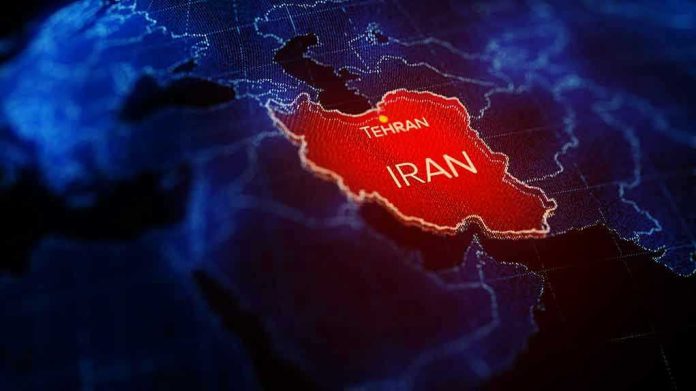
While Americans watch another Middle East blowup, the most unsettling twist is how Moscow can profit from chaos without firing a shot.
Story Snapshot
- Reports indicate Russia expanded arms and possibly logistical support to Iran after Iran’s 2025 losses, while publicly insisting the conflict is “not our war.”
- A reported €495 million deal for Verba shoulder-fired air defenses (500 launchers, 2,500 missiles) signals a long-term Russia-Iran military relationship, even if battlefield impact is limited.
- Claims of Russian intelligence support to Iran remain disputed; Moscow denies them and U.S. confirmation has been described as lacking in available reporting.
- The “Russia is winning” framing is interpretive, but the documented incentives—arms revenue, leverage, and distraction effects—are real and measurable.
How the “Russia wins” narrative formed around the 2026 Iran war
Reporting and analysis around the 2026 Iran war has increasingly framed Russia as an indirect beneficiary, not a frontline participant. The timeline fueling that claim runs through Iran’s June 2025 12-day war with Israel, which reportedly degraded Iranian air defenses and key sites, followed by Tehran seeking Russian help to rebuild. When coordinated U.S.-Israel airstrikes began on February 28, 2026, Russia’s alleged role was described as asymmetric—supporting Iran while avoiding direct combat exposure.
This matters for Americans because asymmetric involvement is how hostile powers traditionally strain U.S. bandwidth: keeping Washington tied down in multiple theaters while they pursue their own priorities elsewhere. The available research does not establish that Russia “controls” events in the region, but it does show a plausible path for Moscow to gain money, influence, and negotiating leverage—without paying the domestic political price of body bags or a direct superpower clash.
The Verba air-defense deal: profit and influence, even if performance is limited
One of the clearest factual pillars in the research is the reported Verba MANPADS deal between Russia and Iran. Accounts describe Iran requesting Verba systems after the 2025 conflict, with a later agreement described as roughly €495 million for 500 launchers and 2,500 missiles, with deliveries reported as scheduled for 2027–2029. Separate reporting also raised the possibility that deliveries could have started earlier via cargo flights, though the timing is not fully confirmed.
Analysts cited in the research argue Verba systems may not be decisive against advanced U.S. air operations, which limits the “game-changing weapon” narrative. Even so, a major arms package can still deliver strategic value: it ties Iran more tightly to Russia’s defense supply chain, builds dependence for training and sustainment, and provides Moscow export revenue. For conservative readers skeptical of global entanglements, the key point is straightforward—prolonged regional instability tends to produce more weapons sales and more bargaining power for America’s rivals.
Alleged intelligence and logistics support: claims, denials, and what’s unproven
Beyond weapons, some reporting described alleged Russian intelligence or logistical assistance, including claims tied to satellite data, drones, or information about U.S. assets. The research also highlights a significant limitation: Russia has publicly denied expanding cooperation in the way some stories alleged, calling such claims “fake news,” and available reporting described U.S. confirmation as not established. That leaves this part of the narrative contested, with assertions on one side and official denials on the other.
Conservatives should evaluate that dispute with discipline. The research supports the existence of strong Russia-Iran military ties and active coordination incentives, but it does not provide definitive proof of specific intelligence transfers during the war. The prudent takeaway is that uncertainty itself is a risk: if U.S. planners must assume hostile intelligence sharing could be happening, America is forced to allocate more resources to protection and redundancy—costs that eventually hit taxpayers and readiness at home.
Why Russia’s Iran relationship intersects with Ukraine and America’s national interest
The research ties the Russia-Iran relationship to the post-2022 period in Ukraine, describing Iranian support to Russia that included drones and other munitions, alongside claims that Russia scaled production. That background helps explain why Moscow has an interest in keeping Tehran afloat: Iran can function as a partner for technology, supply chains, and sanctions evasion. A May 2025 strategic partnership treaty is described as covering defense and energy while stopping short of a mutual defense obligation.
This structure—deep partnership without a formal defense guarantee—lets Russia extract benefits while keeping its options open if the situation turns against Iran. Iranian frustration also appears in the record, including criticism that Russia’s support was inadequate in earlier fighting. For the United States, the strategic question is not whether Russia is “all in,” but whether Russia can use the conflict to pull American attention, money, and military assets away from other priorities while strengthening an anti-West alignment with Iran and, in some accounts, China.
Russia Is the Big Winner in the Iran Warhttps://t.co/CBGCxAhKAC
— 19FortyFive (@19_forty_five) March 22, 2026
Domestic implications are indirect but real: every time Washington’s focus shifts to overseas crises, it amplifies pressure for emergency spending, rapid deployments, and expanded executive-branch discretion. Conservatives who prioritize limited government and constitutional balance should watch for mission creep and open-ended commitments justified by worst-case assumptions. The available research does not map U.S. policy choices in detail, but it clearly shows how adversaries can gain leverage when America is forced to play defense on multiple global fronts.
Sources:
Russia to Supply Iran With Shoulder-Fired Air Defense System
Iran Turned to Russia, China for Missiles After 12-Day War