Sanctions are not a switch that turns an adversary off; they are a running contest of enforcement, adaptation, and leverage—useful for driving costs and isolating networks, but far less reliable for compelling specific concessions on command.
At a Glance
- Washington’s current “maximum pressure” architecture targets Iran’s oil, shipping, finance, and sanctions-evasion networks as an iterative campaign, not a one-off shock.
- The policy’s concrete effects—shrinking export channels, riskier logistics, and chilled financing—are real and visible in repeated U.S. designations and guidance.
- Iran predictably claims resilience and vows to outlast pressure; historically, targets build workarounds that blunt impact over time.
- The core question is effectiveness by objective: sanctions readily raise costs and isolate actors, but they rarely force rapid strategic capitulation without complementary diplomacy.
What Washington Is Actually Doing: The Mechanics of Economic Pressure
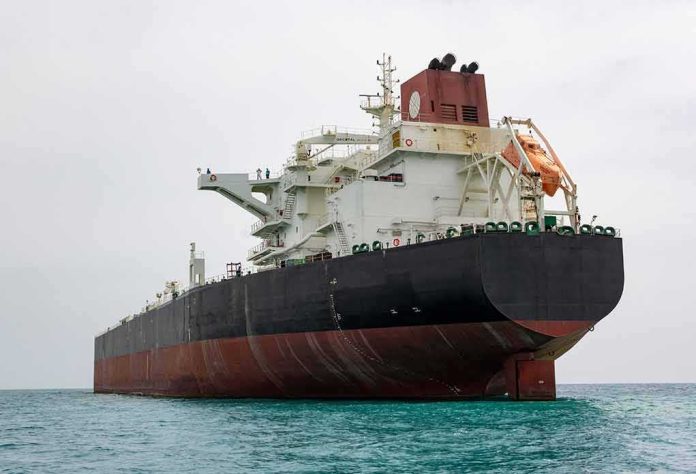
The current U.S. approach is not simply “more sanctions”; it is an integrated enforcement regime that seeks to throttle Iran’s oil revenue, disable its logistics, and deter third parties from facilitating trade. Treasury and State have moved in lockstep: designating brokers and vessels in a “shadow fleet,” blacklisting insurers and financiers, and threatening secondary sanctions against entities that touch Iranian-origin barrels or petrochemicals. The Department of the Treasury describes this as maximum economic pressure and has rolled out actions aimed explicitly at oil sales that fund Iran’s military apparatus. Complementing those actions, State has issued fact sheets detailing coordinated designations of actors that “facilitated the movement of tens of millions of barrels” and fed cash to the IRGC and related organs. This is the plumbing of isolation: choke the money, then keep tightening as evasion routes appear.
A campaign of this sort lives or dies on repetition. Reuters has chronicled waves of new listings since early 2026, from shadow-fleet tankers to financiers tied to Iran’s leadership and procurement networks—evidence of an enforcement rhythm rather than a single, headline-grabbing salvo. The intent is cumulative. Each designation raises due-diligence burdens for banks, insurers, and shippers; each advisory raises the legal and reputational cost of touching Iranian cargo; and each secondary-sanctions threat disciplines counterparties who might otherwise price the risk and proceed. Over time, that scaffolding shifts market behavior, even when barrels still move.
How We Got Here: Iterative Sanctions and the Cat-and-Mouse Reality
Maximum-pressure strategies against Iran have a history, and the playbook has matured. U.S. guidance to maritime and shipping stakeholders now reads like a lessons-learned manual—detailing deceptive shipping practices, liability exposure for insurers, and red flags for traders—in part because previous rounds taught both sides how the other adapts. OFAC’s shipping advisories underscore a “robust and continual” enforcement model that expects evasion and plans to counter it, a clear sign that officials themselves do not assume a decisive, one-time cut-off is feasible in an interconnected energy market. That assumption aligns with the wider record: sanctions often bite hardest early, before targets develop alternative buyers, non-dollar settlement channels, and opaque logistics chains that dilute Western leverage.
Can such pressure crash exports? In acute phases—especially when combined with military risk—export volumes can plunge. Trade trackers have documented steep short-run drops when enforcement tightens, shipping risk rises, and counterparties retreat; the point is not that flows stop forever, but that the costs and hazards spike and the proceeds shrink or become harder to repatriate. Sanctions, done this way, are attritional. They force a choice between revenue and risk, then keep updating the risk calculation as the network mutates.
Competing Claims: Coercion Versus Resilience
Washington’s claim is straightforward: relentless financial and maritime pressure will isolate Iran, starve its military-funding channels, and create incentives for behavioral change. That case rests on visible policy tools—designation rosters, legal authorities, and cross-agency action—and on a demonstrated willingness to sustain pressure as evasion arises. The recent Treasury action aimed squarely at “illicit oil revenue fueling Iran’s military” makes the mechanism explicit: follow the money, then cut it off. In parallel, a steady clip of new sanctions has targeted ships, tank farms, front companies, and financiers tied to procurement and revenue generation. This is the “how,” not just the “what.”
Tehran’s counter-claim is equally familiar: the economy can absorb pain, society will adapt, and U.S. economic warfare will fail to produce capitulation. Iranian officials publicly dismiss each new campaign as doomed, and allied commentators argue that earlier iterations inflicted heavy costs without extracting strategic concessions such as durable nuclear constraints or rollback of regional proxies. That skepticism finds some support in analyses showing that, after initial shocks, Iran rebuilt export channels and even surpassed prior trade levels once global buyers adjusted and enforcement intensity varied. Skeptics of coercive sanctions further point to the historical tendency of targets to diversify economic ties and to lean on state-controlled levers to cushion priority sectors, complicating the path from economic pain to political decision.
What the Evidence Supports
Two propositions can be stated with confidence. First, the United States possesses unmatched capacity to raise the transaction costs of trading with Iran—especially in dollar-clearing, insurance, and maritime services—and is actively using it. The documentary trail of designations and advisories in 2026 is unambiguous on that score. Second, pain is not the same as policy change. Scholarly and policy analyses of previous maximum-pressure cycles conclude that even severe sanctions have not reliably delivered the specific, fast concessions Washington sought—particularly when targets believe core security equities are at stake and when the target regime can socialize costs domestically while cultivating alternate buyers abroad. The result is a grinding competition: sanctions squeeze; evasion adapts; enforcement iterates.
The strategic question, therefore, is not whether pressure “works” in the abstract but which objectives it can realistically deliver on its own. As a tool for degrading revenue, complicating procurement, and narrowing options, sanctions work well and are measurably effective. As an instrument to force top-tier geopolitical decisions on a tight timeline, their record is mixed at best unless paired with off-ramps and multilateral alignment that narrow the target’s alternatives.
**G-1. [update] US announces toughest-ever sanctions on Iran as Hormuz tensions persist**
**Frame — what people think:** The US is finally getting serious about crippling Iran’s economy with unprecedented sanctions after a failed ceasefire, forcing Tehran to back down on Hormuz… https://t.co/bRXc8cOaFe
— GrumpyNews, emotionally clean news. (@GrumpyNews_) August 22, 2026
Implications for the Next Phase
Expect the cat-and-mouse to continue. Treasury and State will broaden lists, refresh advisories, and pursue more extraterritorial cases to deter gray-market logistics. Iran will refine its workaround stack: older tankers operating dark, ship-to-ship transfers, non-dollar settlement, state-backed insurers, and swap arrangements with strategic partners. The fulcrum is third-country behavior. If major refiners, banks, and shippers calculate that U.S. secondary sanctions risk outweighs discounted cargoes, isolation deepens; if they conclude they can route around U.S. pressure—legally or practically—the campaign’s marginal returns diminish.
What Would Change the Equation
Three variables matter most. First, enforcement density: sustained, resource-backed targeting of facilitators—rather than episodic flurries—keeps counterparties risk-averse and starves evasion networks before they ossify. Second, multilateralism: the tighter the alignment among major maritime, financial, and refining jurisdictions, the fewer safe harbors exist for Iranian barrels and the harder it becomes to launder proceeds. Third, strategy design: sanctions embedded in a broader diplomatic framework, with credible off-ramps and verifiable pathways to relief, are more likely to shape decision-making than open-ended pressure whose end-state is uncertain. The history here is plain: durable outcomes emerge when coercion and negotiation reinforce each other; coercion alone grinds.
Bottom Line
Washington can make Iran’s revenue streams narrower, riskier, and more expensive—and it is doing so. Tehran can adapt and endure longer than its critics expect—and it has before. Between those truths sits the policy craft: calibrating enforcement to outpace evasion, aligning partners to constrict alternatives, and defining political end-states that turn economic leverage into strategic results. Without that last step, maximum pressure remains exactly what its architects describe in their own guidance: a continual campaign, not a decisive blow.
Sources:
npr.org, reuters.com, state.gov, indiatoday.in