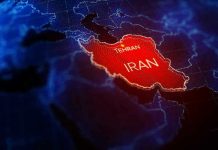
The A-10 Warthog—long slated for retirement by Air Force brass—is proving itself indispensable once again, this time hunting Iranian speedboats in the narrow waters of the Strait of Hormuz as part of Operation Epic Fury.
Story Snapshot
- A-10 Thunderbolt IIs are actively targeting IRGC fast-attack craft in the Strait of Hormuz, demonstrating capabilities no other platform can replicate
- The aircraft’s ability to loiter for hours with precision weaponry makes it uniquely suited for maritime interdiction against asymmetric threats
- Congress halted the A-10’s planned retirement last year, and this deployment validates concerns that the Air Force was abandoning a still-vital asset
- Operation Epic Fury showcases the Warthog’s adaptability with upgraded weapons including anti-drone Sidewinder missiles and laser-guided rockets
Bureaucrats Wanted to Scrap America’s Most Effective Close-Support Aircraft
Air Force Gen. Dan Caine confirmed on March 19, 2026, that A-10 Warthogs are engaged across the southern flank in Operation Epic Fury, targeting Islamic Revolutionary Guard Corps fast-attack watercraft threatening commercial shipping in the Strait of Hormuz. The announcement validates what many in Congress already understood: retiring the A-10 by 2029 would eliminate irreplaceable capabilities. Pentagon planners have repeatedly pushed to mothball the Warthog in favor of expensive next-generation platforms, yet real-world operations keep proving the fifty-year-old design remains operationally necessary for missions that sleek, fast jets simply cannot perform effectively.
Persistent Overwatch That No F-35 Can Match
The A-10’s extended loiter capability allows pilots to maintain hours-long surveillance over the Strait of Hormuz, standing ready for immediate engagement of Iranian speedboats threatening the world’s most critical oil chokepoint. Operating from Muwaffaq Salti Air Base in Jordan alongside F-15Es, F-35s, and F-22s, the Warthog fills a specialized niche that faster platforms cannot replicate. While advanced fighters excel in contested airspace against peer adversaries, they lack the endurance to patrol littoral zones where IRGC forces employ small, agile craft in asymmetric warfare. The A-10’s 30mm GAU-8/A Avenger cannon—firing 3,900 rounds per minute—combined with AGM-65 Maverick missiles and APKWS laser-guided rockets provides devastating firepower against surface threats that expensive munitions would wastefully target.
Congressional Wisdom Versus Pentagon Tunnel Vision
Congress paused A-10 retirement plans in 2025 despite Air Force insistence on prioritizing modernization budgets for platforms designed to counter China and Russia. That decision now appears prescient, as Operation Epic Fury demonstrates exactly the type of conflict scenario where the Warthog excels—protecting American interests and allied shipping against Iranian aggression in confined waters where technological sophistication matters less than persistent presence and cost-effective firepower. The aircraft recently received upgrades including AIM-9M Sidewinder missiles for anti-drone operations against Iranian Shahed 136 UAVs, demonstrating adaptability that justifies continued investment in a proven platform rather than bureaucratic obsession with retiring functional assets simply because they lack glamorous appeal to acquisition specialists.
Defending Critical Infrastructure While Globalists Complicate Energy Security
The Strait of Hormuz carries approximately one-third of global maritime petroleum trade, making effective interdiction of Iranian threats essential for economic stability that prior administrations undermined through naive engagement policies with Tehran. A-10 operations provide immediate deterrence against IRGC fast-attack craft that previously threatened shipping with impunity while Biden-era officials pursued diplomatic arrangements that empowered Iranian aggression. The Warthog’s robust airframe operates from forward bases requiring minimal infrastructure, delivering flexibility that supports American strategic interests without dependence on vulnerable regional facilities. Defense analysts note the A-10’s operational success challenges Air Force modernization tunnel vision, suggesting future force structure decisions should prioritize demonstrated battlefield effectiveness over theoretical capabilities promised by untested platforms consuming astronomical development budgets.
Ugly, Cheap, and Deadly: The A-10 Proves Itself Again Over the Red Sea ~ https://t.co/jSf37edqOf
— MikeKirby (@mikekirbyone) March 22, 2026
U.S. Central Command released official imagery on March 15, 2026, showing A-10C Thunderbolt IIs receiving in-flight refueling while supporting Operation Epic Fury, confirming participation that CENTCOM had acknowledged during the conflict’s opening 48 hours. The deployment from Jordan leverages existing logistical frameworks established when A-10s flew missions over Syria striking ISIS targets and providing close air support to approximately 1,000 American troops stationed there. This operational continuity demonstrates prudent resource utilization and strategic positioning that enables rapid response to evolving regional threats without costly emergency deployments that drain readiness budgets and strain personnel tempo across an already overstretched force structure facing commitments on multiple fronts globally.
Sources:
A-10 Warthogs target Iranian fast-attack craft in Strait of Hormuz – Defense News
A-10 Warthogs target Iranian fast-attack craft in Strait of Hormuz – Air Force Times
A-10 Thunderbolt IIs Operation Epic Fury – The Aviationist
A-10 Warthog back in action in Iran war – Stars and Stripes
New Bomb: A-10 Strike Targets, Strait of Hormuz, Epic Fury – Air & Space Forces Magazine