A former New York City mayor is now turning up at an anti-U.S. “emergency” summit alongside activists accused of serving foreign propaganda interests—raising fresh questions about how America’s political class treats national loyalty as optional.
Story Snapshot
- Reports say ex-NYC Mayor Bill de Blasio traveled to Bogotá in January 2026 with CodePink activists for a “Nuestra América” conference opposing Trump administration policy.
- The event was framed as a response to the reported U.S. capture of Venezuelan leader Nicolás Maduro, a flashpoint driving U.S.–Latin America tensions.
- CodePink has been accused in multiple reports of operating within a China-linked funding and influence ecosystem tied to Neville Roy Singham, allegations not adjudicated in court.
- Progressive International listed de Blasio as a delegate for the January 24–25 gathering, reinforcing claims that his role went beyond casual attendance.
What de Blasio reportedly did in Bogotá—and why it matters
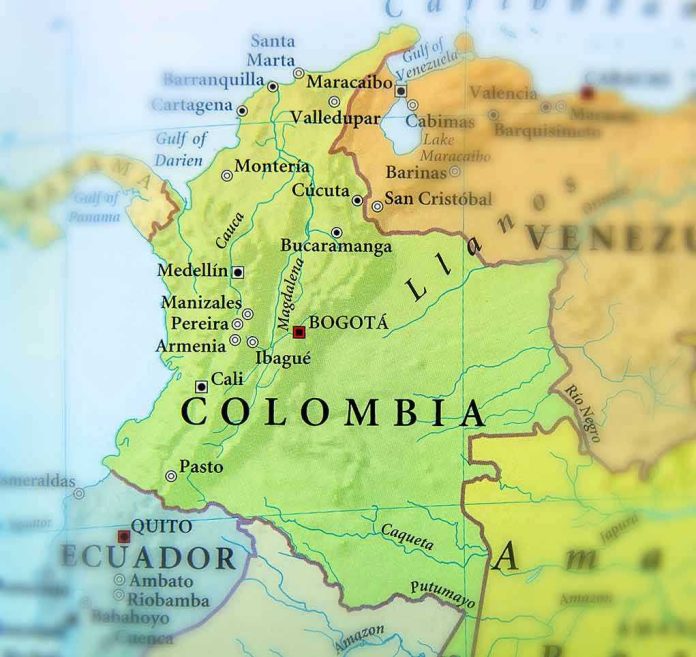
Multiple outlets report that Bill de Blasio quietly traveled to Bogotá, Colombia, in January 2026 with his girlfriend and members of CodePink to attend a “Nuestra América” emergency conference. The meeting, organized by Progressive International, reportedly centered on condemning U.S. foreign policy under President Trump, especially after the reported U.S. capture of Venezuelan leader Nicolás Maduro. Progressive International’s public materials reportedly listed de Blasio as a delegate for the January 24–25 event.
For conservatives, the most important detail is not the tabloid-style mockery around “Bill de Bogotá,” but the basic reality that a high-profile American political figure allegedly joined a foreign conference designed to pressure U.S. policy from the outside. Even if supporters argue it was “activism,” the optics are clear: a former major-city executive lending credibility to a network described by critics as hostile to America’s interests and friendly to adversarial narratives.
CodePink, Progressive International, and the China-link allegations
CodePink began as an anti-war group in the early 2000s and later became known for disruptive demonstrations aimed at U.S. officials. The group is also tied, through reporting and Trump administration warnings cited by outlets covering this story, to allegations of information-warfare style activism—specifically claims that it benefits from support linked to China-based billionaire Neville Roy Singham. A key limitation remains: the “CCP front” charge is an allegation repeated by sources, not a court-proven finding.
Progressive International, an umbrella network associated with far-left global activism, reportedly helped convene the Bogotá conference and has been described by critics as aggressively anti-capitalist. De Blasio’s reported presence as a listed delegate matters because it suggests formal participation rather than an accidental brush with fringe politics. Readers should also note what is missing from the available reporting: a detailed accounting of who funded the trip, what commitments were made, or a direct public explanation from de Blasio addressing the foreign influence concerns.
The Venezuela trigger and Washington’s strategic dilemma
According to the reporting summarized across outlets, the Bogotá “emergency” meeting was triggered by the U.S. capture of Nicolás Maduro, a major escalation in the long-running Venezuela crisis. That context matters because it places the conference inside a larger geopolitical struggle: Washington is trying to contain hostile regimes in the Western Hemisphere while activist networks portray U.S. enforcement actions as imperialism. Without broader documentation, readers can’t fully evaluate what was said behind closed doors, but the policy stakes are obvious.
Why this story hits conservatives differently in 2026
This episode lands at a time when many Trump-supporting voters are already angry about years of elite-driven experiments—globalism, runaway spending, open-border pressure, and cultural radicalism—while also feeling burned by Washington’s habit of sliding into overseas confrontations. That makes de Blasio’s reported involvement with an anti-U.S. summit more than a gossip item: it’s a reminder that ideologically driven networks often oppose American leverage abroad, even when that leverage is used to counter hostile regimes.
Meet Bill de Bogotá: Ex-NYC Mayor de Blasio visits Colombia with alleged China-linked far-left group https://t.co/TN5a3WYpDs pic.twitter.com/H6dMAmV9QI
— New York Post (@nypost) April 3, 2026
The conservative takeaway is straightforward: Americans should demand transparency when public figures align with groups accused of foreign-linked propaganda activity, and they should insist that debates over war, sanctions, and diplomacy happen openly under U.S. constitutional processes. If the allegations around funding networks are as serious as claimed, Congress and federal watchdogs—not activist coalitions—should set the terms for disclosure. For now, the available sources document attendance and affiliations, while leaving unanswered questions about intent and accountability.
Sources:
Free Republic discussion thread on de Blasio Bogotá trip and CodePink allegations
Bill de Blasio’s Bogotá Junket With Alleged China-Linked Lefties Sparks Uproar