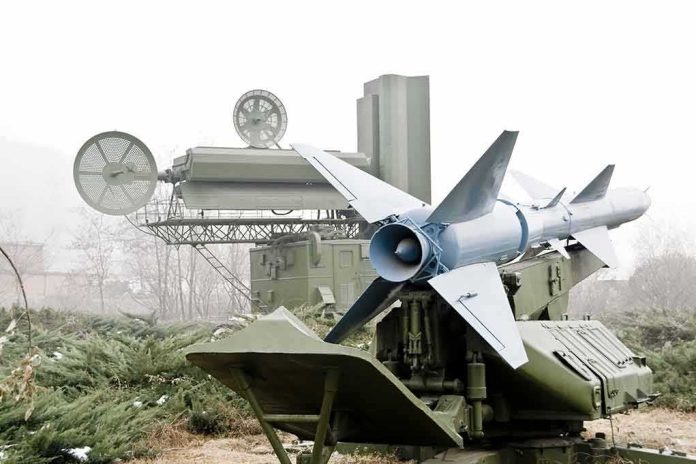
The war with Iran has exposed a hard truth about American power: the United States still dominates in technology and nuclear deterrence, but in the specific missiles it actually needs to fight and defend allies, it has been burning through stocks faster than industry can replace them.
Key Points
- U.S. forces have expended roughly half or more of several high-end missile types in the Iran conflict, including Patriot, THAAD, Tomahawk, and key precision-strike weapons.
- Independent analysis aligned with Pentagon data indicates Patriot and THAAD interceptor inventories have fallen by roughly two-thirds and four-fifths respectively, with replenishment measured in years, not months.
- This creates a “near-term risk” window in which the U.S. could struggle to sustain another large, missile-heavy war while also covering commitments to partners like Israel, the Gulf states, Ukraine, and Taiwan.
- Iran, meanwhile, has absorbed heavy losses yet continues firing missiles and drones, signaling that its political resolve and production base are not close to exhaustion.
- The core challenge is structural: U.S. peacetime procurement and industrial capacity were never sized for back-to-back, high-intensity missile wars, and fixing that will require years of investment and hard choices.
How the Iran War Drained Key U.S. Missile Stockpiles
The Iran campaign has been unusually missile-intensive even by modern standards. In the first weeks of full-scale combat, U.S. forces and their allies fired thousands of interceptors and long-range precision weapons to shield bases, protect shipping lanes, and hit Iranian missile and drone infrastructure. Analysts at the Center for Strategic and International Studies (CSIS), using budget data and deployment patterns, estimate that the United States has expended roughly half of at least four of its most critical munitions—Patriot air defense missiles, THAAD interceptors, Tomahawk land-attack cruise missiles, and certain precision strike systems—since the war began.
CNN, citing multiple sources familiar with recent Pentagon inventory reports, puts the picture in stark relief: nearly four-fifths of the pre‑war THAAD missile inventory has been burned through, and about half of Patriot interceptors are gone. CSIS’s own numbers, derived from open-source congressional data, show Patriot stocks dropping from roughly 2,300 missiles pre‑war to fewer than 827, and THAAD interceptors falling from about 452 to under 278. These estimates, according to CNN’s reporting, broadly align with internal Defense Department assessments.
Offensive missiles tell a similar story. CSIS and other analysts estimate that U.S. forces have fired more than 1,000 Tomahawks in the Iran campaign, pushing the stockpile down by close to half from already modest peacetime levels. Precision Strike Missiles and extended-range JASSM standoff missiles, the kind used to hit defended Iranian targets from outside dense air defenses, have also been depleted by double‑digit percentages. In practical terms, the arsenal underpinning U.S. strike options in the Middle East has been significantly drawn down, even as demands elsewhere—Europe, the Western Pacific—continue to rise.
Why Replenishment Takes Years, Not Months
Missiles like Patriot, THAAD, Tomahawk, SM‑3, SM‑6, and JASSM are not commodity rounds; they are complex, software‑driven systems produced in limited quantities by specialized lines that cannot be surged overnight. CSIS’s “Rebuilding U.S. Missile Inventory” analysis, based on current and planned production rates, concludes that TLAM (Tomahawk), THAAD, and Patriot—“heavily used in this war”—will take three or more years from today to return to pre‑war inventory levels. Standard missiles SM‑3 and SM‑6, central to naval air and missile defense, will take around two years to rebuild, while tactical strike weapons like JASSM and Precision Strike Missile may recover within a year—if funding and industrial capacity are sustained.
CNN’s reporting highlights the bottleneck: under current delivery schedules, the Pentagon is receiving roughly 15 Tomahawks and 20 Patriot missiles per month. At those rates, and assuming continued operational usage, catching up from a deficit measured in the hundreds will be a multi‑year project even with supplemental appropriations. The issue is not simply money; it is physical capacity—plants, skilled labor, subcomponent suppliers, and quality‑assurance pipelines designed for steady peacetime demand, not wartime surges.
Defense Secretary Pete Hegseth has acknowledged this reality publicly, stating that replenishment will take “months and years… depending on the weapon system.” That carefully phrased admission captures the core structural problem: the United States built an industrial base optimized for high technology and relatively low-volume production rather than the mass ammunition requirements of prolonged missile warfare. In the Iran campaign, that structure has been stress‑tested and found wanting.
Depleted But Not Defenseless: The Gap Between Stockpiles and Deterrence
It is important to distinguish between running low on particular classes of missiles and “running out of weapons” altogether. The U.S. nuclear arsenal—around 3,700 warheads in the stockpile and over 5,000 total warheads including retired weapons awaiting dismantlement—remains intact and unchanged in size throughout this period. Strategic ballistic missiles, submarine‑launched systems, and bomber‑delivered weapons are unaffected by the Iran campaign; they serve a different deterrent function and are governed by long‑term arms control considerations, not short‑term operational expenditure.
Likewise, U.S. forces retain substantial inventories of lower‑cost air‑to‑ground munitions, unguided bombs, and shorter‑range missiles suitable for many contingencies. President Trump himself has emphasized that there is “no shortage of munitions” for sustaining the current campaign, while acknowledging that the United States wants more of the most advanced systems to preserve freedom of action against multiple adversaries. This is the crux of the concern: the risk is not that the U.S. suddenly becomes militarily impotent, but that it enters a window of vulnerability in which simultaneous, large‑scale missile wars—Iran plus another theater—would strain its ability to protect forward bases and allies without drawing down reserves to uncomfortable levels.
Allies feel this acutely. Gulf partners relying on U.S.‑supplied Patriot and THAAD batteries to defend their airspace worry that depleted American stocks will translate into slower resupply, reduced rotational coverage, or more reluctance in Washington to accept additional risk. In Europe and the Indo‑Pacific, planners watch the Iran numbers and run their own scenarios: if defending Israel and Gulf bases burns through half the Patriot inventory in months, what happens if a major crisis erupts over Taiwan or the Baltic states before production catches up?
Iran’s Resolve and Production Versus U.S. Capacity
Iran’s position in this contest is very different. It lacks the United States’ nuclear arsenal, global power projection, and advanced missile interceptors, but it has built a large, diversified missile and drone complex designed to endure attrition and sustain salvos over time. Throughout the campaign, Iran has continued firing ballistic missiles, cruise missiles, and one‑way attack drones at U.S. bases, regional infrastructure, and shipping routes, even after suffering heavy losses to strikes on its factories, launch sites, and depots.
Open‑source assessments suggest that Iran’s ballistic missile inventory, especially short‑ and medium‑range systems, runs into the thousands, with indigenous production and foreign assistance (notably from Russia and China) reinforcing its capacity. More importantly, Iran’s political leadership has treated missile warfare as an instrument of strategic leverage rather than a finite resource to be conserved; its willingness to absorb casualties and economic damage in pursuit of regional influence makes “resolve” as central to its war‑fighting calculus as precision or efficiency.
This asymmetry matters. The United States must balance operational needs in Iran against alliance commitments and global deterrence requirements; it cannot afford to exhaust Patriot and THAAD stocks protecting one theater if that leaves others exposed. Iran, by contrast, has fewer theaters to defend and fewer allies to reassure. Its strategy leans on saturation—using relatively cheap rockets, drones, and missiles to impose costs on U.S. and partner defense systems that rely on expensive interceptors. Senator Chris Coons has highlighted this imbalance, noting that Washington is often spending million‑dollar missiles to shoot down low‑cost Iranian drones. That exchange ratio, sustained over months, is precisely what depletes high‑end U.S. stocks.
How the U.S. Got Here: Peacetime Assumptions in a Wartime Reality
The current missile shortfall is not the product of a single bad decision; it reflects decades of peacetime assumptions embedded in U.S. defense planning. After the Cold War, the United States invested heavily in precision, networking, and stealth, assuming that future conflicts would be shorter, more discrete, and largely one‑sided. Missile defenses like Patriot and THAAD were acquired in limited numbers to shield key assets, not to sustain months of large‑scale, multi‑axis missile and drone attacks from a capable regional adversary.
Production lines for these systems remained relatively small, with multi‑year procurement contracts sized to steady demand and budget predictability. Even as early conflicts in Iraq, Afghanistan, and Syria demonstrated growing reliance on precision weapons, the volume of high‑end missile use never approached what the Iran campaign has required. When Russia’s invasion of Ukraine triggered large transfers of air defense and artillery munitions to Kyiv, warning lights began to flash; the Iran war pushed those warnings into hard numbers and public debate.
CSIS, Heritage Foundation analysts, and others have been consistent on one point: rebuilding missile inventories after high‑intensity use will be a multiyear project, not a quick fix. That reality collides with a political culture accustomed to emergency supplemental bills that appear to solve problems rapidly. Appropriations can buy time and capacity, but they cannot conjure seasoned welders, specialized microelectronics, and hardened test facilities out of thin air.
🚨 US MISSILE DEFENSE UPDATE: Sources say the US military has used nearly 80% of its interceptors for a key missile-defense system during the war with Iran.
The depletion of air-defense stockpiles is becoming a major concern as tensions continue.#Iran #US #MissileDefense #
— Heather Charlotte 🎯 truth is the best way to open (@_heather_54) August 5, 2026
Strategic Implications: A Window of Vulnerability and the Choices Ahead
In the near term, the most consequential fact is the existence of a window—a few years in which U.S. stocks of top‑tier interceptors and long‑range precision missiles are well below the levels planners assumed when crafting global war plans. CSIS has aptly described this as a “multiyear project” to regain pre‑war inventories. During that window, U.S. presidents and combatant commanders will have to weigh missile expenditure more carefully, explore alternative ways of defeating Iranian attacks (electronic warfare, point defenses, hardening, dispersal), and consider how much risk to accept in other theaters while the arsenal rebuilds.
For adversaries, that window looks like opportunity. Iran has already sought leverage by threatening horizontal escalation—pressuring Jordan, Egypt, and Gulf states—and by signaling that its missile range can reach into Eastern Europe if European countries host U.S. forces. The more visibly U.S. stocks are drawn down, the more Tehran may feel emboldened to test red lines, confident that Washington will hesitate to burn scarce interceptors on marginal targets.
For allies, the lesson is sobering but actionable. Dependence on U.S. missile defense cannot be taken for granted; regional partners will need to invest in layered defenses of their own, diversify their suppliers, and adapt operational concepts to reduce their exposure to high‑volume missile attacks. For the United States, the deeper lesson is about industrial policy. If missile warfare is now a central feature of great‑power and regional competition, then production capacity for interceptors and standoff weapons is as strategic as the missiles themselves.
The United States is not out of missiles, and its strategic deterrent remains overwhelming. But in the realm that matters most in the Iran war—day‑to‑day protection of bases, shipping, and allies—its arsenal is finite, stressed, and on a replenishment clock measured in years. Iran, facing its own constraints but backed by a different calculus of cost and resolve, has shown no sign of running out of willingness to fire. Bridging that gap will require more than rhetoric about “building plants rapidly”; it will demand sustained investment, realistic stockpile planning, and an honest recognition that in missile warfare, industrial endurance is as decisive as battlefield ingenuity.
Sources:
19fortyfive.com, thebulletin.org, armscontrol.org, csis.org, responsiblestatecraft.org, cnn.com, voz.us, youtube.com, x.com, facebook.com, smallwarsjournal.com, investors.com, ussc.edu.au, foxnews.com