President Trump declared the ceasefire with Iran “over” after Iranian attacks on commercial ships, and U.S. forces answered with strikes on more than 80 military targets.
Story Highlights
- Trump said the truce is “over” after ship attacks in the Strait of Hormuz.
- U.S. Central Command hit over 80 Iranian military targets in response.
- The Islamabad Memorandum set a 60-day window now in dispute.
- Iran’s claims that the U.S. broke the deal first fuel a blame game.
Trump Ends Ceasefire After Ship Attacks Allegation
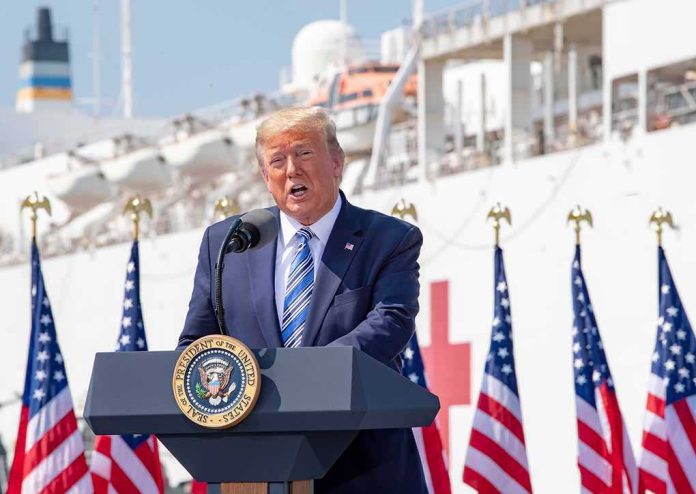
President Trump told reporters at the NATO summit on July 8 that Iran broke the deal, and the ceasefire is “over.” He said Iran hit three commercial ships in the Strait of Hormuz. He called Iran’s leaders “vicious” and warned they would use a nuclear weapon if they had one. He added that negotiators could keep talking, but he would not “deal with them” further himself.
United States Central Command said U.S. forces launched strikes on more than 80 Iranian targets. The command said the strikes answered Iranian attacks on three ships. The targets included air defense systems, missile and drone storage, coastal surveillance, and naval assets. The strikes aimed to reduce Iran’s ability to threaten shipping and U.S. forces in the region.
What The Islamabad Memorandum Actually Did
The Islamabad Memorandum, signed on June 17, set a 60-day period to work out final terms and de-escalate. It followed earlier steps to reopen the Strait of Hormuz and reduce attacks. Reports say both sides had already violated parts of the ceasefire at different points since spring. That history makes the latest break part of a known pattern, not a surprise end to perfect calm.
The White House has not released a formal legal notice that ends the memorandum. Trump’s words carry policy weight, but they are not an executive order. That creates a gray area. Talks may continue even as strikes occur. That is why some say the ceasefire is politically finished but not legally dead. The split can confuse allies, markets, and Congress.
Iran’s Counter-Claim And The Evidence Gap
The Islamic Revolutionary Guard Corps said the United States violated the ceasefire first with airstrikes. Iranian state media described damage to military sites and an area near a nuclear facility. These claims put Iran on record that it was responding to U.S. action, not ships. The United States has not made public video or third-party reports that prove Iran hit the three vessels, leaving a public evidence gap.
That gap does not mean Iran is innocent. It means the administration’s proof is not yet public. Releasing radar tracks, imagery, and ship logs could settle blame for the attacks. Independent maritime incident reports could also help. Until then, each side points at the other. This tug-of-war over facts is common in past U.S.–Iran flare-ups and often delays clear action.
Why This Matters For Security, Energy, And The Constitution
Attacks on commercial shipping threaten global energy flows. The Strait of Hormuz carries a huge share of the world’s oil. Higher risk can raise gas prices at home. Many families still face high costs from earlier inflation. Clear rules, strong deterrence, and open sea lanes protect American wallets. They also protect U.S. troops and allies who move through these waters every day.
President Trump ordered strikes on Iran after the regime violated the ceasefire by attacking commercial shipping in the Strait. CENTCOM confirms nearly 100 strikes on air defenses, surveillance assets, drone sites and military infrastructure since Trump gave that order. https://t.co/1N4eZ1jpMe
— Alex'sGhost (@MozartsTrump) July 10, 2026
Congress adds another layer. Reports say lawmakers passed a resolution trying to block a return to broader war. That move could limit options if Iran keeps hitting targets. The administration must balance fast military needs with constitutional checks. The goal should be narrow missions that defend Americans, punish clear aggression, and avoid endless commitments that drain our budget and our military readiness.
Negotiations: Keep Talking, But From A Position Of Strength
Trump said Iran says one thing in private and another in public. He called that “cuckoo,” and many Americans know this pattern from past talks. If U.S. negotiators keep meeting, they need tight terms, snap-back penalties, and verified steps. Any new deal should force Iran to stop attacks, allow safe passage, and accept real checks. Peace without teeth invites more cheating and more danger at sea.
Allies will watch how Washington links force and diplomacy. Some in Europe may press for restraint while benefiting from secure shipping. The United States should welcome support but must not let outside critics tie our hands. A simple policy line helps: protect ships, hit military tools that threaten them, and demand proof-based relief only after Iran stops lying and stops shooting. That is common sense and defends American interests.
What To Watch Next
Watch for the Pentagon to release declassified evidence on the ship attacks. Watch for a formal legal step on the ceasefire’s status. Watch tanker insurance rates and oil prices for stress signals. Watch Iran’s behavior near the Strait, especially drones and fast boats. These facts will show if deterrence is working. Strength, clarity, and proof can secure the seas and keep American families safe and solvent.
Sources:
politico.com, axios.com, instagram.com, youtube.com